Select a rough terrain forklift from the route, ground bearing, and load. Four-wheel drive does not make weak ground safe.
Survey construction, timber, agricultural, and storage routes in their worst normal condition. A dry demonstration says little about the same yard after rain and traffic.
Survey the Ground Before Choosing a Rough Terrain Forklift
Walk from pickup to set-down and mark:
– loose gravel, mud, ruts, and potholes;
– drainage channels and abrupt transitions;
– ramp grades and cross-slopes;
– weak shoulders, edges, and excavation zones;
– overhead limits and blind corners;
– narrow turns with the longest load;
– changes after rain, frost, thaw, or repeated traffic.
Assess bearing under the loaded axle and prepare or exclude weak areas.
Match Rated Capacity to the Real Load
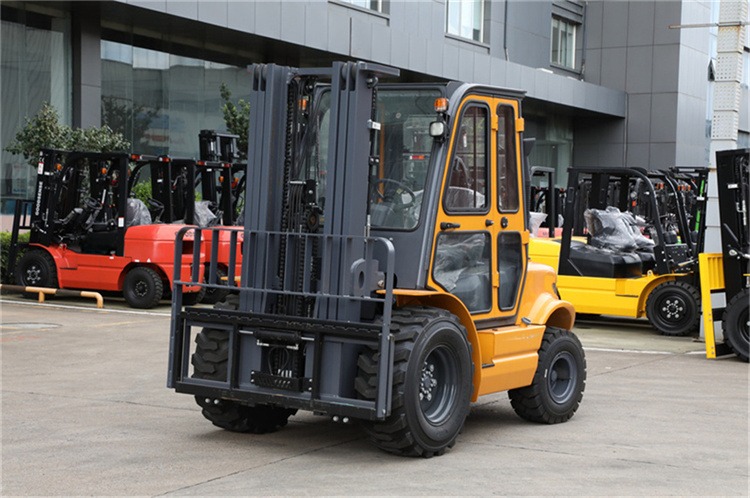
Capacity depends on load center, height, mast, forks, attachment, and offset. Send complete load and pickup data and request the matching chart. Compare JinChengYu’s rough terrain forklift category by route and residual capacity.
Two-Wheel Drive or Four-Wheel Drive
Choose two- or four-wheel drive from surveyed traction needs, with separate route, speed, and stop rules.
Select Tires for Surface and Downtime Risk
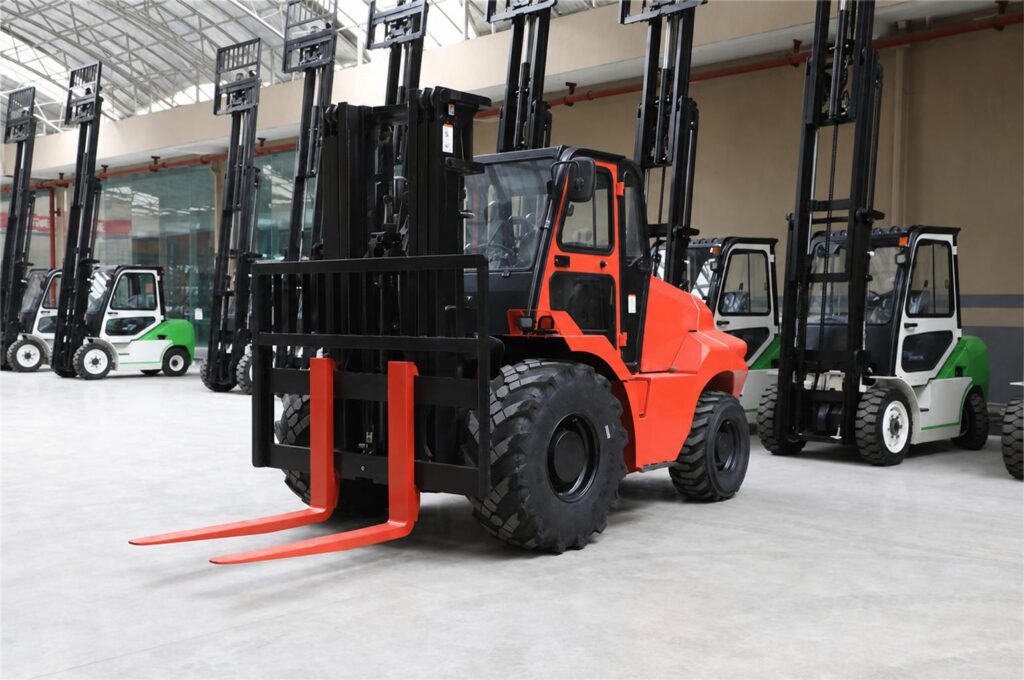
Compare pneumatic, foam-filled, or solid tires on cushioning, traction, puncture risk, shock, tread, distance, pavement time, and replacement support.
Check Clearance, Wheelbase, and Turning Space
Trial clearance, wheelbase, turning, and load overhang at the actual transitions.
ال JinChengYu equipment overview includes rough-terrain and counterbalance categories; maneuverability remains configuration-specific.
Choose the Mast and Attachment Together
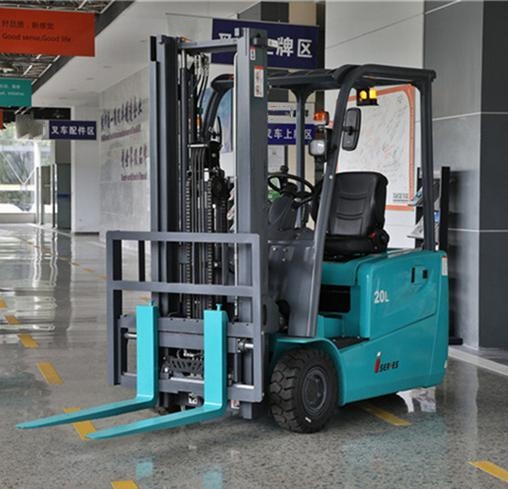
Confirm mast heights, free lift, clearance, visibility, residual capacity, hydraulics, carriage, and attachment effects together.
Plan Visibility and Operator Protection
Check visibility, warnings, restraint, cab, access, vibration, steering, seating, and controls during a normal shift.
Review Engine, Service, and Transport
Match the engine, emissions, cooling, filtration, climate, altitude, parts, and service to the destination.
For site transport, check dimensions, weight, tie-downs, ramp, and legal limits. JinChengYu’s products covers other material-handling categories; airport ground-service equipment is out of scope.
Run a Loaded Site Trial
Use a representative load and the proposed attachment. The trial record should include:
– truck model, mast, forks, attachment, and tires;
– load weight, dimensions, and center of gravity;
– weather and ground condition;
– tire pressure or tire configuration;
– pickup, travel, turn, ramp, and set-down route;
– lowest underside clearance observed;
– wheel slip, rutting, bottoming, or load movement;
– braking and restart on the approved grade;
– forward and reverse visibility;
– turning clearance with load overhang;
– vibration, steering effort, and operator comments;
– stop-work point if the route deteriorates.
Exclude unknown bearing, weak edges, excavations, and waterlogged areas before the trial.
Check the Delivered Configuration
The commercial offer and final acceptance record should identify:
– model and drive arrangement;
– capacity chart for the supplied mast and attachment;
– mast heights, free lift, and carriage class;
– forks, hydraulic functions, and hose routing;
– tire type, size, tread, and replacement source;
– clearance, wheelbase, turning radius, and grade data;
– engine, emissions configuration, cooling, and filtration;
– cab, restraint, lights, alarms, mirrors, and cameras;
– service intervals, included spares, manuals, and warranty;
– transport dimensions, weight, tie-down points, and commissioning.
Any substitution needs a renewed capacity and route check. A different tire, mast, fork, or attachment can change clearance, turning, visibility, residual capacity, and transport.
Maintain a route log after commissioning:
– date, weather, and ground condition;
– grading, filling, drainage, or temporary mat work completed;
– new rut, edge failure, obstruction, or overhead change;
– approved route closure or diversion;
– tire damage, wheel slip, or underside contact reported;
– load type and attachment involved;
– operator report and supervisor action;
– next inspection date.
Review the route after rain, excavation, backfilling, drainage changes, or different loads.
Add a rough-ground pre-shift check to the normal truck inspection:
– tires: pressure or condition, cuts, embedded objects, tread, and wheel fixings;
– forks and attachment: cracks, locking, hoses, pins, and carriage;
– mast: chains, rollers, hoses, and visible damage;
– engine bay: fluid level, leaks, cooling intake, and dust loading;
– brakes, steering, horn, lights, alarms, restraint, mirrors, and camera;
– steps, handholds, windows, and cab doors;
– route status, weather warning, changed excavation, and temporary traffic;
– load information and capacity chart available to the operator;
– communication method for spotters and shared traffic areas;
– transport tie-down equipment when the machine moves between sites.
Record defects by truck ID and verify that any replacement machine shares the approved capacity and clearance for the day’s load and route.
خاتمة
A rough terrain forklift must be matched to the surveyed route, load chart, attachment, tire, mast, visibility, and service conditions.
Send JinChengYu the route and load file, then check the proposed capacity, tires, chassis, visibility, service, and transport.
Recommended site file contents:
– plan with approved pickup, travel, and set-down route;
– numbered photographs tied to the plan;
– route lengths, clear widths, overhead limits, and turning areas;
– measured grades and cross-slopes;
– ground construction or bearing information where available;
– weather and seasonal changes affecting the route;
– load list with dimensions, weight, center of gravity, and frequency;
– stacking height and lowest doorway or roof opening;
– attachment data and hydraulic functions;
– operating hours, shift pattern, and travel between sites;
– maintenance location, fuel arrangement, and service capability;
– local engine, transport, and safety requirements.
Ask the supplier to return a marked response rather than a model name alone: accepted condition, configuration used for the check, condition needing site improvement, and any limit or missing data. Keep that response with the capacity chart and approved route.
If the site later changes the load, attachment, mast, tires, or travel path, reopen the affected parts of the file. The earlier recommendation was made for a defined combination; it should not be stretched to a different job without review.
التعليمات
Q: What makes a forklift a rough terrain model?
A: Common features include more clearance, treaded tires, appropriate chassis geometry, and suitable drive. Site and load approval remains model-specific. Compare gradeability, ground clearance, axle arrangement, tire construction, turning space, mast, attachment, and the capacity chart against the surveyed route and load.
Q: Is four-wheel drive always required outdoors?
A: No. Firm routes may suit a standard truck or two-wheel drive after route review. Four-wheel drive may help where traction changes, but it does not correct weak ground, excessive grade, poor tire selection, unstable edges, or an unsuitable load. Approve the complete route.
Q: Can a rough terrain forklift drive on mud?
A: Only within the model and route limits. Stop for deep mud, waterlogging, unstable edges, or hidden ruts. Inspect after rain and identify a turnaround or recovery plan before entry. Tire grip cannot guarantee ground bearing capacity, steering control, clearance, or load stability.
Q: How does an attachment affect forklift capacity?
A: Weight and forward offset can reduce capacity and visibility. Supply attachment and load data for a revised chart. Include attachment mass, effective thickness, center of gravity, required hydraulic functions, load dimensions, lift height, and mast. Train the operator on the approved configuration and limitations.
Q: Which tire type is best for rough terrain?
A: Compare traction, cushioning, puncture exposure, shock, distance, speed, and local replacement for each tire construction. Review the surface in dry and wet conditions, sharp debris, heat, side loading, and allowable pressure. Confirm wheel compatibility and the manufacturer’s inspection and replacement criteria.