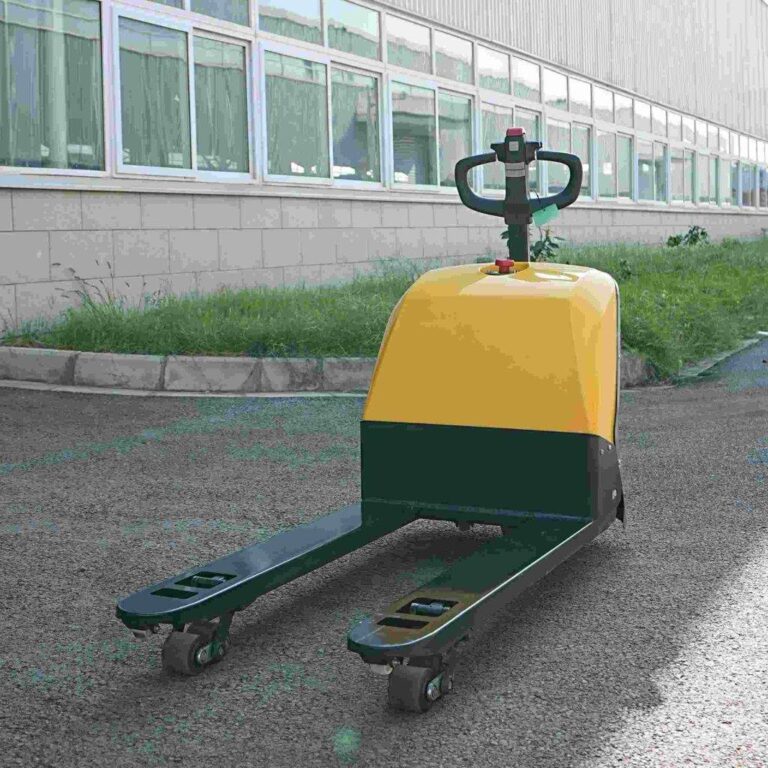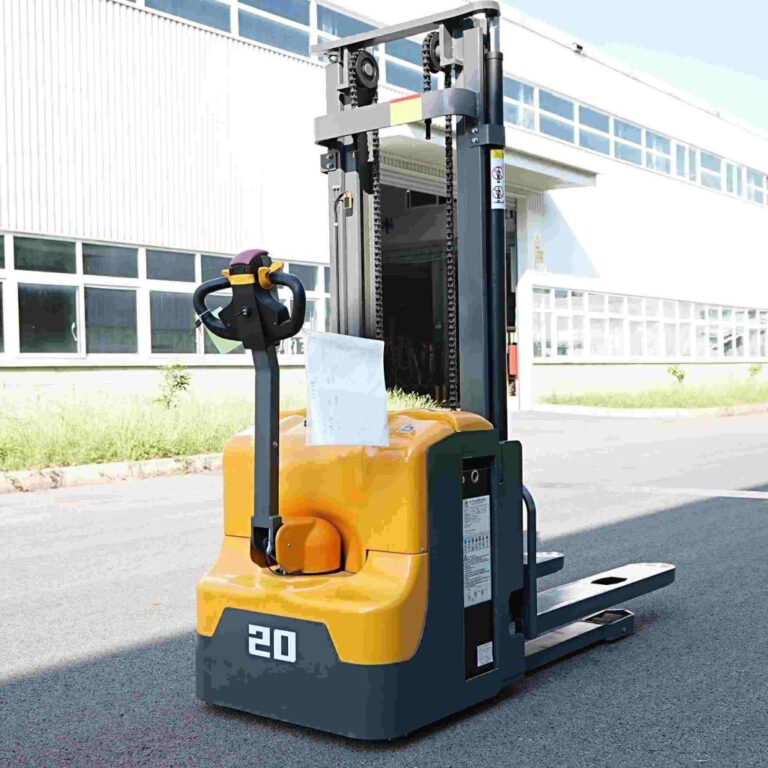
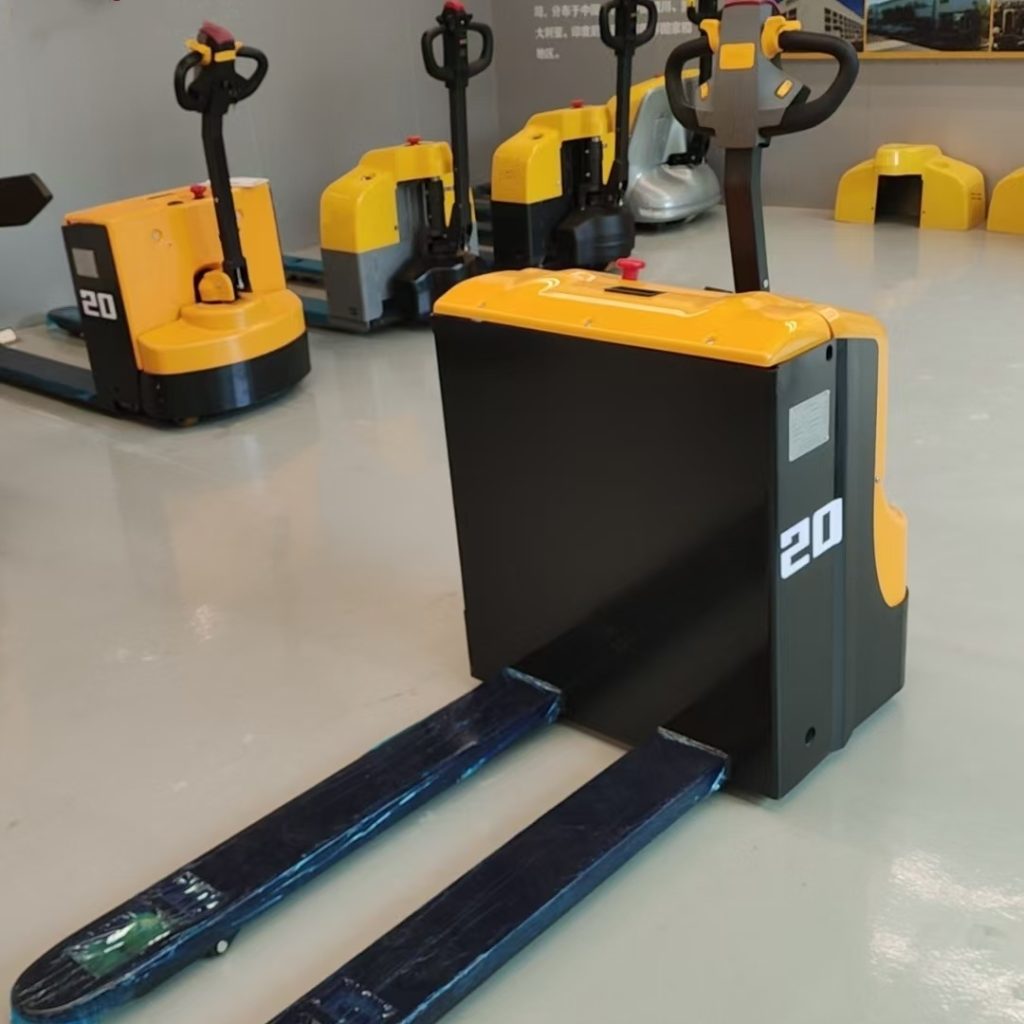
The electric pallet truck is capable of quickly blocking the shipping aisle. Just one truck which does not operate, charge, raise, or drive properly can slow down unloading operations, order selection, retail restocking, and truck tail lift activities. Most problems will be caused by the lack of battery power, loose connections, safety switches, worn wheels, or missing hydraulic fluid.
This article describes electric pallet truck trouble-shooting procedures according to the symptoms experienced. It provides information for management, maintenance, purchasing, and operation personnel.
Start With Safety Before Any Repair
The pallet truck handles cargo, stores electrical energy, and uses hydraulics. It must be parked on flat ground, forks lowered, empty of cargo, turned off, and out of reach of your feet.
What Operators Can Check Safely
Operators can check visible, low-risk items. Electrical testing, hydraulic repair, brake adjustment, and controller work need trained staff.
| Síntoma | First safe check | Possible cause |
| No power | Emergency stop, key switch, battery plug | Discharged battery or loose connector |
| Won’t move | Handle position, brake release, throttle response | Safety switch, drive fuse, controller fault |
| Won’t lift | Load weight, battery level, oil leak | Low voltage, pump fault, hydraulic issue |
| Slow speed | Battery display, wheel condition | Low charge, worn PU wheel, brake drag |
| Not charging | Charger plug, socket, indicator light | Charger fault, bad contact |
Why the Electric Pallet Truck Won’t Move
Cuando an electric pallet truck won’t move forward or reverse, first separate “no power” from “power on but no travel.” The cause changes depending on whether the display lights up, the horn works, and the lift function still responds.
Check Power, E-Stop, and Handle Position
A truck that looks dead may only have the emergency stop button pressed in. Release it fully, turn the key or power switch on again, and watch the battery meter. If the display stays black, check whether the battery connector is seated tightly.
If the truck powers on but does not travel, check the tiller handle angle. Many walkie pallet trucks will not move when the handle is vertical or too low because the brake and safety circuits are active. Move the handle into the normal working range and try forward and reverse at low speed.
Look at Drive Signals, Brake, and Wiring
If the horn is working fine, and the lift is working, but the truck doesn’t move, then the cause could be the throttle, direction control switch, electromagnetic brake, drive fuse, motor wire, or the controller itself. The clicking sound without moving wheels usually indicates a faulty drive circuit and not a battery.
Wet floors, dock dust, broken pallets, and outdoor loading areas put stress on connectors. Waterproof aviation-style connectors help in rainy dock doors or mixed indoor-outdoor work. If a fuse blows again after replacement, stop.
Why the Electric Pallet Jack Won’t Lift
A pallet truck that drives but cannot raise the forks can block a lane or truck bed. Start by ruling out overload, pallet damage, and fork position.
Check the Load and Pallet Fit
It is important to ensure that the load is within the rated capacity of the truck and that the forks are engaged properly. A damaged bottom board, an uneven pallet, or an unbalanced load might cause the truck to be underpowered even if the hydraulics are functioning properly.
Low battery voltage can also affect lifting. Some electric pallet trucks limit the lifting function when the battery drops too low, while travel may still work slowly. This protects the battery and lift motor.
Check Hydraulic Oil, Pump, and Leaks
If the pump sounds low, the forks move up slowly, or the forks sag downwards after being lifted, check the hydraulic system. Check for oil on the cylinder, pump assembly, the hoses, and the fittings. Low hydraulic oil, air in the hydraulic system, worn seals, a clogged filter, and a weak lift motor can all lead to lifting problems.
Avoid holding down the lift switch when the pump is running but the forks are not moving. It may cause overheating of the motor.
Why the Truck Runs Slowly or Feels Weak
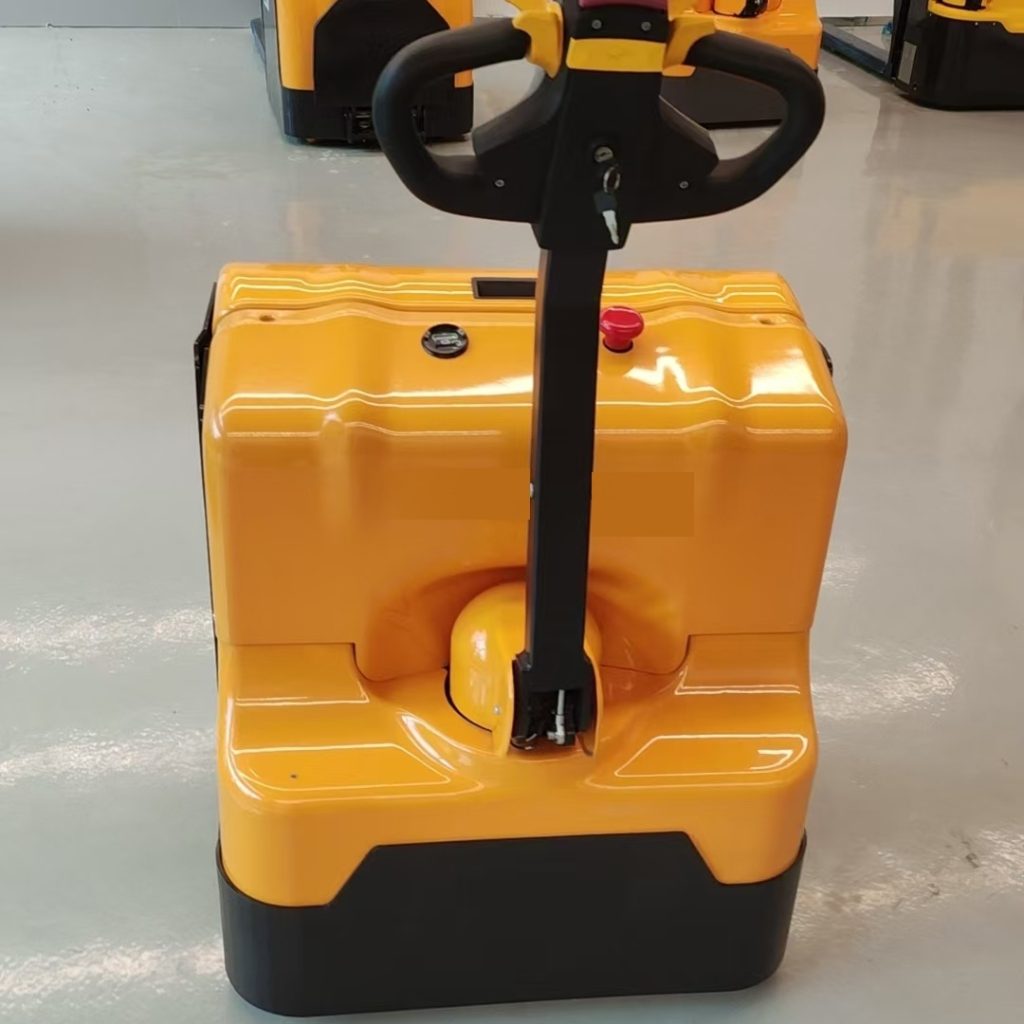
Notably, a decrease in speed does not necessarily mean there is a problem with the electric motor. The reason for slow speed is often related to unfavorable warehouse conditions that include rough floors, worn-out wheels, inadequate charge, or incorrect duty cycle.
Battery, Load, Wheels, and Floor Resistance
The battery is usually one of the reasons for losing power in the process of using the electric pallet truck within a single shift period. The vehicle operates well when it starts, but slows down later. If charging breaks are short, a lithium battery option may better fit multi-shift use.
Overload also reduces travel speed. Moving a heavy pallet over a dock plate, ramp, or rough concrete can trigger protection mode.
Check the PU drive wheel and load rollers. Flat spots, wrapped stretch film, pallet nails, and bearing wear add rolling resistance. Brake drag is another hidden cause. If the brake does not release fully, the truck may move but feel heavy, noisy, or hot near the drive wheel.
Why the Battery Is Not Charging
Charging trouble often appears suddenly: the truck works today, then refuses to start tomorrow. Trace the charging path in order.
Check the Charger Path From Wall to Battery
Start by checking the wall socket, plug of the charger, port of the battery and the LED lights. Heat marks, a loose plug, bent pins, moisture and corrosion should be checked for. A truck that is driven close to cold rooms or outdoors might gather condensation around the connecting points.
The problem could also be the battery itself which can either be deeply discharged, old or damaged. Bad charging practices reduce the life of batteries.
Begin with examining the power outlet, charger connector, charging socket, and LED. Check for signs of overheating, looseness, bent terminals, moisture, or corrosion. An application of the truck close to cold storage areas, loading dock, and exterior doors could lead to moisture in the connections.
When the charger powers up, but the battery is unable to receive the charge, the battery might be heavily discharged, aged, or faul
For operations with short breaks and constant pallet flow, an electric pallet truck with a flexible power system can lower downtime. The ability to upgrade the battery system without replacing the truck is useful when a small warehouse grows into a higher-volume operation.
Error Codes and Warning Lights
Most of the modern pallet jacks employ a screen that displays battery information, hour meter data, and even some fault messages. The error message might indicate low voltage, throttle signal problem, brake malfunction, controller protective action, lift switch fault, or communication problem.
When a Code Needs Service
Power cycling can clear a temporary warning, but repeated codes need service. Note when the code appears: after charging, under load, on a ramp, during lifting, or after rain.
Maintenance Checklist That Prevents Breakdowns
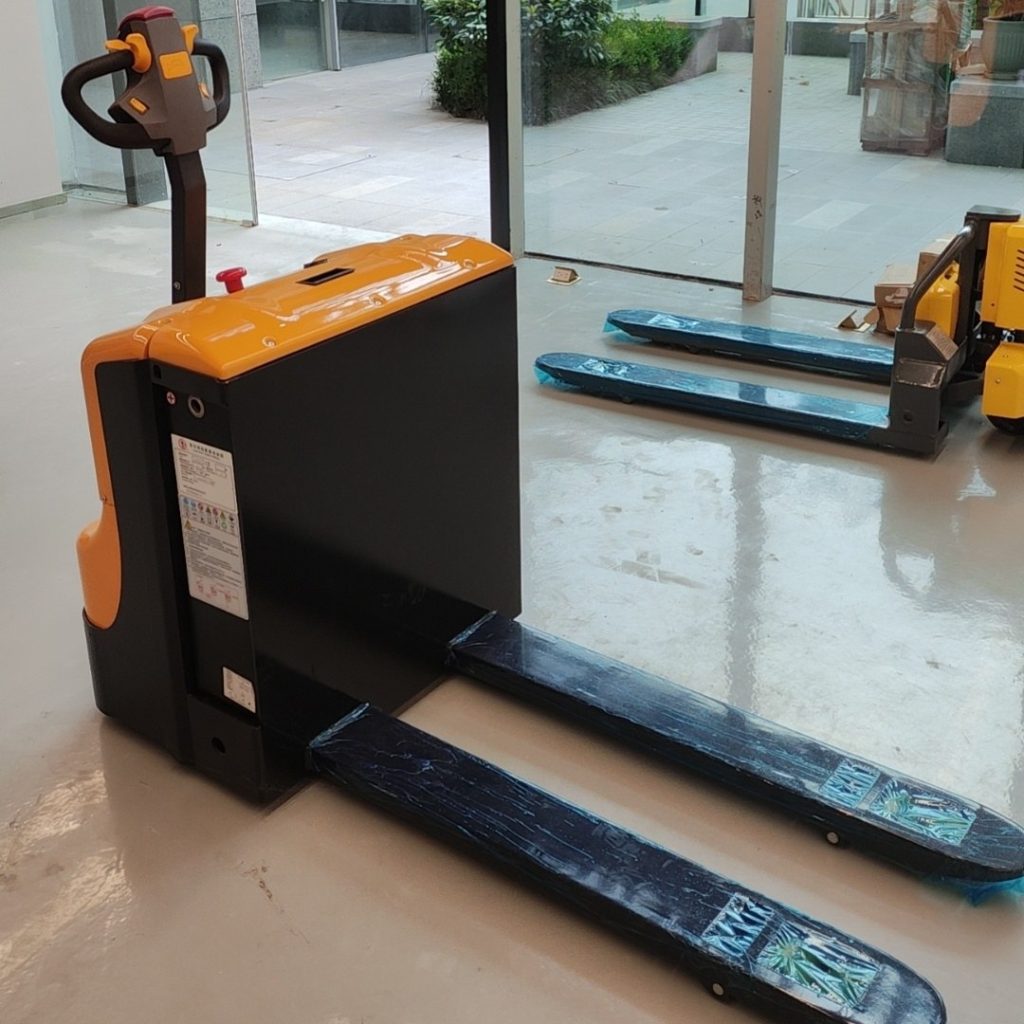
The routine process will not take much time, yet it will avoid numerous emergency repair works. The routine process will prove useful for warehouses, factories, supermarkets, food distribution centers, and delivery services.
Daily and Weekly Checks
- Check battery level before the shift.
- Test horn, brake, lift, lowering, and emergency stop.
- Inspect forks, load rollers, drive wheel, and visible bolts.
- Look for hydraulic oil leaks under the truck.
- Keep the charger plug and battery connector clean and dry.
- Remove stretch film, rope, and pallet debris from wheels.
When Repair Is No Longer the Best Choice
Repair will make sense if the fault is minor and the truck suits the task. The replacement will become more intelligent in cases where the machine breaks down again, the spare parts are not available, and the truck does not suit the working environment anymore.
Signs It May Be Time to Upgrade
Think of buying a new electric pallet truck when the cost of repairs keeps increasing, charging time delays the shift, the truck performs badly in inclined surfaces, or when complaints arise regarding lack of good controls. The expanding warehouse might even require increased drive power, advanced batteries, water-proofing for wires, or improved handle with battery level and hour meter display.
The correctly specified electric pallet truck has an advantage over manual handling due to low stress levels while moving horizontally from receiving, buffer and shipping areas. In dock areas and tail-lifts, the smaller frame size and dependable drive power become important over other accessories that would never be used there.
JinChengYu FORKLIFT as an Electric Pallet Truck Supplier
CARRETILLA ELEVADORA JinChengYu is situated at Qingdao, China, a port city that has good transportation connectivity via land, air, water, and railway. The company provides material handling machinery, warehouse machinery, ground support machinery, and spare parts to international clients.
Practical Features for Real Warehouse Work
Its electric pallet truck range focuses on flexible power choices, efficient operation, and easier service. Practical features include full-load climbing ability of up to 7%, a soft handle with Hall acceleration, lift controls, LCD battery meter, hour meter, protected wiring with IP65-grade connectors, and a 750W drive wheel with strong reduction gearing. These details affect uptime, rainy dock use, wheel service, battery planning, and daily operator comfort.
Conclusión
Troubleshooting electric pallet truck involves identifying the fault in terms of the symptom, such as lack of movement, inability to lift, poor speed, failure to charge, or display of codes. Majority of the problems can result from battery condition, contact of connectors, position of handle, wear of wheels, hydraulic fluid, or charger problem. Performing proper initial tests will help minimize downtime, while maintaining the machine regularly will keep the pallet truck functioning for its intended use in warehouses.
Preguntas frecuentes
What would make my electric pallet truck not move even after having power?
It could be that the handle is out of its operating range, the brake is not being released, the throttle switch could be damaged, or the controller is on protection.
Why is my electric pallet jack lifting slow?
The problem can be caused by low battery voltage, overload, low hydraulic oil, air trapped in the hydraulic system, worn-out pump, or a weak lift motor. If the pump is running but the forks are not moving, stop the jack immediately and have it serviced.
Why is my pallet truck not charging?
It might be because of a defective plug from the charger, charging port, battery connector, wall socket, or the battery.