A fork that fits under a pallet is not automatically long enough to support its load. The choice depends on entry direction, loaded depth, weight distribution, and the ratings of both forks and truck. For a long pallet, measure from the fork face to the far support point. Choose a fork that supports the pallet beyond its midpoint without projecting into another load. Then confirm that the resulting load center remains within the truck’s approved capacity. The right specification comes from the real pallet and route, not a nominal pallet label.
How Should Forklift Fork Length Support a Pallet?
The forks should carry the load through a stable part of its base. For a conventional, evenly distributed pallet, that usually means reaching well beyond the middle of the entry depth. It does not mean pushing the tips through the far side until they protrude into another load. Pallet construction matters: a deckboard or runner that bends under a concentrated load may need more support than a rigid base of the same length.
Record the entry direction before discussing length. A 1,200 mm by 1,000 mm pallet presents a different support depth on each side. For long crates, mark the weight-bearing points. If the load rests on two skids, the forks must engage both at the required spacing; length alone cannot correct poor contact. Leave enough tip clearance to enter without lifting the far edge.

What Measurements Determine the Required Fork Length?
Measure the loaded unit, not an empty sample. A simple field sheet should record five things:
- Entry depth: distance from the fork face to the far end of the pallet or crate in the chosen approach direction.
- Bearing points: position and strength of runners, skids or pockets that actually transfer weight to the forks.
- Fork pocket geometry: opening height, usable width and any cross member that limits insertion.
- Load position: total mass and the estimated center of gravity along and across the forks.
- Route limits: rack backstop, trailer wall, opposing pallet, doorway and turning clearances.
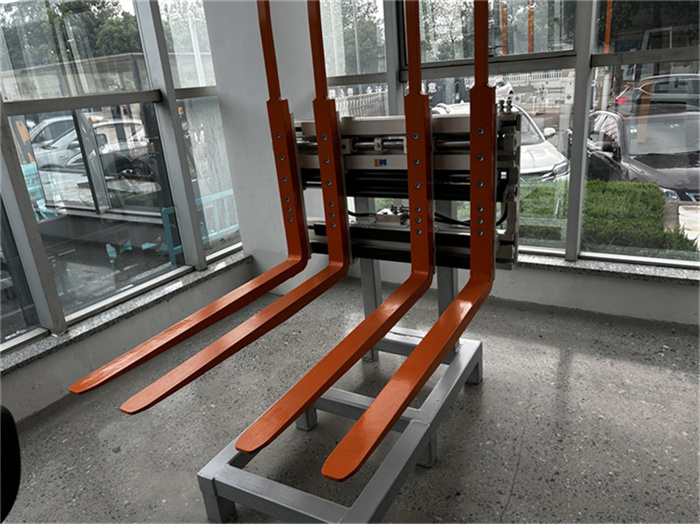
Use these dimensions to compare forklift forks with the truck’s carriage. Check how the manufacturer measures length. Also note fork width, thickness, mounting class and spacing. A longer fork with the wrong mounting may fail the fit check before capacity is considered.
For a mixed fleet, list each pallet family and assigned truck. The most demanding loaded unit should drive the trial. A drawing preserves entry and bearing dimensions better than a photograph.
How Does Fork Length Affect Rated Capacity and Stability?
The truck’s rating is based on a specified load center and lift configuration. If the center of gravity moves farther forward, usable capacity may fall even when nominal tonnage looks sufficient. An attachment or different mast can change the rating. Document the load center rather than inferring it from fork length.
Consider a crate that is much deeper than a standard pallet. A longer fork may support its base, but the crate’s own mass may still be concentrated near the far end. In that case, the horizontal distance from the fork face to the crate’s center of gravity is the critical input. The truck and fork ratings must both cover the load at the working lift height. No generic percentage reduction is reliable for every truck, mast and fork combination.
Check fork markings against the carriage and truck rating. Check lateral balance if the load sits off center. A long fork cannot replace an attachment when the load requires clamping or side support.
What Should a Fork Trial Check Before Approval?
A trial should reproduce the real load and the tightest part of its route. Start at floor level. Confirm that both forks enter fully, sit beneath the intended bearing points and leave no unsupported end that deflects when lifted. Observe the pallet as the load rises just enough to clear the floor. Stop if the base twists, a skid lifts unevenly or the fork tips contact goods beyond the pallet.
Next, move through the actual route at an appropriate travel height. Check operator visibility, doorway clearance, turning radius, rack approach and the distance to adjacent pallets. At the final stacking position, confirm the selected forklift mast and load combination remains within its approved rating. A fork that works on the floor may create a different capacity constraint at height.
Document the load ID, dimensions, mass, truck and fork identification, lift height and outcome. Photograph bearing points and clearance conflicts. Repeat the check if the pallet design or orientation changes. A signed record lets purchasing order the same fit.
Preguntas frecuentes
Should Forks Reach the Far End of Every Pallet?
No. The objective is sufficient support under the load without unnecessary projection beyond the pallet. The required engagement depends on the base construction, weight distribution and handling route. Confirm the actual pallet remains stable in a controlled trial.
Can Fork Extensions Replace Longer Forks Permanently?
Extensions can serve a specific approved task when their manufacturer permits the combination and the truck’s reduced capacity is understood. They add length and move the load forward, so they are not an automatic substitute for correctly rated permanent forks in daily work.
Does a Wider Fork Spacing Increase Capacity?
Wider spacing can improve support across a broad pallet when the bearing points allow it, but it does not raise the truck’s rated capacity. Set spacing to the pallet structure and check the load remains centered between the forks.
Should Long Loads Be Lifted Higher for Better Visibility?
Travel height should remain appropriate for the route and equipment. If the load blocks the operator’s view, revise the travel direction or use a trained spotter under the site’s procedure. Raising a long load to see beneath it increases instability and overhead-clearance risk.
What Should You Send for a Fork Specification Review?
Send us the pallet drawing, entry direction, loaded mass, estimated center of gravity and photos of the bearing points. Add the truck model, carriage details, intended lift height and the narrowest route or rack clearance. If the same truck handles several load families, include the largest and most demanding examples rather than only an average pallet.
With those inputs, we can discuss a compatible fork specification and identify what still needs a site trial. Send the pallet drawing with the truck identification so the discussion starts from the actual load. Keep the final approval tied to the truck and fork rating information and the recorded trial result.