There is no ‘standard’ aisle width for chariots élévateurs à chargement latéral as depends on three checks: straight travel with a load, pickup and withdrawal at the rack, and the swept path through a turn. An aisle that appears to be OK for straight travel can fall down at corners.
The same bundle that lies flat in the storage aisle can protrude well beyond the truck in the direction of travel when turning in the aisle. In addition to the truck itself there are rack arms, building columns, doors, other plant and stock around junctions etc. A building has a grid but that does not make for clear width.
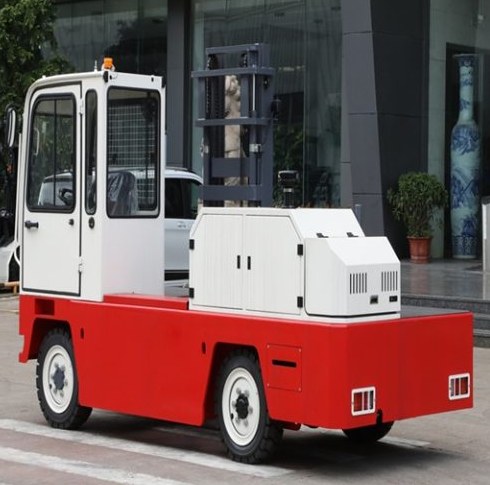
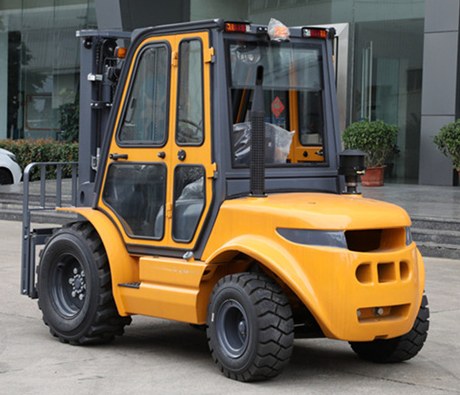
ALT: Side Loader Forklift Aisle Width for Pipes and Steel Storage
Why a Side Loader Needs Its Own Aisle Check
Conventional side loaders are typically designed to collect items against a face and to carry long stock items on their deck, in the design direction. Therefore, they can be more narrow than a long bundle of items that need to be carried across the front of a counterbalance forklift truck during straight line travel. However, the side loader will also require additional space for collection and turning of the load.
Note that whilst the width of the loaded truck is crucial for the straight travel of the forklift, the length of the load to be stored becomes important when cornering and the height of the load will determine the height of the doors, services above, and the general sight lines throughout the warehouse and also the height of upper racking if required.
Measure the Space That Is Really Clear
Therefore, you must measure between the closest fixed points (i.e. 2 protectors instead of 2 columns). A column’s base can be much wider than the column itself. Also, a door opened for storage can have a handle or be recessed within the opening.
Repeat this measurement at various floor levels to account for cantilever arms and for stored material above floor level. Also, include end caps, timber, bands and covering material as well as extended ends to the length of the pipe bundles.
|
Area |
Include in the survey |
Question to answer |
|---|---|---|
|
Straight storage aisle |
Loaded truck width and fixed projections |
Can the load travel in its approved position? |
|
Rack face |
Mast and fork movement plus bundle withdrawal |
Can the bundle leave the arms without contact? |
|
End aisle or crossing |
The whole truck body, plus both ends of the load |
Will the whole truck combination turn at this corner? |
|
Door or covered route |
Side, threshold, and overhead clearance |
Can the loaded truck pass completely? |
It is not sufficient to have extra space at the end of the aisle; a rack protector in the middle of the aisle which is narrower than the center of the aisle can create problems for very wide loads. Draw all areas where the truck will travel separately.
Find the Straight Travel Envelope First
Early planning checks would typically establish the width of the loaded truck traveling along a straight line within approved limits to which clearance would be added for supplier’s operating requirements, site requirements and risk assessment.
Do not use a ‘safe’ & ‘round’ figure that you have got from somewhere else in the warehouse. The amount of space required for clearance is determined by a number of factors which include steering response, guidance, visibility, speed of travel, floor surface etc. Indoor guided aisles have different requirements than unguided outdoor yards.
Measure the Bundle, Not One Pipe
A single pipe can form a bundle of various widths including the dunnage, bands, etc. which form part of the bundle. The widest packed bundle must be recorded for width and height to form part of the load schedule, listing the longest bundle first then the widest.
As mass and center of gravity also have to be within the warehouse’s capacity, list all relevant items, including forklift attachments and accessories, including their dimensions and mass.
State the Travel Position on the Drawing
Have the position of the mast, forks and load shown on the plan for the travel position. This may be wider than the retracted transport position and must be shown for the specific sequence of movements to be used. It helps the operator to know what he can expect to find in the aisle and the manager to check that sufficient space has been allowed.
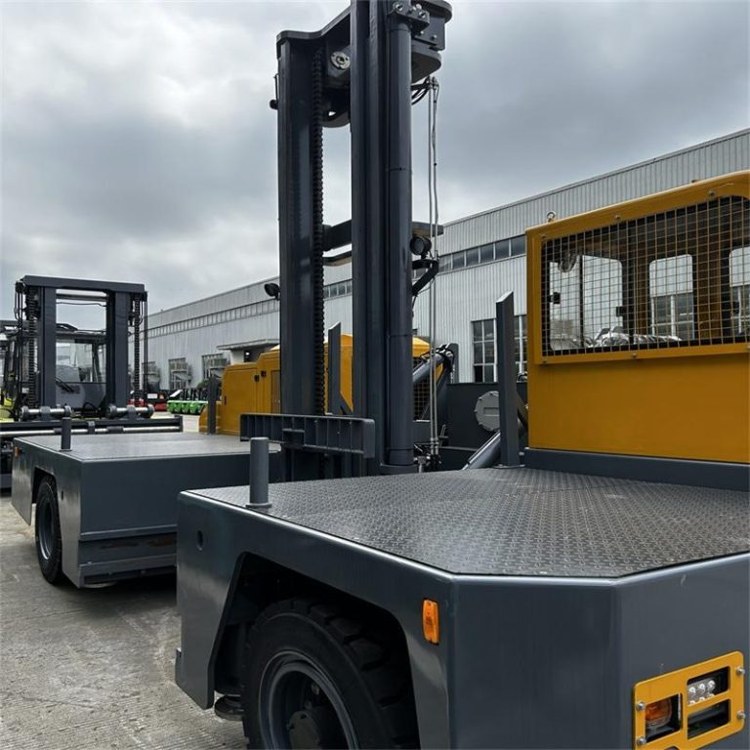
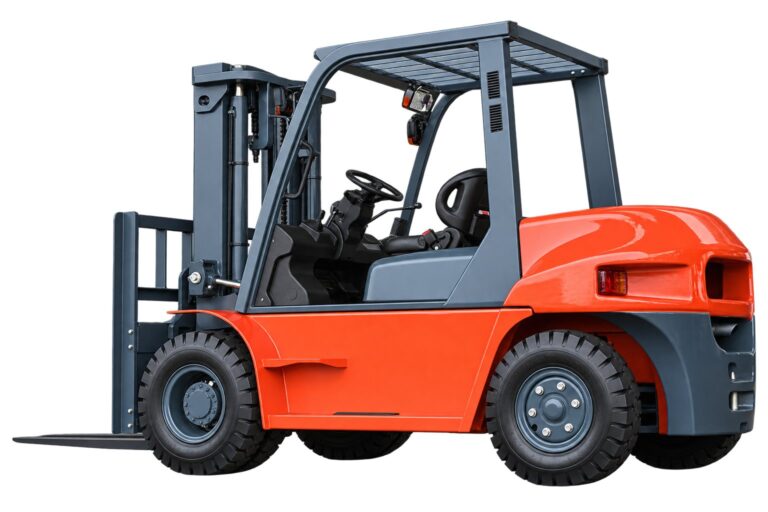
ALT: Side loader deck and mast for storage aisle planning
Leave Room to Pick Up and Withdraw the Load
At the storage location there are many more restrictions for a safe placement and removal of a load than just for a straight travel to the next location. The straight travel envelope gives no reliable information about the necessary dimension for pickup and withdrawal of the load from a rack or stack of goods.
Present the supplier with the cross-section of the rack to establish the arm depth, the face of the rack, the position of the bundle, the lowest point at which it can be lifted, the highest point at which it can be deposited and any back stops. Draw the path that the end of the bundle will travel before it comes to rest against any stop. Establish how far the front and rear of the bundle travel before it is deposited to its resting place.
For rounded materials, use chocks, cradles or form bundles. These need to be restrained in storage and will affect fork entry and the space around the load that needs to be left. So a planned gap is not to rely on the item being eased around a corner by the operator.
Plot the Swept Path of Long Loads
At a corner the body of the truck, the front of the load and the back of the load all take different paths. Request a swept-path drawing that includes the steel, which is often the item most likely to collide with a rack.
Look Closely at End Aisles and Junctions
Your detailed drawing of the approach, turn and exit to a corner of your warehouse would be viewed from above with walls, columns etc. highlighted and potentially staging and stock within the immediate vicinity marked. It would clearly highlight a ‘keep clear’ area and the related operating instruction(s).
This also includes a reverse view of the truck. Review the operator’s view and how other people will be kept outside the movement area. A painted pedestrian route is not spare turning space for the end of a long pipe bundle.
Floor Defects Reduce the Available Margin
The drawing may show a pothole to be of minor consequence; in reality a wheel can go into it and veer off in an unintended direction. A joint in a floor can rise up to inflict damage on the load and the rack guard protecting the nearby steel. Loose scale or gravel on a floor can affect the manner in which a truck turns or brakes. The drawing will have assumed a smooth surface.
Send a Layout That a Supplier Can Check
A simple inquiry to send would be a marked up plan with a simple load schedule showing units in numbers next to each dimension with existing racks distinguished from proposed ones and anything that can be moved out of the way within a shift noted.
• maximum dimensions (length and width) of the load as well as its height and weight; manner of packing.
• The marking of required width of aisle, the projection of the rack-arms and the height of picking.
• Show end aisles, doors, columns, traffic direction, and keep-clear zones.
• Description of floor surface, of existing and proposed pedestrian paths, of number of shifts.
Post via the equipment contact page about the equipment of interest. Ask them to draw or write up a check list of assumptions that the supplier will have made when setting up the test. Travel direction, load overhang, method of steering and minimum clearance.
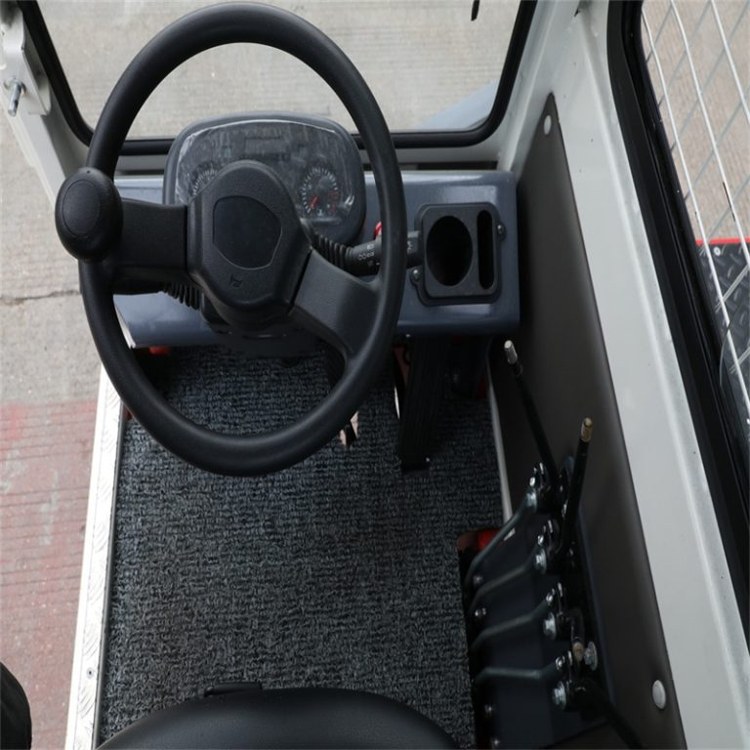
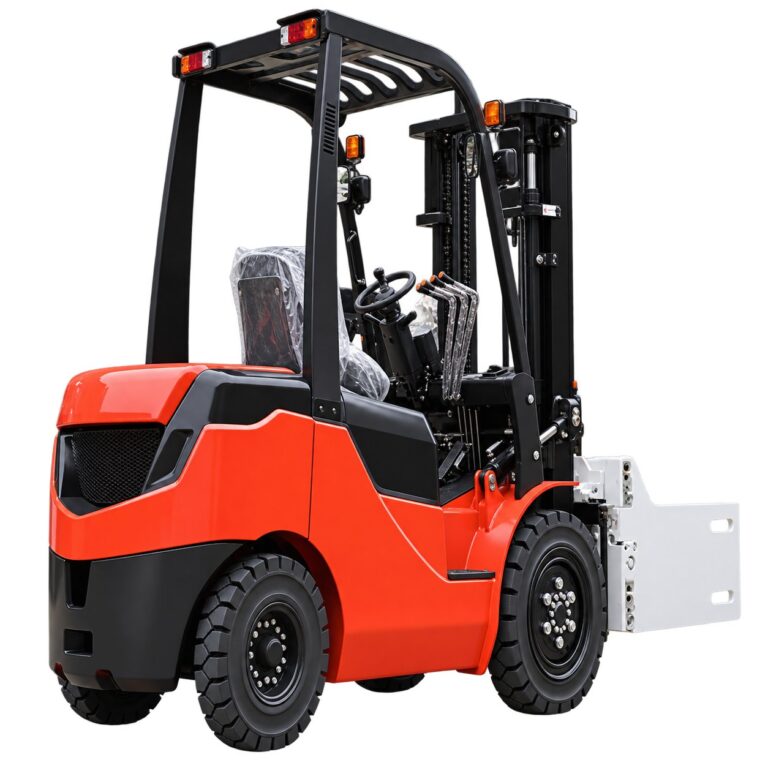
ALT: Side loader configuration for long material handling
Test the Whole Handling Cycle Before Moving Racks
A controlled demonstration is so useful before you fix the locations of your racks. Ideally, you would use the longest normal load, the widest normal bundle, the tightest pick up position and use the actual exit route off the site. One straight run down the aisle is not a test of a complete cycle.
À propos du chariot élévateur JinChengYu
Qingdao JinChengYu Machinery Co., Ltd. supplies forklifts, warehouse equipment, and parts to overseas customers. Its company profile describes sales, after-sales, and rental services. Their products include side loaders which can be requested from their Side Loaders page including checking load schedules and warehouse layouts against specific models to receive a written statement detailing the exact overall dimensions and the limitations for that specific model and layout configuration.
Conclusion
The width of an aisle for side loader forklifts is generally planned for the straight travel of the forklift, the pick up of racks and long loads and the turning movements involved to complete a full cycle around the aisle. Use the actual measurements between obstructions to plot the full swept path of travel for the proposed loads and transport method and get the supplier to confirm the proposed layout after a full test.
FAQ
Often the same questions have to be answered when a rough sketch of pipe or steel storage is turned into measured dimensions for a detailed plan.
What Is the Minimum Aisle Width for a Side Loader Forklift?
No universal figure applies. Loaded truck width, operating clearance, mast movement, steering, guidance, and the route all affect the minimum aisle width.
Does Pipe Length Determine Straight Aisle Width?
The length of pipes is usually of less concern for laying out straight aisles between rows of storage. However, when turns, cross stock, angled doors or unusual pick locations are involved then pipe length becomes a very important factor to consider when laying out a steel storage facility.
Can a Counterbalance Forklift Aisle Formula Be Used?
This would not be a sensible approach as side loading fork lift trucks have different orientation and handling methods of steel storage than right angle stacking. Use the side loaders drawing and approved movements for the steel storage layout plan.
Should Pedestrian Space Be Included in Truck Clearance?
Truck clearance does not automatically become a pedestrian way. The separation of pedestrian ways needs a separate risk assessment, measurements and controls. These are to be depicted separately from the truck ways.
What Should Be Checked Before Installing Steel Racks?
Check the loaded truck’s path to travel down the aisle to the nearest rack to pick up a load and withdraw from, around any turns in the path, above overhead services and through all points in the aisle and around corners and switchbacks in the path. Check floor surface and any that the loads may come into contact with. Check for any other traffic in the aisle.