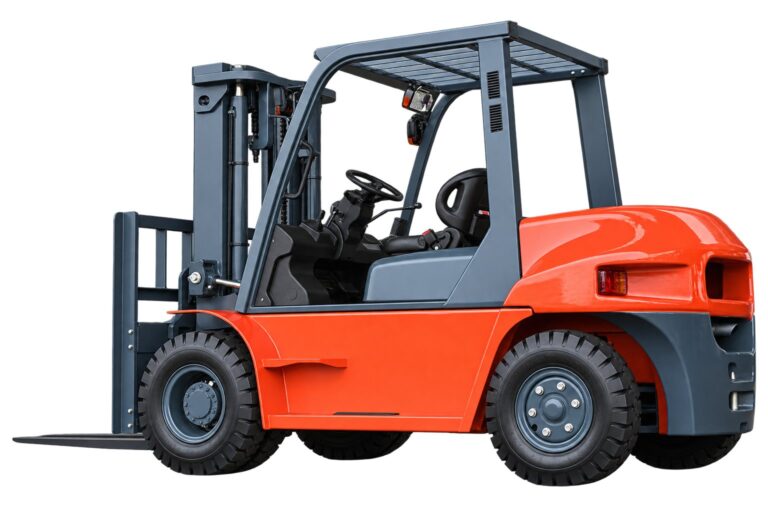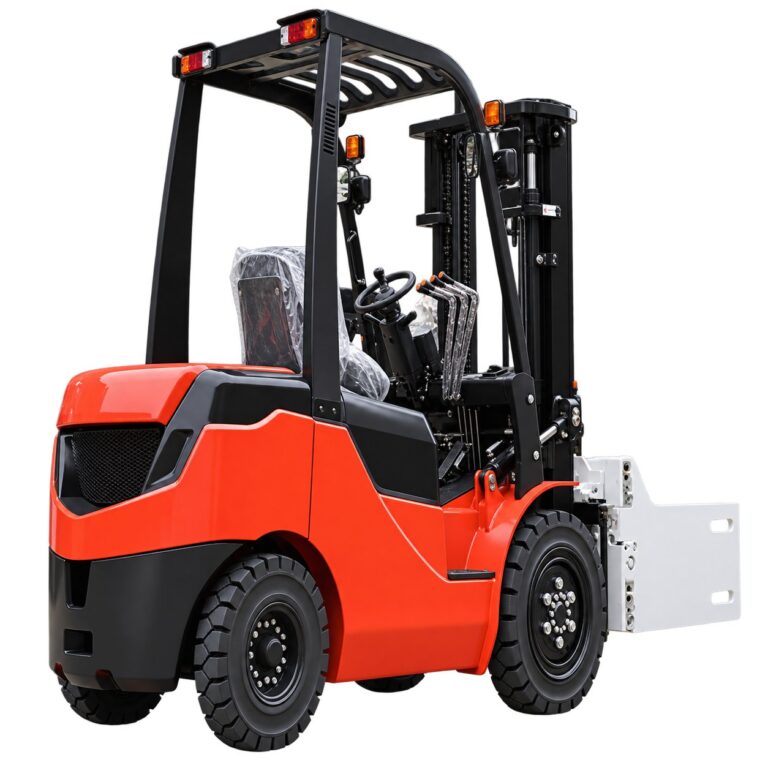
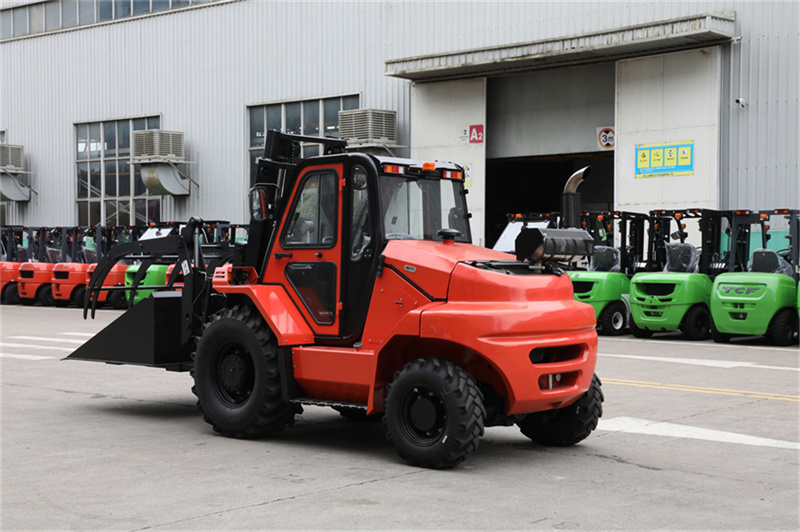
Choosing a rough terrain forklift is not as simple as matching rated capacity to the heaviest pallet on site. Uneven ground, slopes, long loads, lift height, tyre choice, and attachments can all change how safely and efficiently the machine works.
A forklift that looks large enough on paper may struggle when a load is raised high or carried across soft ground. Buying far more capacity than the job requires can also increase fuel use, transport cost, turning radius, and tyre wear.
The right decision starts with the real load, then considers the site and daily work cycle.
What Does Rough Terrain Forklift Capacity Mean?
Rated capacity is the maximum weight a forklift can handle under stated conditions. These normally include a fixed load center, standard forks, a specified mast, and a defined lift height.
Change one factor and usable capacity may fall. This is why two loads with the same weight can place different demands on the machine.
Load Center Changes the Real Limit
The load center is the distance from the fork face to the load’s center of gravity. A compact pallet keeps weight close to the mast. A long crate, timber bundle, or pipe pack pushes the weight farther forward.
That extra distance creates more leverage. A long 2,800 kg load may require more working capacity than a compact 3,000 kg pallet.
Antes choosing a machine, record the load weight, length, width, center of gravity, fork length, and whether the load can shift during travel. The capacity chart should be checked against the real load center, not weight alone.
Lift Height Reduces the Working Margin
A forklift is most stable when the load is low and close to the mast. As the forks rise, the center of gravity moves upward and the safety margin becomes smaller.
This matters when materials must be placed on high racks, truck beds, loading platforms, or elevated work areas. Ask for capacity at the required height rather than relying only on the headline rating.
Start With the Actual Load Profile
A useful specification begins with the materials handled every day. Separate normal work from occasional maximum loads. A machine that handles common loads comfortably will usually be more productive than an oversized forklift bought for one rare lift.
| Capacity range | Common outdoor work | Main checks |
| Around 2.5 tonnes | Feed bags, irrigation parts, light building materials | Compact loads, firm tracks, lower stacking |
| Around 3 to 3.5 tonnes | Fertilizer, bricks, cement, farm supplies, timber | Mixed loads, moderate slopes, regular use |
| Around 4 tonnes | Stone packs, steel parts, heavy timber, equipment parts | Load length, attachment weight, tyre grip |
| Around 5 tonnes | Dense timber bundles, large blocks, heavy machine parts | Ground strength, turning room, transport limits |
Separate Normal Loads From Rare Loads
Suppose a site handles loads between 2,200 kg and 2,800 kg every day but receives one 4,500 kg machine part twice a year. Buying a larger forklift only for those two lifts may not be the best choice.
The rare load may be split or handled by hired equipment. Daily productivity should carry more weight in the decision.
A working margin is still important. Repeatedly operating at the exact rated limit leaves little allowance for wet materials, uneven loading, longer pallets, attachments, or future growth.
Measure the Load and Forks Together
Weight does not fully answer “what size forklift do I need?” Measure load depth, width, height, and support points. Forks must support the load correctly.
Longer forks may be needed for timber, pipes, double pallets, or machinery crates, but they can move the load center forward. Attachments such as a side shifter, fork positioner, or clamp also add weight in front of the carriage. The final capacity plate should match the complete configuration.
Match Capacity With Terrain and Workflow
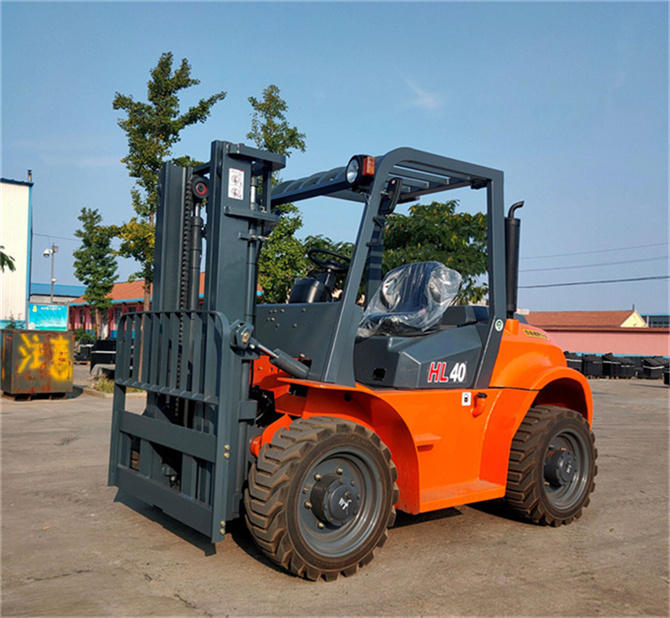
The machine must not only lift the load. It must reach it, carry it, turn with it, and place it safely.
Firm gravel, loose stone, mud, sand, grass, ruts, and slopes place different demands on tyres, drivetrain, steering, and ground clearance.
Choose 2WD or 4WD From the Worst Surface
Two-wheel drive can suit packed ground, dry yards, short routes, and sites where soft areas are unusual. It may also reduce purchase and maintenance cost.
Four-wheel drive is better for wet fields, soft soil, loose gravel, repeated slope work, muddy entrances, and routes where wheel slip regularly slows work.
Base the choice on the worst surface used during normal operations, not the cleanest part of the yard. Four-wheel drive improves traction; it does not increase rated lifting capacity.
Check Space, Clearance, and Ground Pressure
Higher-capacity forklifts are generally larger and heavier. That affects turning space, gate access, ramps, compacted floors, and soft ground.
Before moving to a higher capacity class, measure:
- The narrowest gate and travel lane
- The smallest turning area
- The lowest overhead obstacle
- The steepest regular slope
- The softest wet-season surface
- Trailer or road transport limits
A 5 ton rough terrain forklift may provide useful reserve capacity, but it may not suit a tight farmyard or narrow construction route. Access can be as important as lifting power.
Use a Five-Step Selection Process
A clear process gives the supplier enough information to recommend the correct configuration.
- List common loads and mark the heaviest normal item.
- Record dimensions, pallet depth, and required fork length.
- State the highest lift point and the load placed there.
- Describe the ground, slopes, wet-season changes, and route length.
- Add attachment, tyre, cab, transport, and service needs.
Photos of the load, route, turning area, and stacking point can make the recommendation more accurate. Export buyers should also state the destination country, port, climate, and expected daily operating hours.
Common Capacity Selection Mistakes
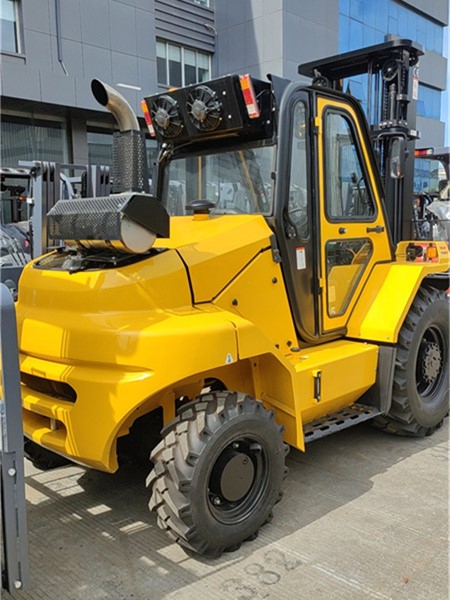
Many purchasing errors come from incomplete site information.
Common mistakes include choosing from pallet weight alone, ignoring a forward load center, quoting maximum lift height without the load, adding an attachment after specification, and comparing prices without matching the mast, tyres, forks, and drive system.
A site test should use a normal working load and the real route. It should include the tightest turn, regular slope, roughest surface, and placement at the required height. An unloaded drive on flat ground reveals little.
JinChengYu FORKLIFT como fornecedor de empilhadeiras para terrenos acidentados
The JinChengYu FORKLIFT offers material handling machines, attachments, and replacement parts in Qingdao, China. Their rough terrain forklifts include several capacities as well as two-wheel-drive and four-wheel drive models suitable for farms, construction sites, lumber yards, industrial places, and other outdoors operations.
Some of the additional products offered by the company are forklift trucks, warehouse products, attachments, and parts. Applications include agriculture handling, warehouse operation, pipe handling, paper handling, and others.
Buyers can review completed application cases and submit project details through the página de contato. Load weight, dimensions, lift height, ground photos, slope, daily hours, and attachment needs are the most useful details for an accurate proposal.
Conclusão
The best rough terrain forklift is not always the machine with the largest capacity number. Good selection links rated capacity to load center, lift height, attachments, terrain, access, and the daily work cycle.
Start with measured loads and real site conditions. Then compare the complete working configuration, including the drive system, tyres, mast, forks, attachments, and service requirements.
This approach produces a forklift that handles routine work with a useful margin while avoiding unnecessary size, fuel use, transport cost, and tyre wear.
Perguntas frequentes
Is a 3.5 Ton Rough Terrain Forklift Enough for a 3 Ton Load?
It may be, but the answer depends on load center, lift height, fork length, attachments, and ground conditions. A compact three-tonne pallet carried low is different from a long crate placed at height. Check the capacity chart against the actual task.
Should Capacity Match the Heaviest Load Exactly?
No. Operating at the exact limit leaves little allowance for long loads, wet materials, uneven weight distribution, attachments, or future changes. Select from the heaviest normal duty and keep a practical working margin.
Does 4WD Increase Lifting Capacity?
No. Four-wheel drive improves traction on mud, loose gravel, soft soil, and slopes. Lifting capacity still depends on the rated configuration, mast, load center, lift height, and attachments.
What Information Is Needed for an Accurate Quote?
Provide normal and maximum load weights, dimensions, lift height, surface type, slope, route length, daily operating hours, tyre preference, attachments, destination country, and local working conditions.