A low purchase quote can become an expensive forklift once fuel, charging, tires, repairs, idle time, and resale value enter the picture. Forklift total cost of ownership, or forklift TCO, puts those costs into one figure. It gives buyers a fair way to compare machines that may work very differently over five or seven years.
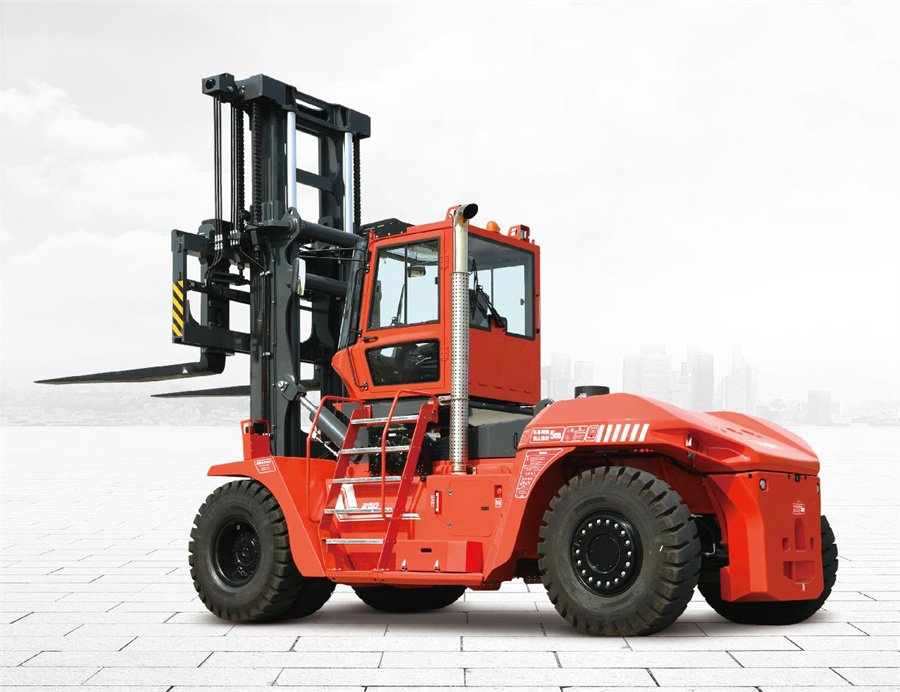
What Is Forklift Total Cost of Ownership?
The total cost of ownership of a forklift is the entire cost of purchasing, operating, maintaining, and eventually selling off or scrapping a forklift. A useful formula to apply would include the cost of purchasing, financing, fuel, maintenance, repairs, tires, batteries or engines, operator training, and salvage.
The basic equation is:
Forklift TCO = acquisition + finance + energy + maintenance + repairs + tires + downtime + compliance costs – residual value
That line looks simple. Gathering honest inputs is the harder part. A warehouse that works one light shift has a different cost pattern from a building-material yard loading trucks for ten hours in dust, rain, and broken concrete.
Why the Purchase Price Gives an Incomplete Answer
In any case, two forklifts could come into possession in quite an obvious price difference and change their position within just a few years. In any case, the cheaper one could consume more fuel, require rarer parts, and spend more time in service. At the same time, the more expensive one could have a higher residual value or simply do the job without damaging tires and transmission.
Consider a warehouse receiving six containers each week. If its only forklift stops for two days, repair labor is only one cost. The receiving crew may wait, rented equipment may be needed, and scheduled trucks may have to return later. Those operating losses belong in the forklift TCO calculation even though they never appear on a service invoice.
Buyers comparing equipment can review the available forklift and material-handling products after defining the work cycle, rather than choosing capacity from a price list alone.
The Eight Cost Lines That Belong in a Forklift TCO Calculation
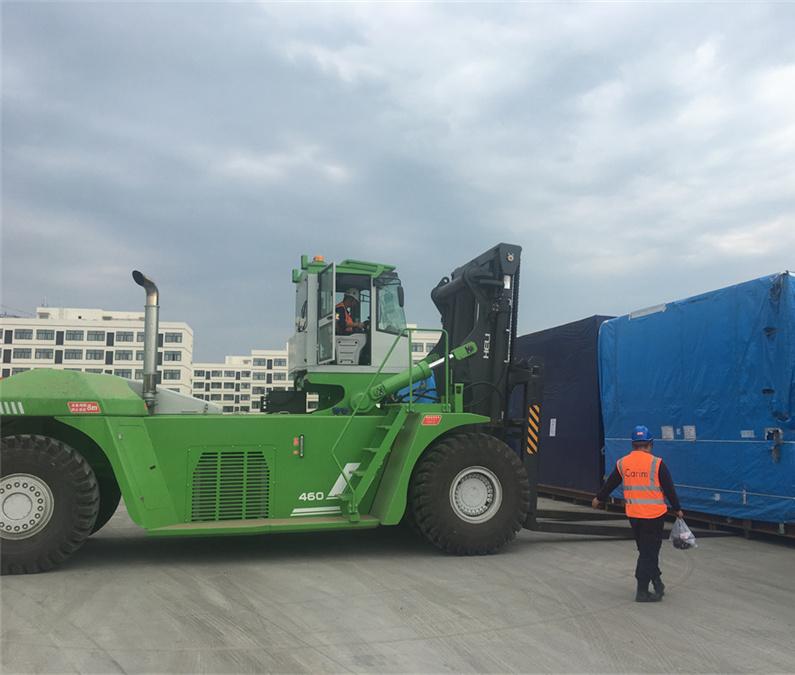
With the purchase and delivery costs established, the next step is to account for the energy and infrastructure requirements that shape the forklift’s ongoing operating cost.
Acquisition and Delivery
Start with the invoice price, inland freight, ocean freight when applicable, insurance, import charges, commissioning, and any site preparation. Add the battery and charger for an electric truck if they are quoted separately. Fork extensions, clamps, cabins, lights, and other fitted items also belong here.
Financing changes the number. Record interest, bank fees, and the timing of payments. A cash purchase and a financed purchase with the same invoice price do not have the same forklift cost.
Energy or Fuel
Use the facility’s own rates and measured working hours. Avoid a yearly guess based on a perfect eight-hour shift. Key inputs include:
- Litres of diesel or LPG used per operating hour
- Kilowatt-hours drawn from the meter, including charger losses
- Battery change or charging labor during a shift
- Local fuel delivery and cylinder handling fees
- Seasonal changes, such as cold-store battery losses or winter warm-up time
For a quick example, a truck using 3 litres per hour over 1,500 annual hours consumes 4,500 litres a year. Multiply that figure by the contracted fuel price, not a national average. For an electric truck, meter a full charging cycle over several normal workdays and divide the result by actual truck hours.
Planned Maintenance
Scheduled service includes inspections, oils, filters, grease, fluids, brake adjustment, mast checks, chains, hoses, and labor. Ask for the service interval in hours. A cheap service visit every 250 hours can cost more each year than a larger visit every 500 hours.
Keep planned maintenance separate from repairs. That makes it easier to see whether good service is reducing breakdowns or merely adding another bill.
Repairs and Wear Parts
Forks, tires, hydraulic hoses, seals, brakes, bearings, contactors, and cooling-system parts wear at different rates. Floor condition often matters more than buyers expect. A truck crossing dock plates and damaged concrete all day can consume tires far faster than the same truck working on smooth indoor floors.
Build the repair budget from service records when replacing an existing truck. For a first purchase, ask the supplier for maintenance intervals, local parts availability, common wear items, and typical lead times.
Battery and Charging Infrastructure
Electric forklift costs may include a battery room, electrical work, charger installation, ventilation for some battery types, cables, connectors, and protective equipment. Multi-shift work can also require battery changes or planned charging breaks.
Do not spread every infrastructure cost across one truck if several machines will share it. Divide the cost by the expected number of users and the useful life of the installation.
Operator and Training Costs
Operator wages normally exist regardless of the truck selected, so they are often left out of a comparison. Include only the labor difference caused by the equipment: battery watering, cylinder changes, daily checks, extra travel, slow lift speed, or time spent adjusting forks by hand.
Training, site authorization, refresher training after unsafe operation, and attachment-specific instruction can be recorded as separate compliance costs.
Downtime and Lost Output
Downtime is the cost most likely to be ignored. Start with the hours when the truck should have worked but could not. Then attach a site-specific hourly value.
That value may include:
- Idle warehouse or production labor
- Forklift rental and emergency delivery
- Truck waiting charges or missed loading slots
- Overtime used to clear the backlog
- Lost production where the forklift feeds a line
Use a conservative figure. The purpose is a fair comparison, not an inflated business case.
Residual Value and Disposal
Subtract the expected resale or trade-in value at the end of the study period. Age, hours, maintenance records, battery condition, tire condition, market demand, and parts support all affect the result. If disposal will cost money, enter a negative residual value.
A Practical Five-Year Forklift Cost Example
The following numbers are an example, not a market quotation. They show how to structure the calculation for one truck working 1,500 hours a year.
| Cost item | Five-year amount | How to estimate it |
| Purchase, delivery and setup | $32,000 | Supplier quote plus site costs |
| Finance | $3,200 | Loan schedule or cost of capital |
| Energy | $18,750 | Measured hourly use x 7,500 hours |
| Planned service | $6,000 | Service interval x quoted visit cost |
| Repairs and tires | $8,500 | Records or a staged age-based allowance |
| Downtime | $7,500 | Lost hours x site-specific hourly cost |
| Training and compliance | $1,250 | Initial and refresher costs |
| Residual value | -$7,000 | Conservative resale estimate |
| Five-year TCO | $70,200 | Total of all lines |
The truck costs $9.36 per operating hour: $70,200 divided by 7,500 hours. That figure can be compared with another proposal using the same hours, energy rates, downtime method, and ownership period.
How to Compare Diesel, LPG, and Electric Forklift Costs Fairly
One worksheet should be used for each option along with one duty cycle per option. The electric forklifts will be able to handle indoor operations along with scheduled charging; on the other hand, combustion-powered machines may be appropriate for outdoor use and non-electrical environments.
Compare these operating facts:
| سؤال | Why it changes forklift TCO |
| How many productive hours run each day? | Affects energy use, service hours, and charging windows |
| Is the truck indoors, outdoors, or mixed? | Changes tire, corrosion, ventilation, and weather needs |
| Can charging happen during breaks? | May remove the need for battery changes or spare trucks |
| How costly is one hour of downtime? | Makes service support and parts lead time financially visible |
| Will an attachment remain fitted? | Adds purchase, maintenance, and possible capacity costs |
A fuel-cost comparison alone misses the larger decision. Charging infrastructure can make a lightly used electric truck expensive at first. High annual hours can spread that investment across more productive work. On the other side, frequent short trips, idling, and indoor ventilation rules can change the economics of a combustion truck.
Common Forklift TCO Mistakes
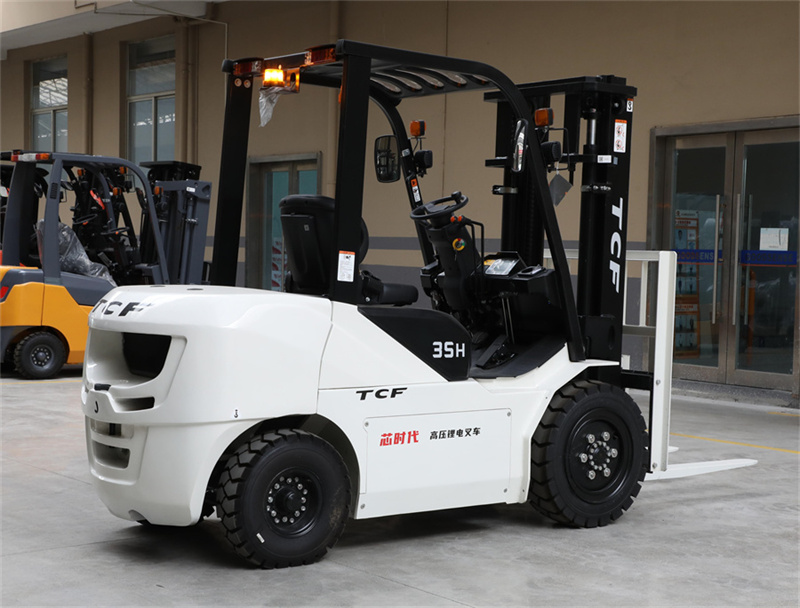
Before building a forklift TCO comparison, it is important to avoid a few common mistakes that can make the final number misleading.
Comparing Different Workloads
One quotation may assume 1,000 hours a year while another assumes 2,000. Put both on the same base. The same rule applies to energy price, loan term, tire life, and resale year.
Treating Downtime as Zero
Even reliable equipment needs service. Record planned downtime and allow a modest repair figure. A site with no spare truck should assign a higher cost to lost hours than a fleet where another unit can cover the task.
Using Rated Capacity as the Only Specification
Capacity, load centre, lift height, aisle width, floor condition, gradients, and attachments shape daily output. An underspecified truck may work slowly or suffer excess wear. An oversized truck carries extra capital and energy cost.
Accepting Unchecked Claims
Ask for written service intervals, warranty scope, excluded parts, charger requirements, and spare-parts lead times. Keep assumptions in the TCO sheet. When a number cannot be confirmed, use a cautious range rather than a precise-looking guess.
A Better Supplier Enquiry Starts With Operating Data
Send suppliers a short duty profile before asking for a final quote. Include the heaviest regular load, load dimensions, lift height, floor and yard conditions, aisle width, annual hours, shifts, local voltage, attachment needs, and delivery location.
JinChengYu FORKLIFT is based in Qingdao, China, and supports overseas customers in material handling, warehouse equipment, ground support equipment, and spare parts. Its stated services cover sales, after-sales support, rental, mixed orders, and pre-shipment inspection. Buyers can read the company background and service scope and send a duty profile through the JinChengYu contact page for a configuration and quotation discussion.
خاتمة
رافعة شوكية TCO turns a buying decision into an operating decision. Use the same working hours and assumptions for every option. Count energy, service, repairs, tires, downtime, training, infrastructure, and resale value. Then divide the final total by expected operating hours. The result exposes costs that a purchase quote cannot show and gives the supplier better information for matching equipment to the job.
الأسئلة الشائعة
What is included in forklift total cost of ownership?
Forklift total cost of ownership includes acquisition, finance, fuel or electricity, maintenance, repairs, tires, battery or charging costs, training, downtime, and end-of-life value. Site-specific costs such as import delivery or charging-room work may also apply.
How do you calculate forklift cost per hour?
Add every ownership and operating cost over the chosen period, subtract residual value, and divide by expected operating hours. Use productive hours rather than calendar hours so proposals can be compared on the same basis.
Is an electric forklift always cheaper to own?
No. Electric forklift TCO depends on annual hours, electricity rates, charging windows, battery life, infrastructure, and the work environment. A lightly used truck at a site needing major electrical work may not recover the higher setup cost quickly.
How should forklift downtime cost be estimated?
Multiply unavailable working hours by a conservative hourly loss. Include paid idle labor, rental equipment, waiting trucks, overtime, or lost production only when those costs are tied to the stoppage.
How often should forklift TCO be reviewed?
Review the calculation at least once a year and whenever fuel prices, electricity rates, shift patterns, maintenance costs, or utilization change. Replace assumptions with actual service and meter data as records build up.