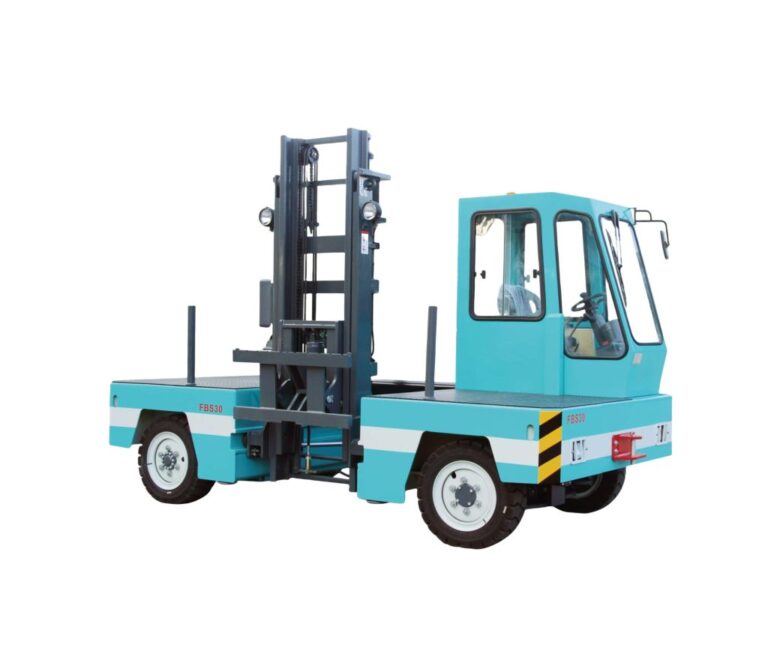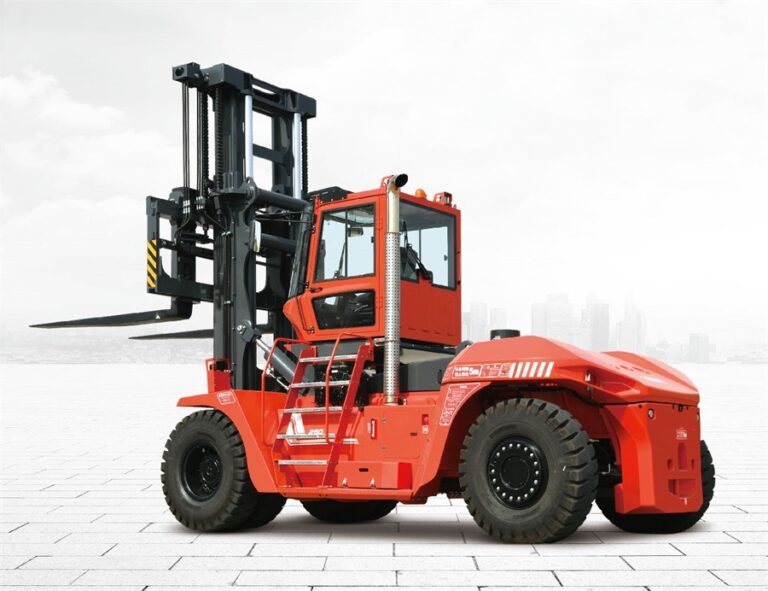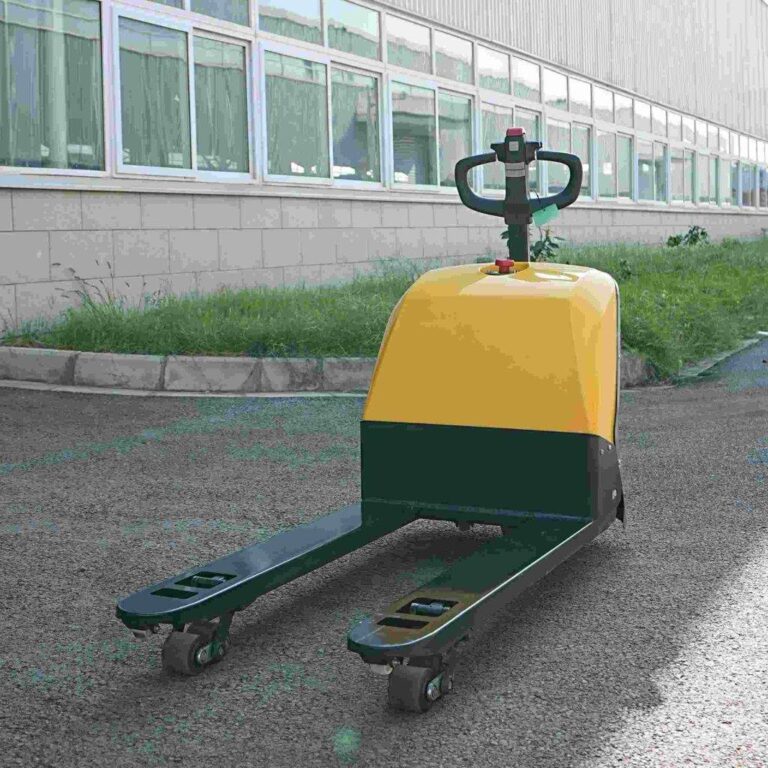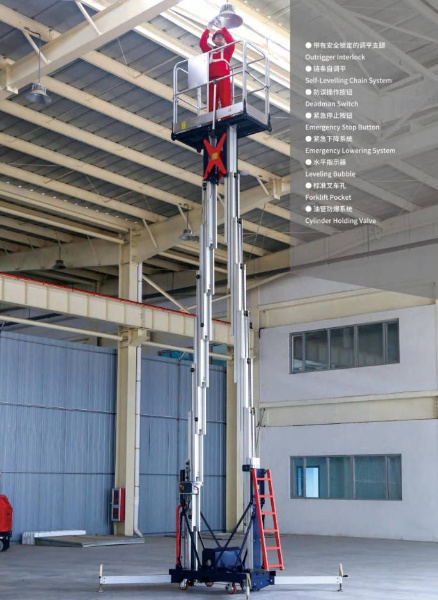
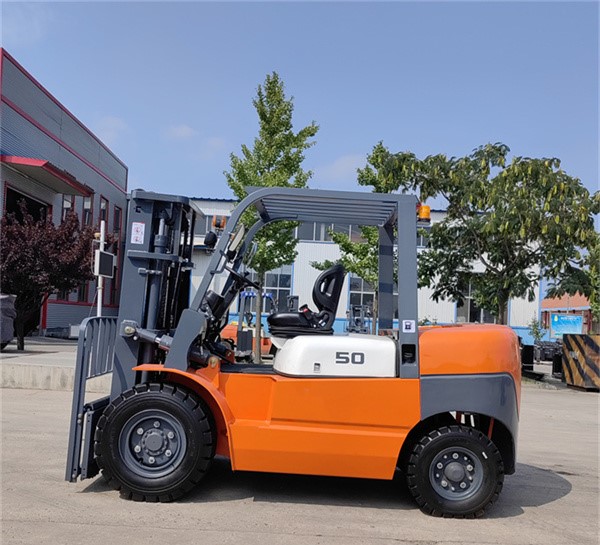
A forklift’s rated capacity applies only under the conditions listed on its data plate. Move the load’s centre of gravity farther forward, raise it higher, or fit an attachment, and the available capacity can fall. Forklift load center is the distance that connects all of those decisions.
What Is a Forklift Load Center?
رافعة شوكية load center is the horizontal distance from the vertical face of the forks or attachment to the load’s centre of gravity. For a uniform load sitting against the fork face, the load center is usually half the load depth measured along the forks.
A pallet that is 1,200 mm deep has a nominal 600 mm load center when the weight is spread evenly and the pallet sits fully back. If the same pallet stops 150 mm short of the fork face, the effective distance becomes about 750 mm. That extra distance increases the forward turning force on the truck.
The data plate remains the final authority. A hand calculation is useful for screening loads, but it cannot replace the rated capacity supplied for the exact mast, lift height, tires, forks, and attachments.
Why Load Center Changes Forklift Capacity
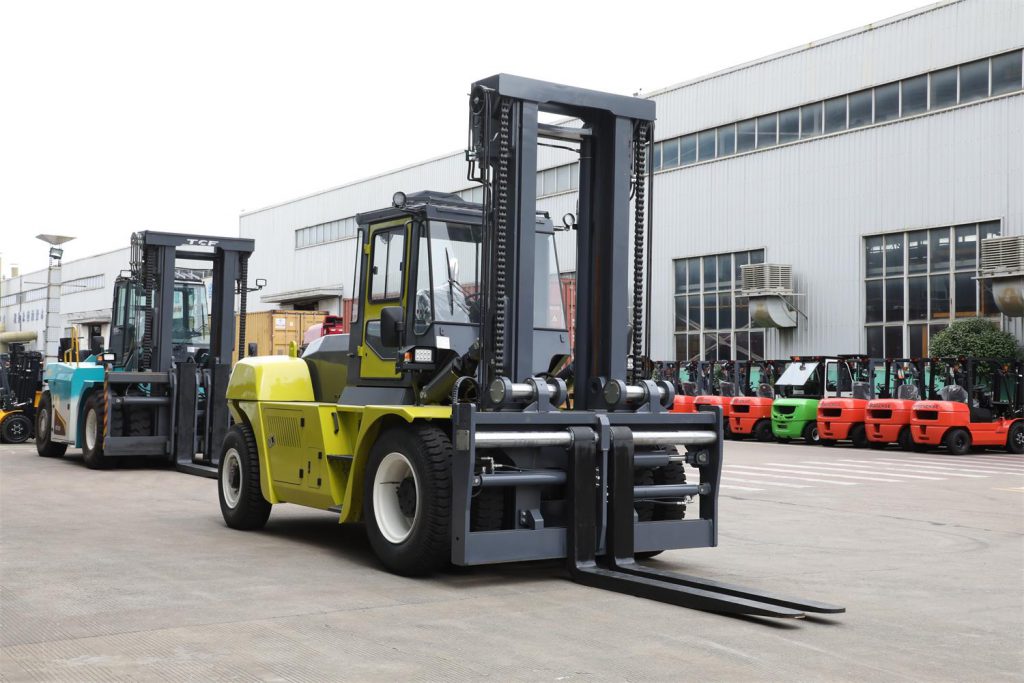
رافعة شوكية balances weight around its front axle. The load creates a forward moment: load weight multiplied by its horizontal distance from the tipping line. Moving the same weight farther away increases that moment, even though the scale reading has not changed.
For example, a 2,000 kg uniform load centred 500 mm from the fork face creates a nominal load moment of 1,000,000 kg-mm. Move that centre to 750 mm and the moment rises to 1,500,000 kg-mm, a 50 percent increase.
This explains a common yard problem. A long crate may weigh less than the forklift’s headline capacity but still exceed the permitted moment because much of the weight sits near the fork tips.
Buyers can compare different forklift and material-handling categories after recording load depth, weight, height, and attachment needs.
How to Measure the Actual Load Center
Understanding the actual load center is essential for accurate capacity assessment. The following steps explain how to measure it correctly, starting from the true reference point of the forklift.
Start With the Fork Face
Measure from the vertical fork face, or from the working face of a fitted attachment, to the load’s centre of gravity. Do not measure from the fork tips. Fork length alone does not define the load center.
Find the Centre of Gravity
For a uniform rectangular load, half the front-to-back depth is a reasonable first estimate. Real loads are often uneven. A machine packed in a crate may have its motor at one end. A coil can sit off-centre on a cradle. Liquid in a partly filled container can shift during travel.
Look for:
- Supplier drawings that mark the centre of gravity
- Shipping documents with component weights
- Heavy components sitting toward the fork tips
- Gaps between the load and fork face
- Loose material or liquid that can move
When the centre of gravity cannot be established with confidence, stop and obtain load information or an engineered lifting plan.
Include the Gap Behind the Load
Loads do not always sit against the carriage. Packaging, a clamp, fork extensions, a protruding base, or poor pallet entry can push the load forward. Add that gap to the half-depth estimate.
| Load condition | Approximate horizontal load center |
| 1,000 mm uniform load against fork face | 500 mm |
| 1,200 mm uniform load against fork face | 600 mm |
| 1,200 mm load with a 150 mm gap | 750 mm |
| 1,600 mm uniform load with a 100 mm gap | 900 mm |
These examples assume even weight distribution. If the heavy part sits forward, the true centre may be farther out.
A Simple Forklift Capacity Estimate
A common screening calculation keeps the rated load moment constant:
Estimated capacity = rated capacity x rated load center / actual load center
Suppose a data plate shows 3,000 kg at a 500 mm load center. A uniform load produces a 750 mm actual load center.
3,000 x 500 / 750 = 2,000 kg
The simplified estimate suggests that 2,000 kg is the upper screening figure at that longer distance. It does not approve the lift. Mast deflection, raised height, attachment mass, tire setup, hydraulic limits, load shape, and the truck’s rated chart can reduce capacity further.
Never use the formula to raise capacity above the data-plate rating when the load center is shorter. Never use it to fill in a missing or unreadable plate.
Lift Height Can Reduce Available Capacity
Many data plates list more than one capacity because a truck may lift less at its maximum height. Raising the load moves the combined centre of gravity upward. The stability margin becomes smaller, especially while tilting, turning, braking, or working on an imperfect floor.
Picture a rack installation with the top beam at 6 metres. The floor-level task may look comfortable, yet the same pallet at the top level can fall outside the truck’s capacity chart. The purchase specification must therefore state both load weight and required lift height.
When reviewing an electric forklift for indoor material handling, record the highest storage level, overhead clearance, aisle width, pallet depth, and maximum regular load. Those details matter more than a capacity label viewed on its own.
Attachments Change the Load Center and Net Capacity
A side shifter, carton clamp, paper roll clamp, fork positioner, or other attachment adds weight in front of the truck and may move the working face forward. Both effects reduce the weight available for the cargo.
The safe figure is the truck’s net capacity with that attachment fitted, shown on an updated data plate. Subtracting the attachment’s weight from the original capacity is not enough because the attachment also changes the load moment.
Before fitting an attachment, provide the supplier with:
- Truck data-plate information
- Attachment weight and centre of gravity
- Effective thickness from carriage to working face
- Load weight, dimensions, and centre of gravity
- Required lift height
- Hydraulic flow and function needs
If the attachment is removed or changed, check that the plate still matches the truck’s current setup.
Load Shape Matters as Much as Weight
Different load shapes create different stability challenges. The following examples show how common load types can affect load center, handling requirements, and safe forklift operation.
Long Crates and Timber Packs
A long pack can extend far beyond the fork tips. Confirm where the weight sits, whether longer forks are required, and whether travel routes allow the load to stay low and stable. A wider aisle may be needed even if the truck can carry the weight.
Paper Rolls and Coils
Round loads concentrate weight differently from a pallet. A clamp or cradle creates its own forward offset. Record roll diameter, width, weight, core position, handling orientation, and whether rotation is needed.
Machinery in Shipping Cases
The visible centre of a crate may not be the centre of gravity. Motor housings, gearboxes, pumps, and counterweights can place most of the mass near one wall. Lifting points or centre-of-gravity marks from the packer are valuable.
Liquid Containers
Liquid movement adds a dynamic effect during braking and turning. Use suitable containers and handling methods, keep travel smooth, and follow the site risk assessment. A basic static formula does not describe liquid surge.
Read the Forklift Data Plate Before Every Unusual Lift
A data plate commonly lists rated capacity, load center, lift height, truck weight, power type, and fitted attachment details. Operators should be able to find each value quickly.
Check the plate when:
- The load is longer or taller than normal
- A new attachment or fork set has been fitted
- Work moves to a higher rack level
- The load cannot sit against the fork face
- The weight distribution is uneven
- The plate is damaged, missing, or hard to read
Do not operate with a missing or unreadable plate. Obtain the correct replacement information from the manufacturer or a qualified equipment supplier.
Common Load Center Errors on Real Worksites
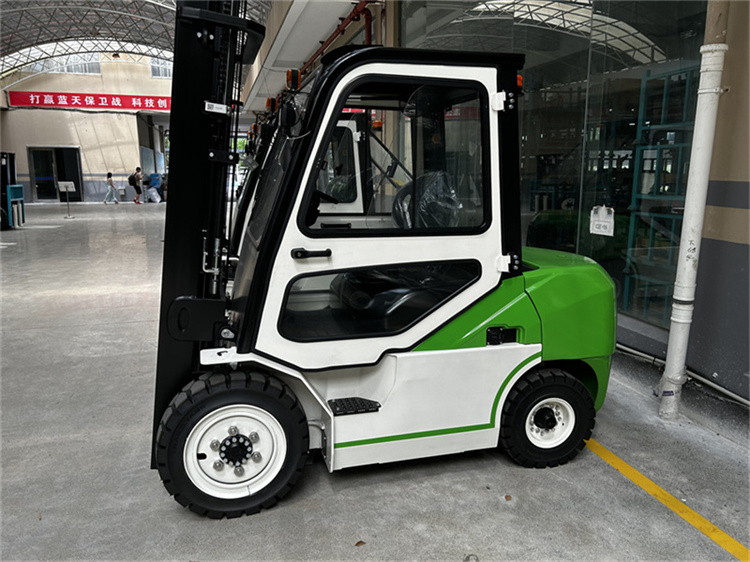
These mistakes often come from simple assumptions about loads and operating conditions. The following examples highlight common situations where incorrect load center estimates can affect forklift safety and capacity.
Assuming Every Pallet Is Uniform
A stack of identical cartons may be close to uniform. A mixed pallet with dense metal parts on the front edge is not. Check how the load was built, not only its outside size.
Adding Longer Forks Without Reviewing Capacity
Longer forks add weight and allow cargo to sit farther forward. They may solve fork coverage while creating a capacity problem. Review the full configuration and update the data plate where required.
Travelling With the Load Raised
Capacity figures do not make high travel safe. Carry the load at the site’s specified low travel height, use a suitable backward tilt where the load permits, slow before turns, and avoid sudden braking.
Using a Formula as Permission
The rated-moment formula is an early check. It cannot model every truck feature. If the estimate approaches the limit, move to the truck’s capacity chart or ask for written confirmation for the proposed setup.
Specify the Load Before Specifying the Forklift
A useful equipment enquiry starts with the cargo. Send the maximum regular weight, front-to-back depth, width, height, centre-of-gravity information, required lift height, attachment, aisle size, floor condition, gradients, and operating hours.
About رافعة شوكية جينتشنغيو
رافعة شوكية جينتشنغيو is based in Qingdao, China, and supplies material-handling equipment, warehouse equipment, ground support equipment, and spare parts for overseas customers. The company describes sales, after-sales, rental, mixed-order, and pre-shipment inspection support. Its company profile provides further background, while the contact team can review a duty profile before quotation.
خاتمة
Forklift load center turns a weight figure into a safe-capacity question. Measure from the fork or attachment face to the true centre of gravity, include any gap, and check the required lift height. Treat quick formulas as screening tools. The current data plate and the rated chart for the fitted configuration decide whether the lift is permitted.
الأسئلة الشائعة
What is the standard forklift load center?
Many counterbalance forklifts use a rated load center of 500 mm or 600 mm, often corresponding to half the depth of a common pallet. The actual value must be read from the truck’s data plate rather than assumed.
Does a longer load center reduce forklift capacity?
Yes. Moving the centre of gravity farther from the fork face increases the forward load moment. Available capacity normally falls, subject to the truck’s approved capacity chart.
How is forklift load center calculated for a uniform load?
For a uniform rectangular load placed against the fork face, divide its front-to-back depth by two. Add any gap between the load and fork face. Uneven loads require centre-of-gravity information rather than the half-depth shortcut.
Do forklift attachments reduce lifting capacity?
They commonly do. An attachment adds its own weight and often moves the load forward. Use the net capacity shown for the truck and attachment combination on an updated data plate.
Can a forklift capacity formula replace the data plate?
No. A formula can flag an obvious mismatch, but it does not account for every mast, height, attachment, tire, hydraulic, or stability limit. The approved data plate remains the controlling reference.