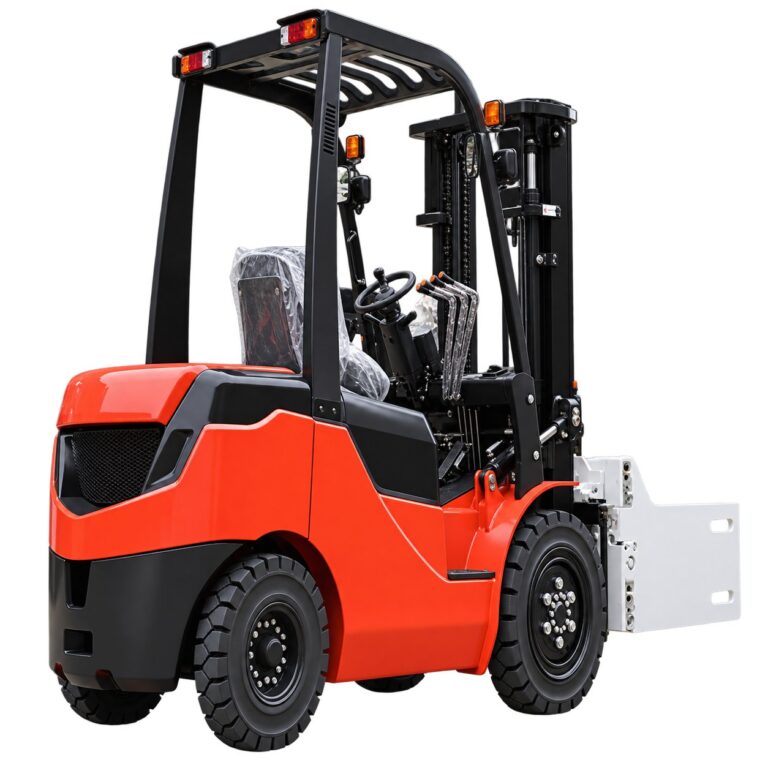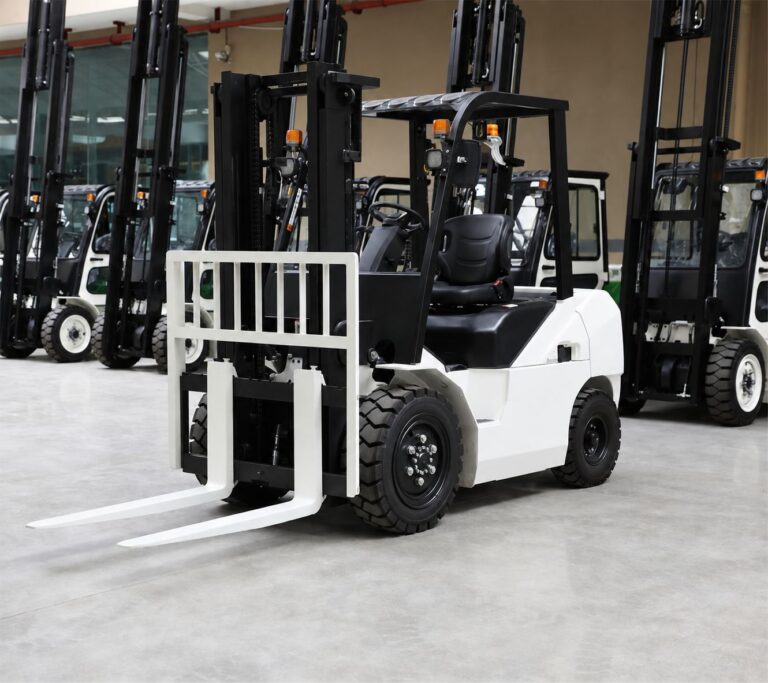
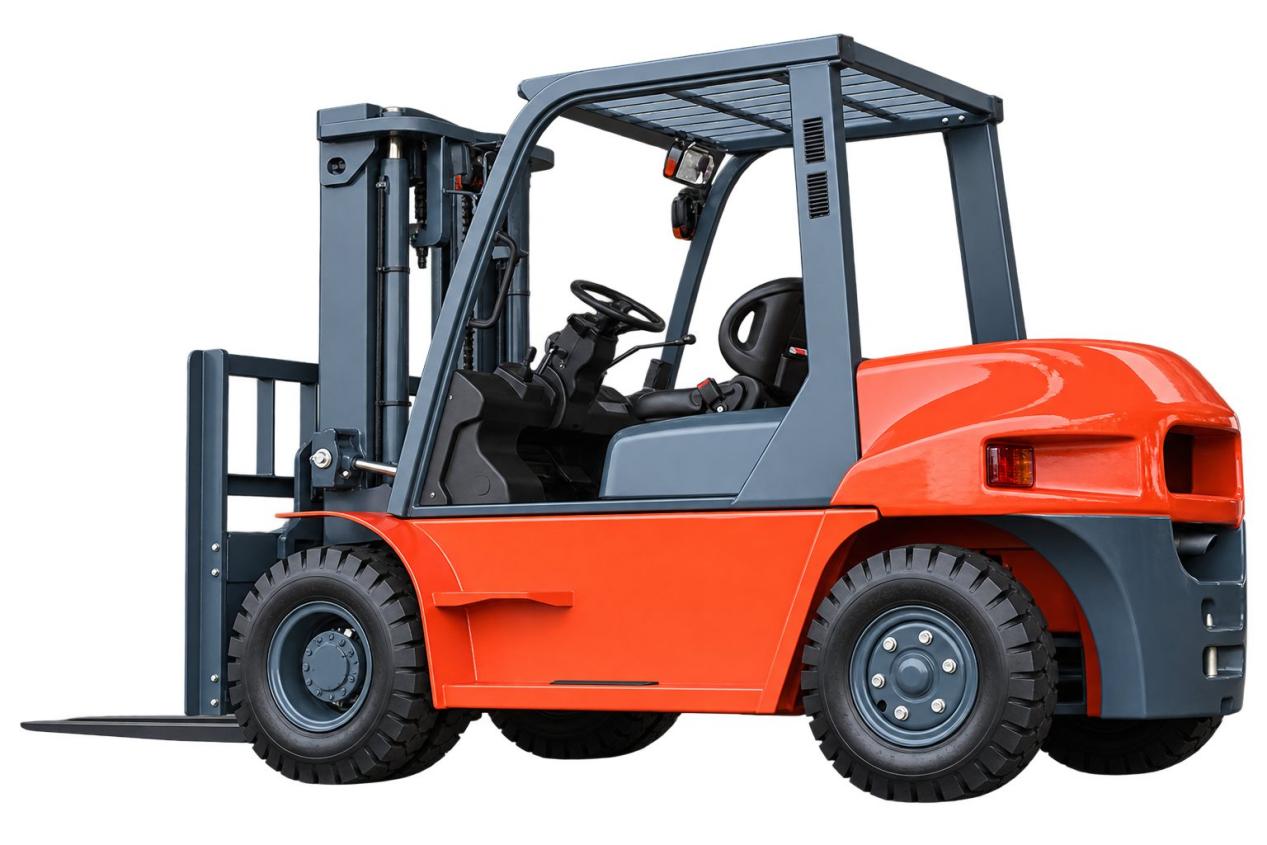
ALT:Forklift Gradeability Plan Safe Ramp Work
Forklift gradeability is the steepest stated slope a truck can climb under defined test conditions. It does not promise that the truck can carry every load up every ramp. Load weight, tire grip, surface condition, ramp length, temperature, braking, and the entrance and exit all change the real job.
Buyers should treat gradeability as a screening figure. The final decision needs the truck’s rated loaded performance and a review of the complete route. A machine selected from a single maximum percentage may climb the ramp empty but slow, spin, overheat, or lose safe control during daily loaded work.
How Forklift Gradeability Is Expressed
Ramp steepness is commonly shown as a percentage. Divide the vertical rise by the horizontal run and multiply by 100. A ramp rising 1 m over a 10 m horizontal run has a 10% grade. That equals an angle of about 5.7 degrees, not 10 degrees.
The distinction matters because drawings, site staff, and equipment specifications may use different units. Confirm whether a quoted figure means percent grade or degrees before comparing it with the forklift data.
These values describe geometry only. They do not establish that a particular forklift can use the ramp safely.
Loaded and Unloaded Gradeability Are Different
A specification may show separate loaded and unloaded figures, or it may list one maximum value under a stated condition. Read the notes. An unloaded truck can often climb a steeper grade than the same truck carrying its rated load.
The payload changes axle loading, traction demand, braking distance, and heat in the drive system. A long or tall load can also affect stability and visibility. If the route requires several climbs each hour, continuous thermal performance matters more than one successful demonstration.
Buyers considering a carretilla elevadora diésel for a yard ramp should provide the expected load, travel frequency, ramp length, and surface. Engine power alone does not settle the question; transmission response, tires, cooling, and the approved loaded grade rating matter too.
Measure the Ramp and the Whole Approach
Measure vertical rise and horizontal run rather than estimating from a photo. Record the steepest section, because a ramp can change angle near a drain or repaired patch. A long level-looking section does not cancel a short, sharp transition.
Then inspect at least 5 to 10 m before and after the slope where space permits. The truck may need to align, stop, restart, or turn near the ramp. Those actions can be harder than the climb itself.
Site information should cover:
• Ramp rise, horizontal run, length, and narrowest width
• Surface material and condition in dry and wet weather
• Bottom and top transitions, including drainage channels or raised edges
• Largest load weight, length, height, and center of gravity
• Required starts, stops, turns, or reversing movements on the route
• Number of loaded trips per hour and total shift duration
• Lowest overhead point and available clearance at slope changes
A short video taken from the bottom, side, and top can support the measurements. It should not replace them.
Surface Grip Can Change the Result
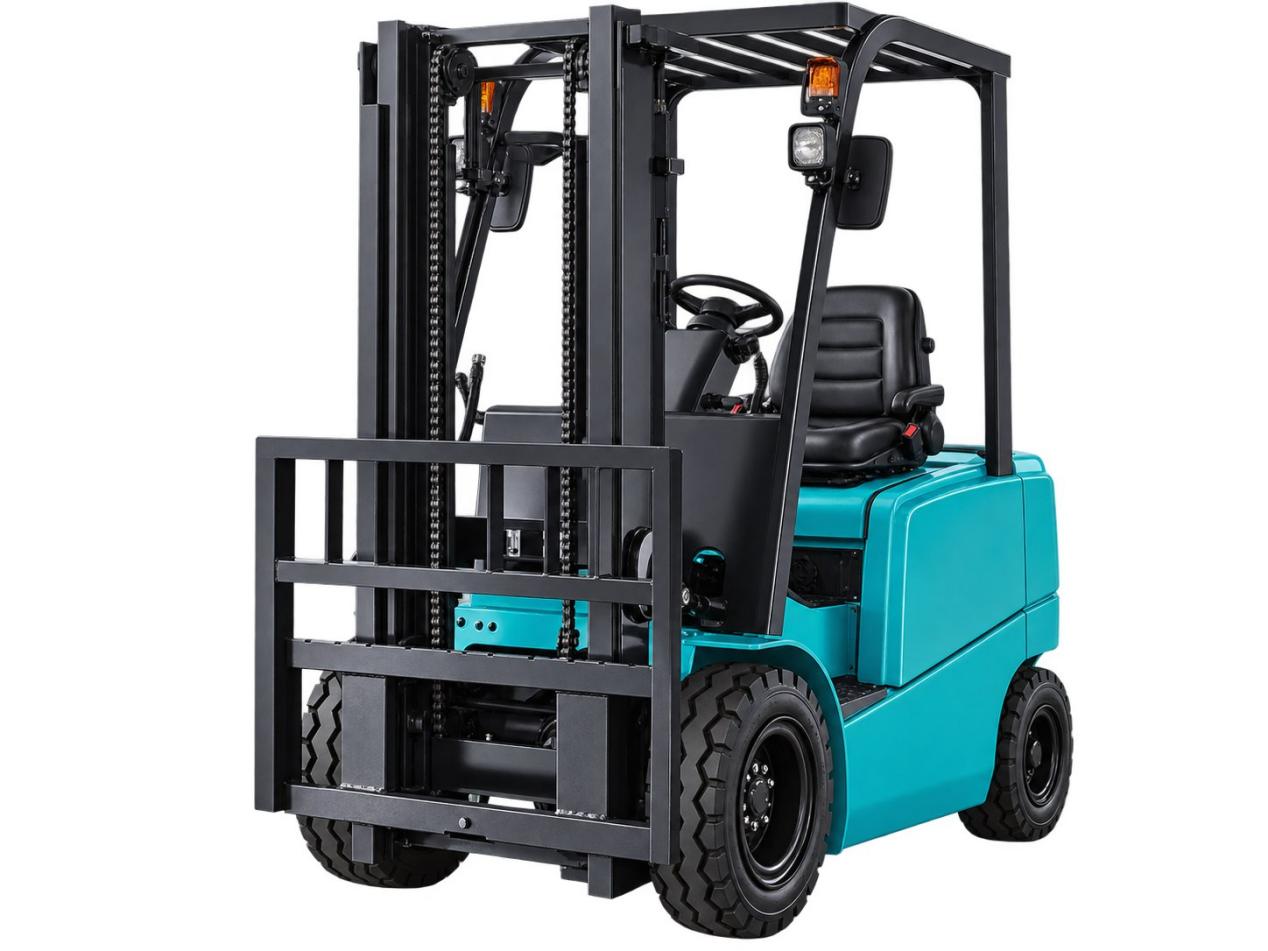
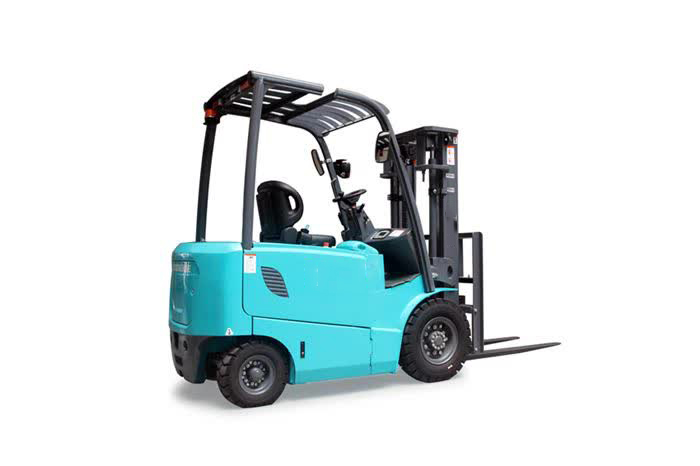
ALT:1.5-2.5T E series lithium battery eletric forklift
Dry broom-finished concrete, polished concrete, steel dock plates, compacted gravel, mud, and wet paving offer very different grip. A truck with enough power may still fail to transfer that power to the ground.
Debris and water often collect at the bottom transition. That is also where the truck begins climbing and where the drive tires may face the highest traction demand. Wheel spin damages tires and the surface, while a sudden gain in grip can disturb the load.
Tire choice must match the full route. Pneumatic tires can cushion rough outdoor ground, while solid tires resist punctures in debris-prone yards. Neither type removes the need for a stable, maintained ramp. The earlier guide to carretillas elevadoras para terrenos difíciles is relevant when the route includes loose ground, ruts, or unpaved approaches rather than a clean warehouse ramp.
Ramp Transitions and Ground Clearance
The change from level ground to a slope creates a breakover point. A low chassis, long wheelbase, low attachment, or hanging load can contact the surface even when the middle of the ramp is manageable.
Check the bottom approach angle and the top crest. A drainage channel, lip, or dock plate can reduce clearance further. Drawings may show a smooth line while the finished site has a sharp concrete edge.
The load can also strike overhead structures as the truck angle changes. A tall pallet that clears a doorway on level ground may move closer to the header when the front axle enters the ramp. Measure with the load geometry in mind.
Braking and Travel Direction Need Site Rules
Ramp work needs trained operators and a route-specific procedure. General industry practice keeps a load on the uphill side and the forks low during travel, but the exact method must follow the truck manual, local regulations, and site risk assessment.
Turning across a slope raises risk because gravity acts sideways on the combined truck and load. Plan the layout so the operator can align before entering the grade and continue straight until reaching level ground. If a turn at the top cannot be avoided, provide enough level space to complete it after the truck has cleared the slope.
Do not use the parking brake as a routine way to hold a loaded truck on a grade while work happens around it. Loading, unloading, lifting, or parking on a slope requires specific assessment and may be prohibited by site rules.
Match the Power Source to the Duty Cycle
Gradeability is not limited to one power source. Internal-combustion and electric trucks can both perform ramp work when rated and configured for it. The important comparison is the loaded duty cycle.
An electric truck may provide strong low-speed torque, but repeated climbs draw substantial battery energy and create heat. The inquiry should state trips per hour, shift length, charging windows, ambient temperature, and load. Buyers reviewing an electric forklift range should ask for loaded gradeability and runtime information for the intended configuration.
For combustion trucks, repeated low-speed climbing can also create heat in the engine, transmission, and brakes. Cooling capacity, maintenance condition, and correct gear use affect daily performance. A short empty test is not a duty-cycle test.
A Practical Ramp Review Before Purchase
Begin with a written route profile. Mark the load pickup, alignment space, ramp, crest, destination, and return path. Note where pedestrians, doors, trucks, or stored materials can interfere.
Next, compare the measured grade with the supplier’s loaded figure for the proposed truck. Leave room for wet conditions, wear, and operational variation rather than treating the published maximum as a normal target. Confirm tires, mast, attachment, and capacity as one configuration.
Where the margin is small or the cycle is demanding, arrange a controlled site demonstration. Use a representative load and an approved operator. Observe starting, steady climbing, speed control, braking, temperature warnings, tire slip, clearance, and the top transition. Stop the test if control or stability is uncertain.
Information to Send with an Inquiry
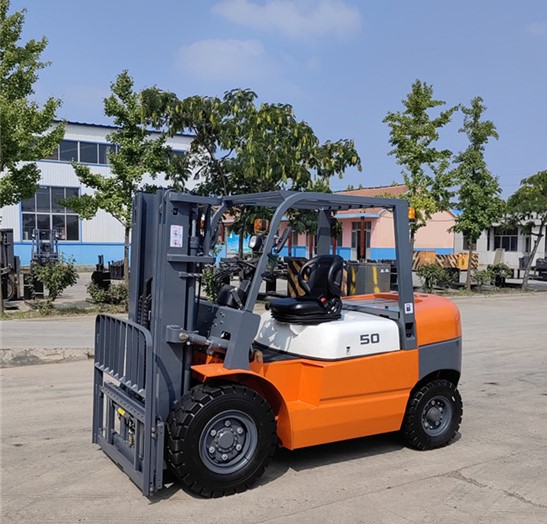
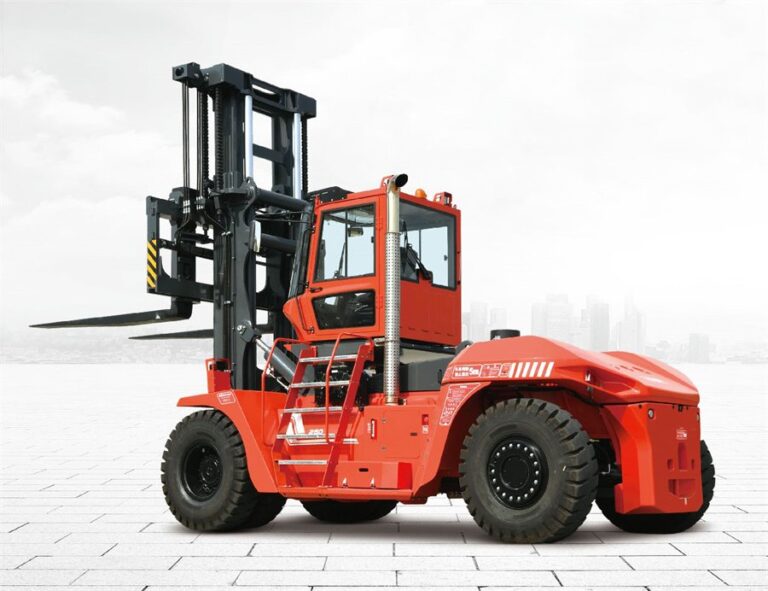
ALT:4-5T diesel forklift
Clear inquiries reduce back-and-forth and prevent a recommendation based on assumptions. Send dimensions in one unit and label every photo.
Useful information includes the ramp grade or rise and run, ramp length and width, surface, wet-weather condition, load weight and shape, load center, trips per hour, shift hours, travel distance, turning areas, and required lift height. Include any attachment because its weight and effective thickness can reduce usable capacity.
The wider material-handling range provides different truck categories, but the selection should be based on this site data rather than category names alone.
Acerca de la carretilla elevadora JinChengYu
JinChengYu FORKLIFT is a Qingdao-based supplier serving overseas material-handling buyers. The company’s website includes counterbalance forklifts, rough-terrain trucks, warehouse equipment, attachments, parts, and related logistics machinery. This breadth is useful when a ramp is only one part of a mixed route involving a yard, doorway, loading area, and warehouse.
An objective equipment discussion should begin with verified load and route information. Buyers can send ramp measurements, photos, videos, working frequency, and environmental details through the company’s página de contacto. The final decision should refer to the approved specification, capacity plate, manual, and local operating requirements for the delivered machine.
Conclusión
Forklift gradeability is a conditional rating, not a guarantee for every ramp. Calculate the grade correctly, distinguish percent from degrees, compare loaded performance, and inspect surface grip, transitions, clearance, braking, and duty cycle.
A strong purchasing inquiry describes the full route and the real load. When the available margin is small, a controlled loaded trial provides better evidence than an empty climb or a brochure maximum.
Preguntas frecuentes
The answers below address the measurements and comparisons that often appear during ramp planning.
What does forklift gradeability mean?
Forklift gradeability is the steepest stated slope a truck can climb under defined conditions. Buyers must check whether the figure is loaded or unloaded and confirm the exact truck configuration.
How is forklift ramp grade calculated?
Divide vertical rise by horizontal run and multiply by 100. A 1 m rise over a 10 m horizontal run is a 10% grade, which is approximately 5.7 degrees.
Can a forklift carry its full rated load up its maximum slope?
Do not assume so. Maximum gradeability may refer to an unloaded truck or specific test conditions. Ask for loaded gradeability and capacity data for the planned mast, tires, attachment, and operating cycle.
Which forklift tires are best for ramps?
The answer depends on surface, debris, moisture, distance, and load. Tire construction and tread must suit the entire route. Grip should be assessed in the worst normal weather condition, not only on dry concrete.
What information should be sent for a ramp application?
Send the grade or rise and run, ramp length and width, surface condition, transitions, load details, trips per hour, shift length, turning space, clearance, and attachment requirements.