Airports are moving fast toward electric ground support equipment. Electric baggage tractors, belt loaders, and pushback tugs are now common on active aprons. But one operational gap remains difficult to solve: remote stands without fixed charging infrastructure.
These areas are often far from terminal buildings or central power grids. Installing permanent chargers at every stand is expensive, slow, and in many cases impractical due to layout changes and seasonal traffic shifts. As a result, charging becomes a bottleneck rather than an enabler.
Mobile charging units designed for airport ground operations provide a practical alternative. Instead of bringing vehicles to a charging point, power is brought directly to the equipment.
Why Remote Stands Create a Charging Problem
Remote stands are typically used for overflow traffic, regional flights, or during peak hours when main gates are fully occupied. These positions are flexible by design, which also makes infrastructure planning difficult.
Several operational constraints usually appear:
- Limited or no fixed electrical installation
- High cost of underground cabling across apron areas
- Frequent reconfiguration of gate assignments
- Safety restrictions on permanent high-voltage equipment near active taxi lanes
In practice, ground handling teams often rely on a centralized charging area. That creates extra driving time for equipment such as baggage tractors or belt loaders. A single charging trip can add 10 to 25 minutes of non-productive movement per cycle, depending on airport size.
Over a full operational day, this reduces fleet availability and increases the number of standby vehicles required.
What Mobile Airport Charging Units Do Differently
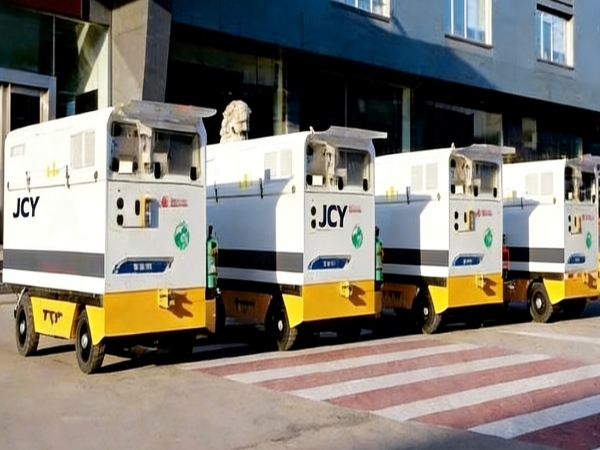
Mobile charging systems are built to operate directly on the apron. Instead of fixed installation, they are designed to be moved where electricity is needed most.
Typical features include:
- Towable chassis for apron movement
- High-capacity lithium battery storage
- DC output compatible with common eGSE systems
- Multi-gun charging capability for simultaneous equipment support
- Built-in battery management and safety controls
A common configuration in airport deployments includes energy storage around 200kWh class capacity, which is sufficient for multiple charging cycles of medium-duty ground vehicles during a shift.
These systems function as distributed energy nodes, which makes them especially useful in flexible stand environments.
Five Real Operational Use Cases at Airports
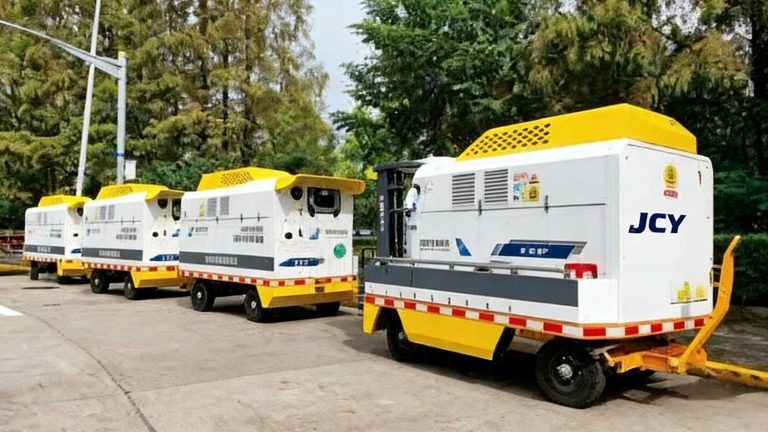
Mobile charging is not a theoretical solution. It is already being used in different apron scenarios where fixed infrastructure cannot keep up with operational demand.
Use Case 1 – Turnaround Support at Remote Parking Positions
At remote stands, aircraft turnaround operations depend heavily on baggage tractors and belt loaders. These units often operate continuously between aircraft and baggage sorting areas.
When charging is centralized, vehicles must leave the stand during peak turnaround windows. That leads to delays in baggage handling.
With mobile charging placed near the stand, equipment can be charged between two flights without leaving the operational zone. A typical scenario involves 30–45 minute ground windows where partial charging is enough to keep the next cycle running.
Use Case 2 – Emergency Power for Discharged Equipment
Battery depletion on the apron is not rare. Long shifts, unexpected delays, or cold weather conditions can reduce available runtime for electric tractors.
In these cases, towing equipment back to a fixed charger is inefficient and sometimes disrupts active stand operations.
Mobile charging units can be deployed directly to the stranded vehicle. This reduces downtime and avoids moving additional towing resources across the apron. In busy hubs, even a 15-minute recovery gain can affect multiple flight schedules.
Use Case 3 – Peak Season Overflow Operations
During peak travel seasons, airports often operate beyond normal gate capacity. Temporary stands or overflow parking areas are activated to handle increased traffic.
These areas rarely have permanent electrical infrastructure.
Instead of investing in fixed charging stations that may remain underused for most of the year, mobile chargers can be deployed only during peak periods. After demand drops, units can be relocated to other terminals or storage areas.
This flexible deployment model helps balance infrastructure cost with seasonal demand.
Use Case 4 – Construction and Gate Renovation Zones
Airports frequently undergo expansion or maintenance work. During these periods, entire gate areas may be temporarily closed or relocated.
Ground equipment still needs to operate in adjacent zones, often in temporary layouts.
Mobile charging ensures continuity without waiting for permanent electrical installation. It can be positioned near temporary gates or relocated daily depending on construction progress. This avoids operational interruptions during infrastructure upgrades.
Use Case 5 – Transition from Diesel to Electric Fleet
Many airports operate mixed fleets where diesel and electric equipment coexist. Transition periods can last several years depending on budget cycles and procurement schedules.
During this phase, charging demand is unpredictable. Some stands require high-frequency charging, while others remain unchanged.
Mobile charging units provide flexibility by adapting to fleet composition. As more equipment becomes electric, charging points can be redistributed instead of rebuilt.
Operational Advantages Compared with Fixed Charging Stations
Fixed charging infrastructure is stable but limited in flexibility. Mobile systems reverse that trade-off.
Key operational differences include:
- No civil construction required
- Deployment within hours instead of months
- Coverage across multiple stands with a single unit
- Reduced dependency on apron redesign
- Better utilization of charging assets
In large airports, apron layouts change frequently due to airline scheduling, gate allocation, and maintenance cycles. Fixed systems struggle to adapt to these changes without additional investment.
Technical Characteristics of Modern Mobile Charging Systems
Airport-grade mobile charging units are designed for harsh outdoor conditions and continuous duty cycles.
Common technical characteristics include:
- High-capacity lithium iron phosphate battery systems for stability and cycle life
- DC fast charging output suitable for ground support vehicles
- Dual output channels for simultaneous charging operations
- Thermal management systems for high-temperature apron environments
- Towable structure compatible with airport service vehicles
Charging power is typically designed to support multiple mid-size eGSE units within a single operational window, depending on remaining battery levels and shift planning.
Safety systems include insulation monitoring, overcurrent protection, and real-time diagnostics to ensure stable operation in mixed traffic environments.
Planning Mobile Charging Deployment in Airport Operations
Img.Mobile charging units.webp
Effective deployment depends on operational mapping rather than simple equipment placement.
Key planning steps include:
- Identifying high-traffic stands with frequent turnaround cycles
- Mapping eGSE fleet types and energy consumption patterns
- Aligning charging cycles with aircraft schedules
- Positioning units near bottleneck zones instead of static locations
- Rotating deployment during seasonal demand shifts
In many cases, one mobile charging unit can support multiple stands depending on apron layout and driving distance.
Cost and Efficiency Considerations
From an investment perspective, mobile charging reduces upfront infrastructure requirements.
Typical efficiency improvements include:
- Lower civil engineering cost compared to fixed installations
- Reduced idle time for ground support equipment
- Fewer backup vehicles required in peak hours
- Higher utilization rate of electric fleets
- Faster electrification rollout without redesigning airport grids
Instead of expanding electrical infrastructure across the entire apron, capacity can be added incrementally through mobile units.
Supplier Overview in Airport Ground Power Solutions
Chariot élévateur JinChengYu operates in the field of airport ground support equipment and industrial vehicle systems, with a focus on electric mobility and charging solutions for apron operations. The company develops equipment designed for harsh outdoor environments, including mobile power systems intended to support electric ground fleets in airports, logistics hubs, and industrial yards.
Its product range covers forklifts, airport handling equipment, and mobile charging systems designed to support electric ground operations where fixed infrastructure is limited or unavailable. Manufacturing capability includes battery integration, structural design for towable units, and adaptation for different international airport standards.
The approach focuses on practical deployment in real airport conditions, where flexibility, safety, and continuous operation are required across different ground handling scenarios.
Conclusion
Remote stands remain one of the most challenging areas for electrified airport operations. Fixed infrastructure cannot always match the flexibility required by changing gate assignments, seasonal traffic, and construction cycles.
Mobile charging units provide a practical approach by bringing energy directly to where ground support equipment operates. Instead of reshaping airport infrastructure, the charging system adapts to existing operational layouts.
As airports continue to electrify their fleets, flexible charging strategies will play a central role in maintaining efficiency across both fixed and remote operational zones.
Foire aux questions
What types of airport equipment can be charged with mobile systems?
Electric baggage tractors, belt loaders, container movers, and pushback tugs are commonly supported depending on voltage and connector configuration.
Can mobile charging replace fixed charging infrastructure completely?
In large hubs, it usually complements fixed systems rather than replacing them. It is most effective in remote stands and flexible operational zones.
How long does a mobile charging unit stay operational?
Runtime depends on battery capacity, charging load, and usage frequency. Units are typically designed for full-shift apron operation with scheduled recharging cycles.
Is mobile charging safe for apron environments?
Yes, systems are built with insulation monitoring, temperature control, and protective shutdown features to ensure safe operation near active aircraft and vehicles.