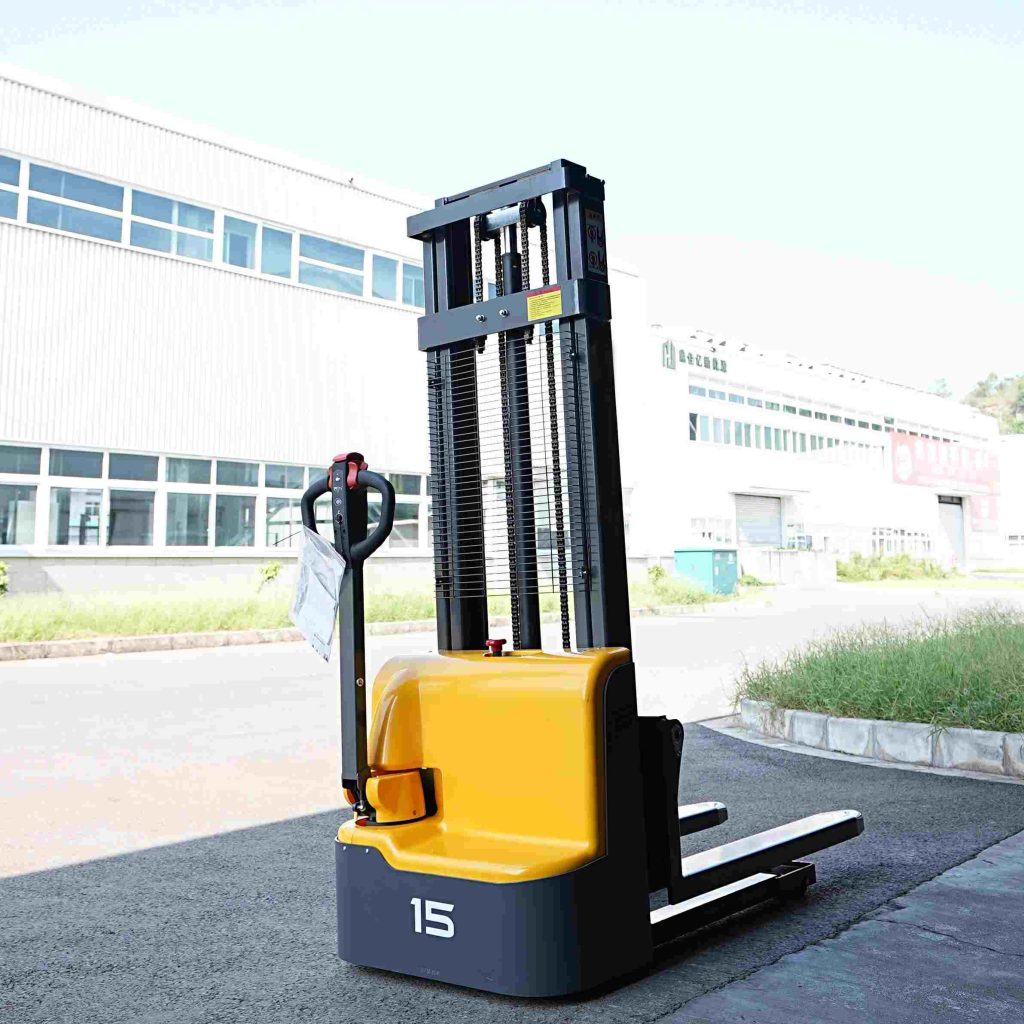
A stacker seems like a very basic device to lift and transport pallets, transport goods and place loads on shelves. But in practical work at warehouses, the correct stacker can speed up the entire day’s work of the warehouse. This machine can save the time spent handling pallets, decrease tiredness of the operator, make aisle access easier and increase storage capacity of the warehouse.
The wrong choice does the opposite. A stacker with too little load capacity may struggle with common pallets. A machine with too much size may waste turning space. A battery that cannot cover the shift may stop work at the busiest hour. That is why choosing a stacker should start with the real working site, not with a price list.
What Does a Stacker Actually Do?
A stacker is a warehouse material handling equipment that lifts and stacks loads in a warehouse. A stacker can be positioned somewhere between a pallet truck and a forklift. A pallet truck can only transport loaded pallets on the floor level. A forklift can do heavy duty jobs. A stacker is more practical when a warehouse requires vertical lifting, shorter distance of pallet movement, and efficient racking space utilization.
For instance, in a retail warehouse, a stacker can transport boxes from loading bay to low or middle racking levels. For a spare parts warehouse, it can transport pallets in tight spaces where turning radius of a larger truck becomes problematic. For a small manufacturing facility, it can provide input to the assembly line and move the output to dispatching area.
The best stacker for warehouse work is not always the strongest one. It is the one that matches the load, rack height, aisle width, floor condition, and daily use pattern.
Key Factors Before Choosing a Stacker
Before comparing different stacker types, the buyer should collect site data. Guessing from memory often leads to overspending or poor fit. A quick walk through the warehouse with a tape measure and pallet records can prevent many mistakes.
Грузоподъемность
Pallet capacity for stacking purposes must be calculated on the basis of the heaviest pallets, not on the average weights. In case most pallets are 800 kg and a few pallets each week are 1,300 kg, then the latter figure is important. Furthermore, it is better to have some leeway for safety reasons.
For light storage, a compact electric stacker may be enough. For heavier warehouse racking, a heavy-duty stacker with stronger frame structure and stable lifting performance is safer. Operators should also pay attention to load center. A long load places more pressure on the mast than a short, compact pallet of the same weight.
Высота подъема
Stacker lift height should match the highest rack beam plus a safe clearance. A warehouse with 3-meter racking does not simply need a 3-meter lift. The pallet height, fork entry angle, floor level, and top beam clearance all matter.
Residual capacity is another key point. A stacker may lift its rated load at a low height, but the safe load may drop as the mast rises. For warehouse racking, buyers should check the load weight at the actual working height, not only the number printed in the brochure.
Aisle Width and Turning Space
Aisle width for stacker use is often the detail that decides whether the machine works smoothly. Narrow aisles call for compact body design, good steering response, and stable travel at low speed. If the aisle has rack protectors, wall corners, columns, or pedestrian lanes, these should be included in the measurement.
A stacker for narrow aisles should also suit the operator’s movement. A walkie stacker needs space for the operator to stand behind the tiller. A standing stacker needs room for safe entry, exit, and turning.
Battery and Shift Time
Электрический штабелер performance depends heavily on battery type and daily working hours. Lead-acid batteries can suit buyers who want a lower initial cost and have time for full charging. Lithium battery stackers are often better for frequent use, short breaks, and multi-shift work because they can charge faster and need less daily care.
Battery choice should follow the work cycle. A warehouse that unloads trucks for two hours in the morning and two hours in the afternoon has different needs from a distribution center where the stacker moves pallets all day.
Main Types of Stackers
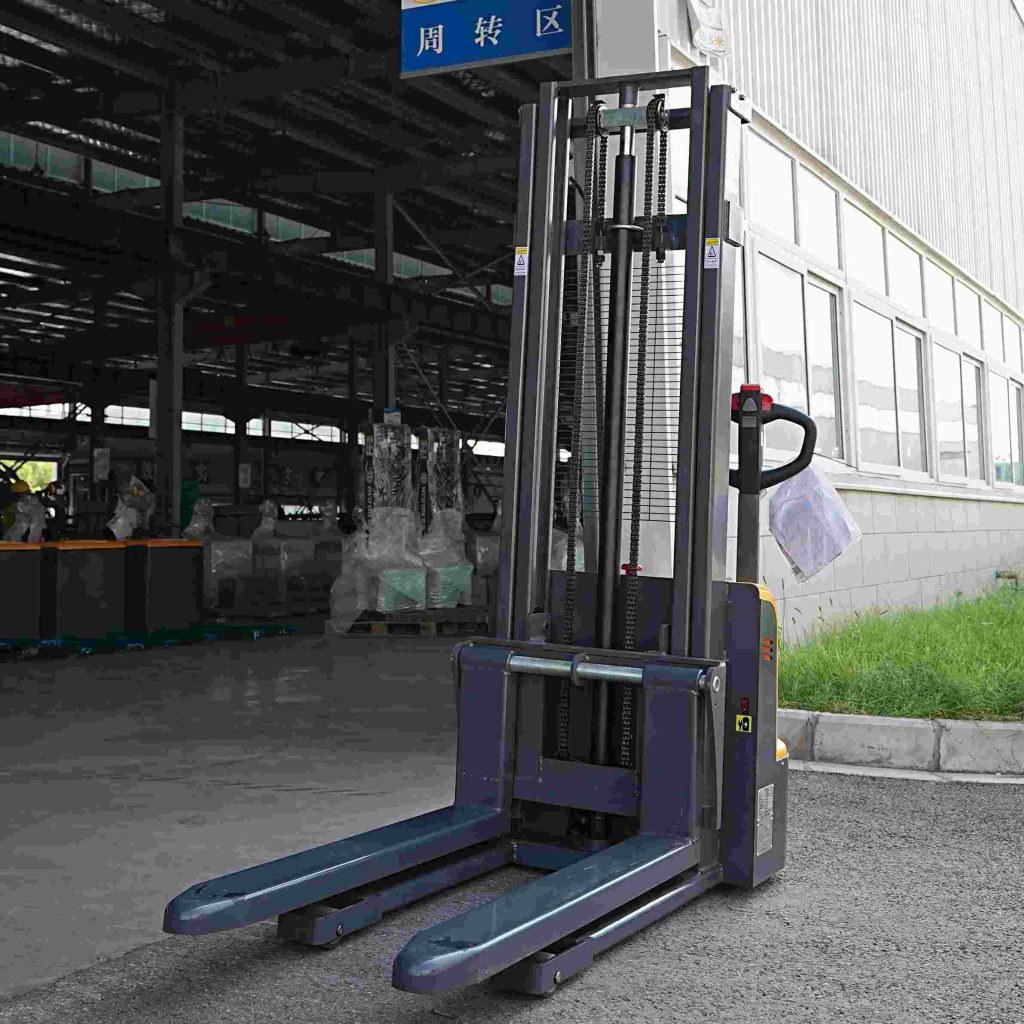
Each stacker type has a clear role. A good buying decision usually comes from matching the type to the job, not from choosing the most advanced machine.
Manual and Semi-Electric Stackers
The manually operated stackers and semi-electric stackers are useful for the infrequent lift operations. Such machinery is normally seen in the smaller storeroom facilities, repair shops, and intermittent loading docks. The semi-electric stacker offers ease of operation while remaining simple in design.
Such equipment is relatively inexpensive; however, they are not suitable for extensive travel distances or heavy duty lifting requirements. In case the operator lifts tens of pallets every shift, the operation may prove to be tiresome.
Walkie Electric Stackers
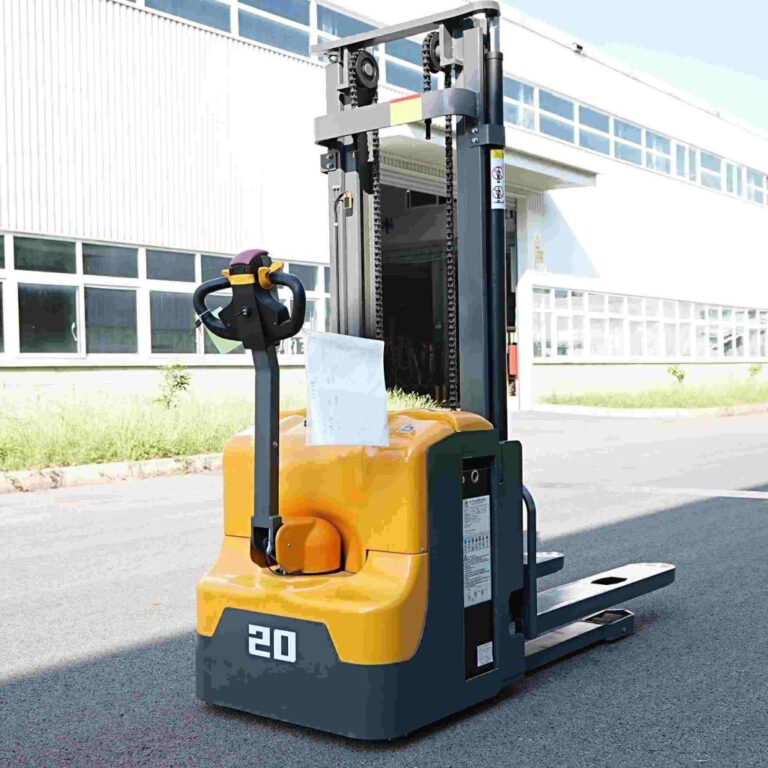
A walkie stacker is a common choice for small and medium warehouses. The operator walks behind the machine and controls travel and lifting from the handle. It works well for short-distance handling, rack loading, delivery receiving, and pallet movement between storage and packing zones.
An electric pallet stacker in this category is often easier to train on than a larger truck. It can also be a good fit where aisles are too tight for larger equipment but vertical stacking is still needed.
Standing Electric Stackers
A standing stacker is built for higher work frequency. The operator rides on a platform, which reduces walking over long shifts. This type suits warehouses with repeated pallet movement, longer travel paths, and busy loading schedules.
For heavy working conditions, a standing electric stacker can raise productivity because the operator spends less energy walking and more time handling loads. It is a practical choice for logistics centers, beverage warehouses, parts distribution, and production warehouses with fast inbound and outbound flow.
Compact Electric Stackers
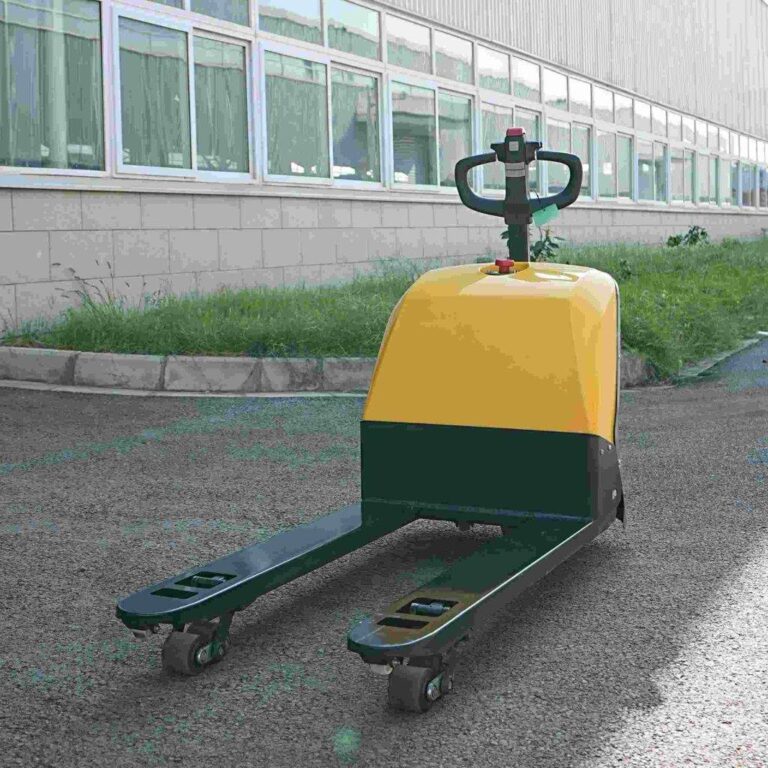
A compact electric stacker is useful where space is tight. This includes truck tail-lift operations, small warehouses, supermarket backrooms, and narrow storage corners. A light frame, stable chassis, and built-in charging design can make daily use simpler.
Compact units are not meant to replace heavy-duty machines. Their value lies in easy movement, lower noise, and simple pallet handling in areas where large trucks feel oversized.
Practical Selection Table
| Warehouse condition | Better stacker choice | Почему это подходит |
| Light loads, occasional lifting | Compact electric or semi-electric stacker | Lower cost, easy operation, small footprint |
| Narrow aisles and medium racks | Walkie electric stacker | Good turning ability and practical lifting height |
| Heavy pallets and frequent rack work | Heavy-duty walkie stacker | Stronger frame and better load stability |
| Long travel distance or busy shifts | Standing electric stacker | Less operator fatigue and higher work rhythm |
| Multi-shift indoor use | Lithium battery stacker | Faster charging and lower daily battery care |
Common Buying Mistakes
The cheapest stacker can become expensive if it slows work or breaks down often. A warehouse should look at the full cost: maintenance, battery care, operator time, spare parts, and downtime.
Common mistakes include:
- Buying based only on rated load without checking residual capacity
- Ignoring aisle width, rack layout, and turning space
- Choosing a battery that cannot match the shift schedule
- Using a light-duty stacker for frequent heavy pallets
- Forgetting fork length, pallet type, and floor condition
- Treating after-sales support as a minor detail
One example is a warehouse that uses tall racking but buys a stacker only by rated load. The machine may lift the pallet at ground level, yet feel unstable near the top beam. Another common case is a small warehouse buying a large heavy-duty stacker, then finding it hard to turn near packing tables and doorways.
Recommended Stacker Choices for Real Workplaces
There is no doubt that a small warehouse that stores products in boxes or spare parts will find a useful application of an inexpensive electric stacker. This kind of stacker is designed for the manipulation of loads that require lower strength and for short distance transportation. The features of reinforced forks, durable chassis, metal protection cover, and on-board battery charger can help in handling operations.
For heavier pallets and regular rack loading, a heavy-duty walkie stacker is a stronger fit. This kind of warehouse stacker is made for tougher load conditions, stronger frame demand, and more stable lifting. A lithium battery option can help warehouses that need fast charging and reduced battery care.
For busy facilities with longer routes, a heavy-duty standing stacker is often the better choice. The operator platform and protective arms help reduce fatigue during repeated movement. In warehouses where pallets move from receiving to racks, then from racks to dispatch, this setup can keep work moving without asking the operator to walk the full distance each cycle.
How to Match a Stacker to the Working Scene
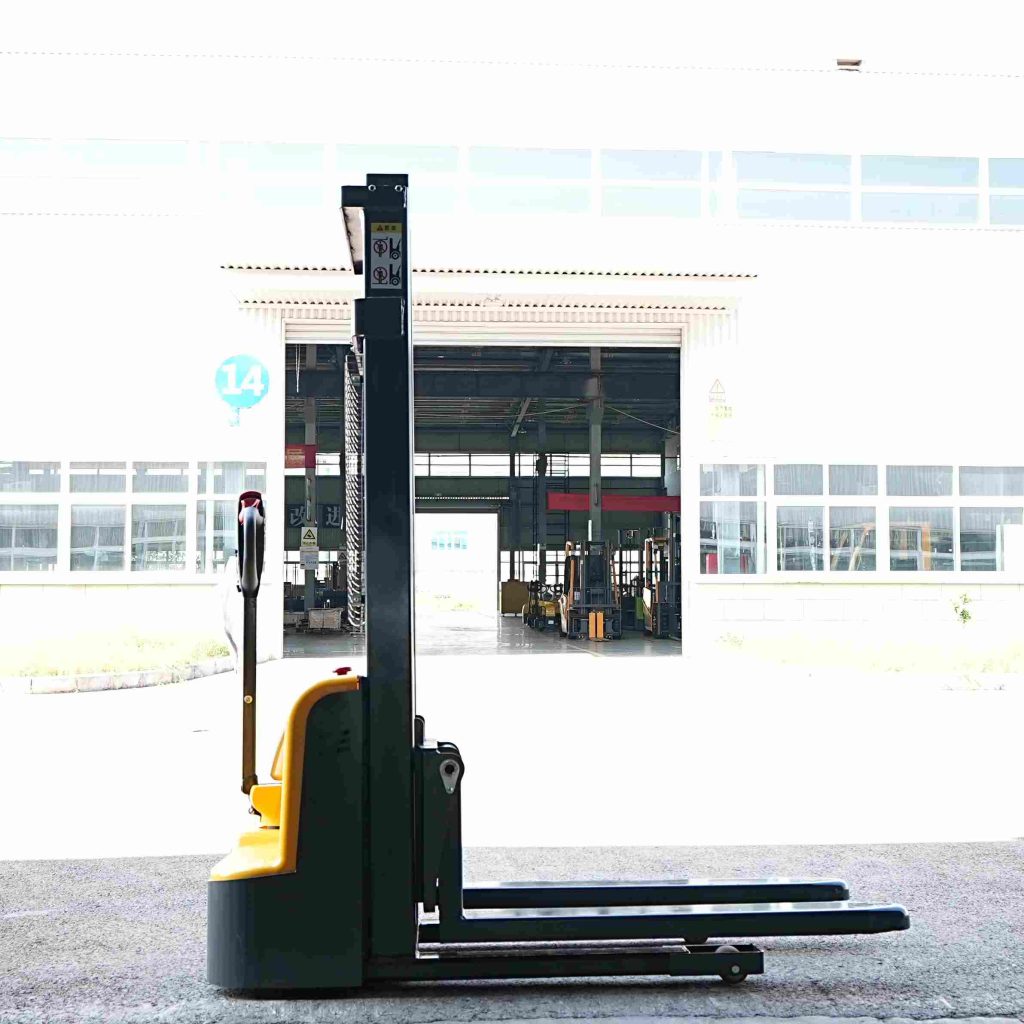
A warehouse manager can start with one simple question: where does the pallet go after it enters the door?
If pallets arrive by truck and move only 10–20 meters to low racks, a compact electric stacker may be enough. If pallets go through long aisles, up to higher racking, and back to a packing zone, a standing stacker may pay back through faster handling and less fatigue. If the site handles mixed loads, a heavy-duty walkie stacker can give a balanced mix of strength, control, and space use.
Floor condition also matters. Smooth concrete helps electric stackers run quietly and steadily. Uneven floors, ramps, drainage channels, and dock plates need more attention. In those areas, wheel type, braking, stability, and operator control become more important than appearance.
JinChengYu FORKLIFT as a Stacker Supplier
ВИЛОЧНЫЙ ПОГРУЗЧИК JinChengYu is based in Qingdao, China, a city with convenient access to land, sea, air, and rail transport. The company focuses on material handling equipment, warehouse equipment, ground service equipment, forklifts, attachments, accessories, and spare parts for overseas customers.
Its warehouse handling equipment range supports buyers who need more than one machine type. A warehouse project may start with a stacker, then later require electric forklifts, pallet trucks, reach equipment, attachments, or spare parts. A supplier with a wider handling equipment range can help buyers keep product selection, shipment communication, and after-sales support more consistent.
JinChengYu’s stacker options cover compact electric use, heavy-duty walking operation, and standing operation for more demanding warehouse work. This gives buyers room to choose based on load, aisle, battery, and shift needs rather than forcing one machine into every job.
Заключение
Choosing the right stacker starts with real warehouse data: pallet weight, lift height, aisle width, travel distance, battery needs, floor condition, and shift pattern. A compact electric stacker can suit light and narrow spaces. A walkie stacker can handle regular warehouse racking. A standing stacker can support busier operations with longer travel and heavier use.
The ideal stacker for use within warehouses will neither be the biggest nor the most affordable. Instead, it will be the one that matches up to the site conditions and ensures safety of the operator, efficient movement of the loads, and continuous operation throughout the day. For consumers looking at options for electric stackers and warehouse material handling equipment, JinChengYu FORKLIFT provides realistic alternatives.
Часто задаваемые вопросы
What is the difference between a stacker and a pallet truck?
A pallet truck mainly moves pallets at floor level. A stacker can lift pallets to racks, shelves, or loading positions. For warehouses that need vertical storage, a pallet stacker is usually more useful than a pallet truck alone.
What load capacity should an electric stacker have?
The load capacity should be higher than the heaviest regular pallet. Buyers should also check load center and residual capacity at the real lift height. A safe choice is based on actual warehouse loads, not only average pallet weight.
When should a warehouse choose a standing stacker?
A standing stacker is a good fit when operators travel longer distances, handle many pallets per shift, or work in busy logistics areas. It reduces walking and helps keep a steady work rhythm.