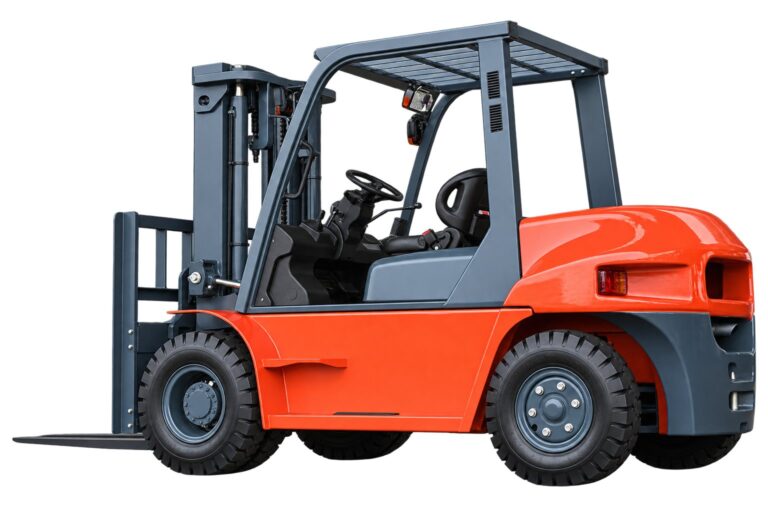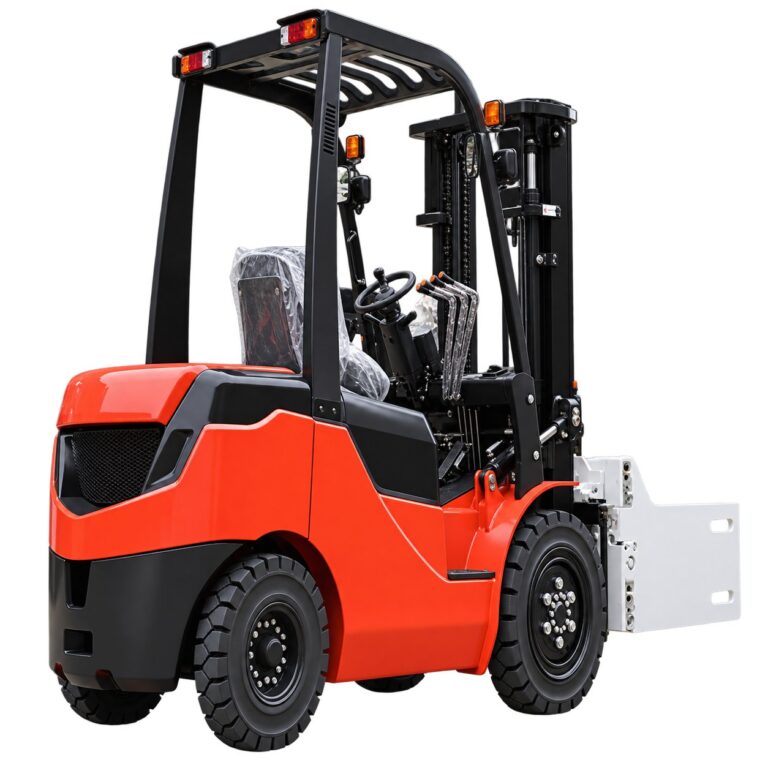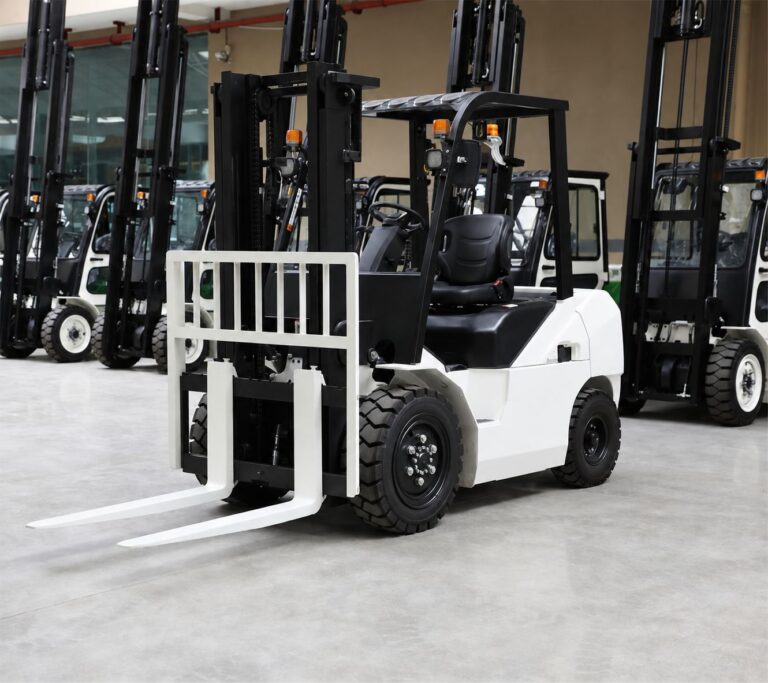
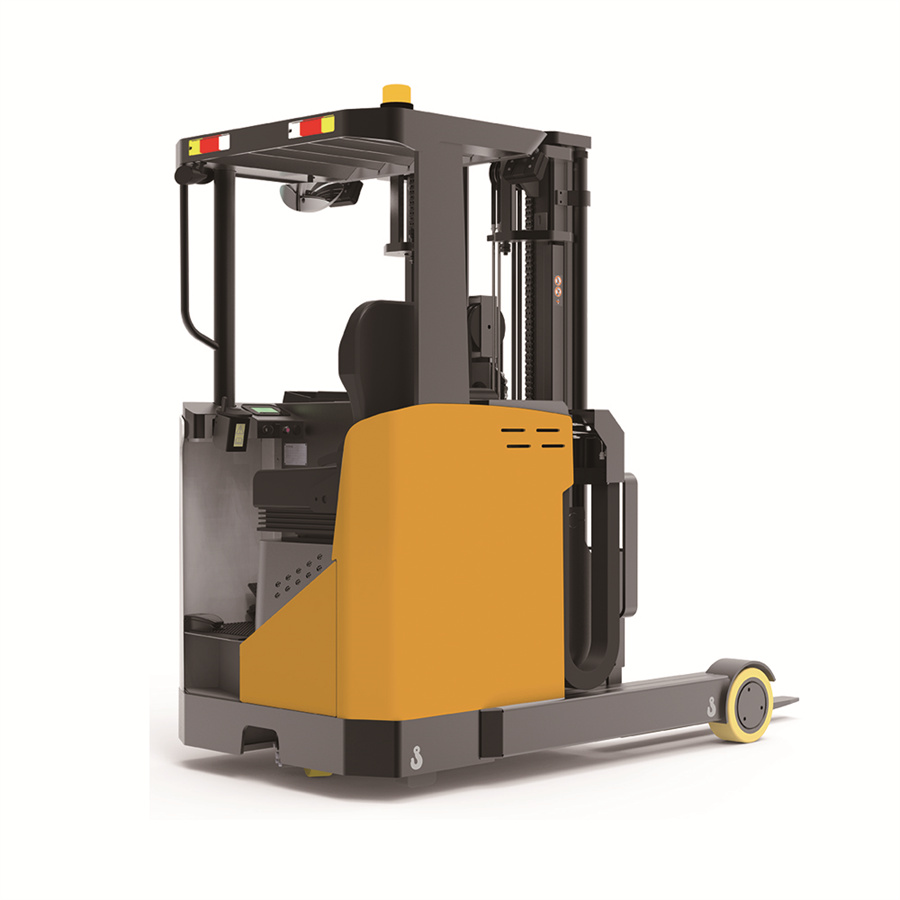
A narrow aisle warehouse would have the capability to hold more number of pallets without expanding its capacity, provided that the lift truck is suitable to its racks, floors, and other parameters. Generally, reach trucks would be ideal indoors since the former performs better in narrow aisles and is able to stack up at higher rack levels.
It may fit the aisle when empty but struggle with a loaded 1,200 mm pallet. It may reach the top beam but lose useful capacity at height. Before asking for a reach truck price, buyers should check three figures first: rack height, aisle width, and pallet weight.
What a Reach Truck Does Best
A reach truck is built for indoor pallet storage where space is expensive and vertical storage matters. Its compact body and reaching mechanism help the forks enter pallet racking with less turning room than many standard warehouse trucks.
It is appropriate for distribution center, e-commerce warehouse, food storage facility, spare parts warehouse, and manufacturing storage area with high rack storage. It is not an optimal choice for rough terrain, cracked outdoors, or long loads.
Where it fits in a real warehouse
A common case is a warehouse with 8 to 10 meter racks, mixed SKUs, and fast replenishment. The truck must turn cleanly, lift smoothly, and place pallets without touching upright frames.
Start With Rack Height, Not Truck Price
Rack height is the first number to check. The truck works to the pallet position, not the roof. Measure the top beam height, pallet height, load height, and the extra space needed to clear the beam.
Required lift height = top beam height + pallet clearance + load placement margin
If the top beam is 9 meters and the operator needs another 300 to 500 mm of working margin, a truck with only 9 meters of maximum lift height is too close to the limit.
Maximum lift height is not the whole story
Maximum lifting height tells only part of the story. The key question is capacity at height. A truck may carry a certain load near the ground, but the safe load can fall as the mast goes higher or the load center moves forward. This is why a load chart matters.
For high rack storage, check:
- Highest beam level
- Pallet and load height
- Maximum pallet weight
- Load center
- Floor flatness
- Capacity at the top storage level
A reach truck with maximum lifting height up to 10.5 m can cover many high-rack warehouses, but pallet weight and rack layout still decide the final choice.
Measure Reach Truck Aisle Width Before Ordering
Reach truck aisle width is one of the most common buying mistakes. The aisle on a racking plan may mean rack-to-rack space, clear aisle space, or usable turning space. Those are not always the same.
A truck needs room for its body, pallet, turning path, and safety margin. Pallet overhang changes the number too. A 1,000 x 1,200 mm pallet with cartons hanging 50 mm over each side needs more aisle space than a clean pallet with no overhang.
The aisle width formula buyers can use
Minimum aisle width = right angle stacking aisle + load length + clearance
Right angle stacking aisle is the space needed for the truck to turn 90 degrees and place a pallet into the rack. Add the load length, not just the fork length. Then add clearance for pallet overhang, rack guards, wall columns, sprinklers, and slight placement errors.
In many narrow aisle warehouses, reach trucks work in aisles around 2.6 to 3.2 m, depending on truck size, pallet type, and operating speed. Some layouts go tighter, but very tight aisles can slow drivers and increase rack damage.
Why right angle stacking matters
Right angle stacking affects speed and safety. If the truck has a small turning radius and a right angle stacking channel suited to the rack design, the operator can align the pallet, reach into the rack, and back out with fewer corrections. This matters in replenishment aisles where the same movement happens hundreds of times per shift.
Match Pallet Weight With Real Load Capacity
Pallet weight is not just the weight printed on a purchase order. Warehouses need to check average load, maximum load, load center, and how goods sit on the pallet. A compact pallet of metal parts behaves differently from a tall pallet of cartons.
Reach trucks in the 1,600 to 2,000 kg class suit many indoor pallet handling jobs. Still, the higher the lift, the more residual capacity matters.
A quick selection table
| Warehouse condition | Check first | Reach truck direction |
| Light cartons, medium racks | Lift height and battery hours | Compact electric reach truck |
| Mixed pallets, high racks | Capacity at height and aisle width | High-lift reach truck |
| Dense SKU storage | Turning radius and pallet access | Narrow aisle reach truck |
| Long shifts | Battery capacity and charging plan | Large-capacity battery truck |
A safe purchasing habit is simple: send the supplier the heaviest pallet weight, pallet size, highest beam height, and clear aisle width before requesting a final recommendation.
Check Battery Size and Working Hours
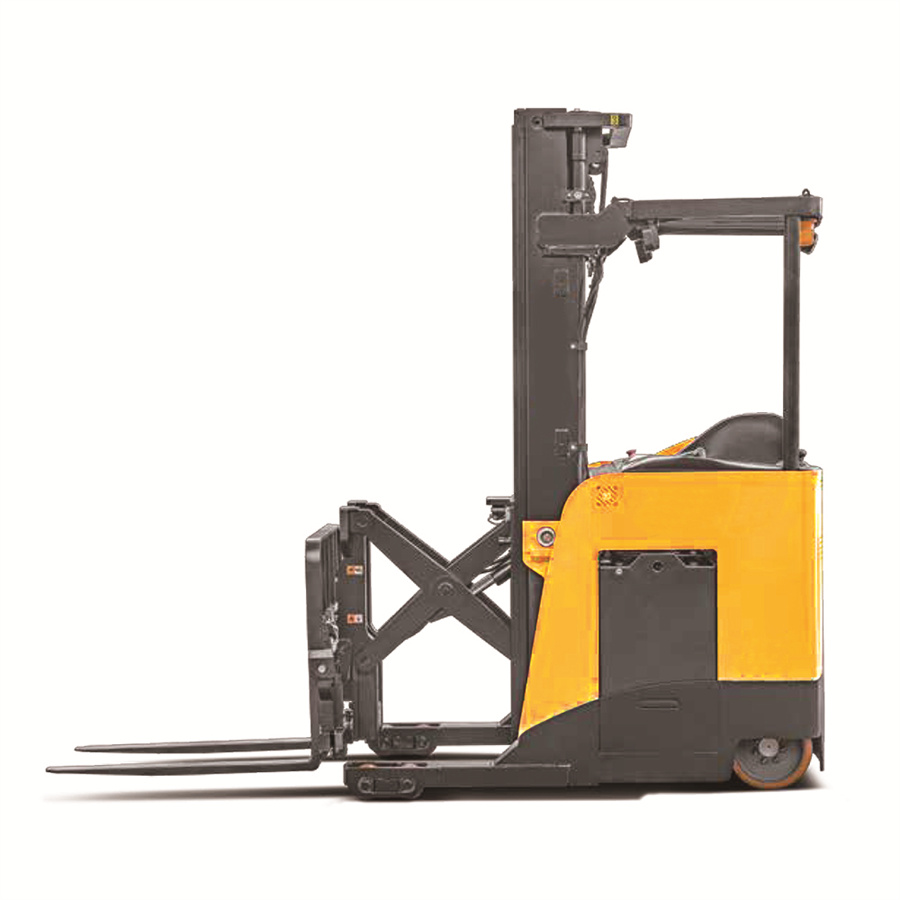
Because reach trucks are mainly used indoors, battery performance affects daily output. A warehouse running one 8-hour shift has different needs from a food storage site or a warehouse running two shifts with short charging windows.
A large-capacity battery, such as a 480Ah to 600Ah DIN standard battery, can reduce charging interruptions. A side pull-down battery layout also makes service and battery handling easier in tight maintenance areas.
Plan charging around the real workflow
Map the day before buying. How many pallet moves happen per hour? How far is the travel distance from receiving to racking? Are there peak hours before dispatch cut-off? Does the operator have a charging window during lunch or shift change?
Do Not Ignore Operator Comfort and Visibility
Narrow aisle work is repetitive. Small mistakes can damage racks, pallets, and product packaging. Operator comfort, visibility, and control response play a direct role in productivity.
A practical reach truck should have a comfortable seat, clear forward and upward visibility, stable mast movement, smooth travel control, and easy access for maintenance. Useful features include an adjustable suspension seat, smart front-drive layout, door frame drop buffering, and convenient service access.
Choose Equipment for the Whole Pallet Flow
A reach truck is usually one part of a larger warehouse flow. It may not be the best machine for every movement from truck unloading to final storage. A better setup often uses different machines for different zones.
| Warehouse job | Suitable equipment |
| High rack pallet storage | Carretilla retráctil |
| Dock-to-aisle transfer | Electric pallet truck or electric forklift |
| Apilamiento bajo a medio | apilador eléctrico |
| Short-distance pallet movement | Full electric pallet truck |
| Light warehouse stock movement | Economical electric pallet truck |
This mixed approach keeps the reach truck focused on high rack storage and helps control wear, battery use, and aisle traffic.
JinChengYu FORKLIFT como proveedor de carretillas elevadoras retráctiles
CARRETILLA ELEVADORA JinChengYu, established in Qingdao, Shandong, offers facilities to transport goods by road, ship, air, and rail. It provides forklifts, warehouse products, ground support equipment, parts, and material handling systems for international clients.
Its warehouse handling range covers electric forklifts, storage forklifts, pallet trucks, stackers, used forklifts, attachments, and related equipment. For reach truck buyers, key features include rated loads from 1,600 to 2,000 kg, maximum lifting height up to 10.5 m, compact turning design, right angle stacking ability, adjustable operator seating, side pull-down battery access, and large-capacity 480Ah to 600Ah batteries.
The company also supports final inspection and machine service before shipment, mixed model orders, customized logo options, sales support, after-sales service, and rental-related service.
Conclusión
Choosing a reach truck starts with warehouse data, not a catalog price. Rack height shows how high the truck must lift. Aisle width shows whether it can turn and stack without slowing the operator. Pallet weight shows whether the truck has enough real capacity at the storage level.
For narrow aisle warehouses, the best reach truck is the one that fits the rack plan, handles the heaviest pallet safely, works through the shift, and keeps daily pallet movement simple. Buyers who share rack height, aisle width, pallet size, pallet weight, and working hours can get a much more accurate reach truck recommendation and avoid costly layout mistakes before the machine arrives.
Preguntas frecuentes
Aisle Width Requirement for Reach Truck?
The reach truck aisle width required is based on the body of the truck, right-angle stacking aisle, length of pallet, overhang of pallet, rack protection and safety allowance. Most narrow aisle systems range between 2.6 to 3.2 m wide, but the right figure will come out through the truck specification and size of the pallet.
Can a reach truck move heavy pallets?
Yes, if the weight, center of gravity and lift height of the pallet is within the rated load and residual capacity of the machine. The pallet that can be moved safely from low level might not be safe at top rack level.
What information do you need to send before requesting for a quote?
Information about aisle width, rack height, pallet size, maximum weight of the pallet, working hours per shift, floor condition, charge policy and limitations on height of doors and turning radius will be required.