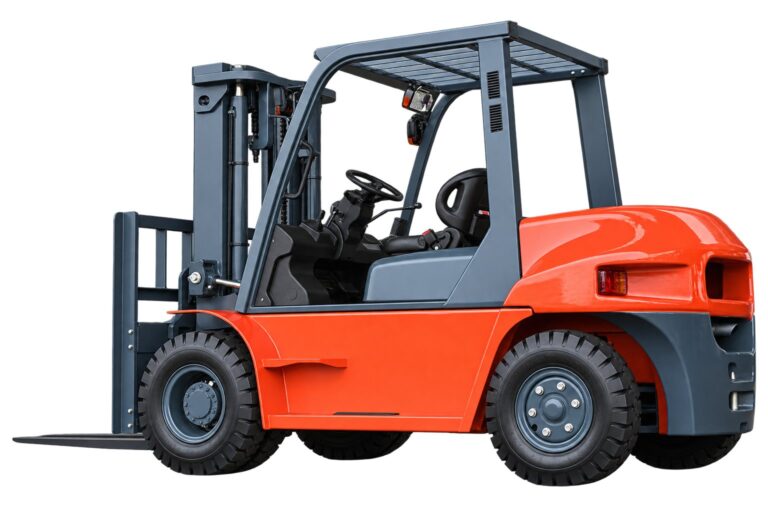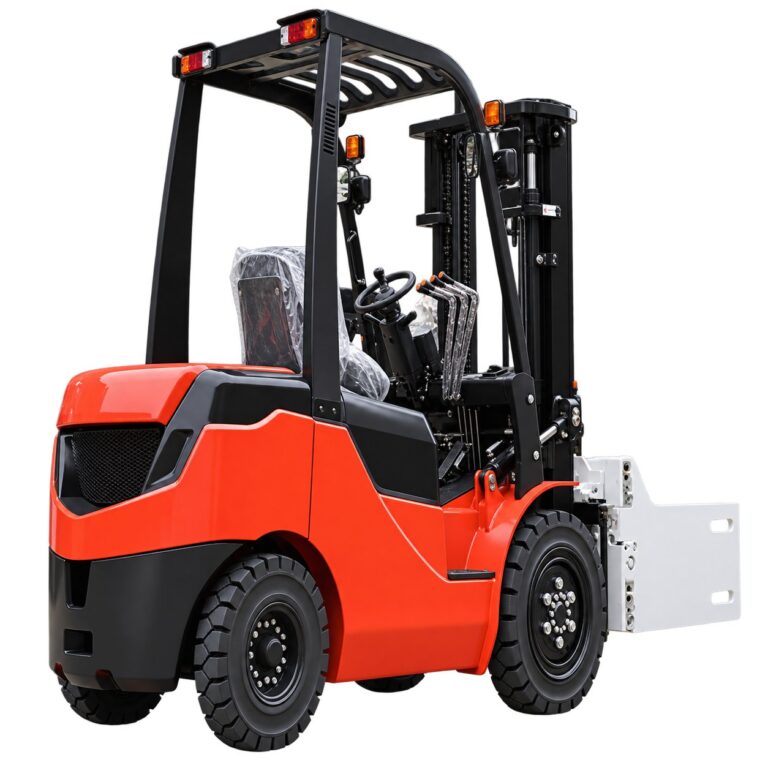
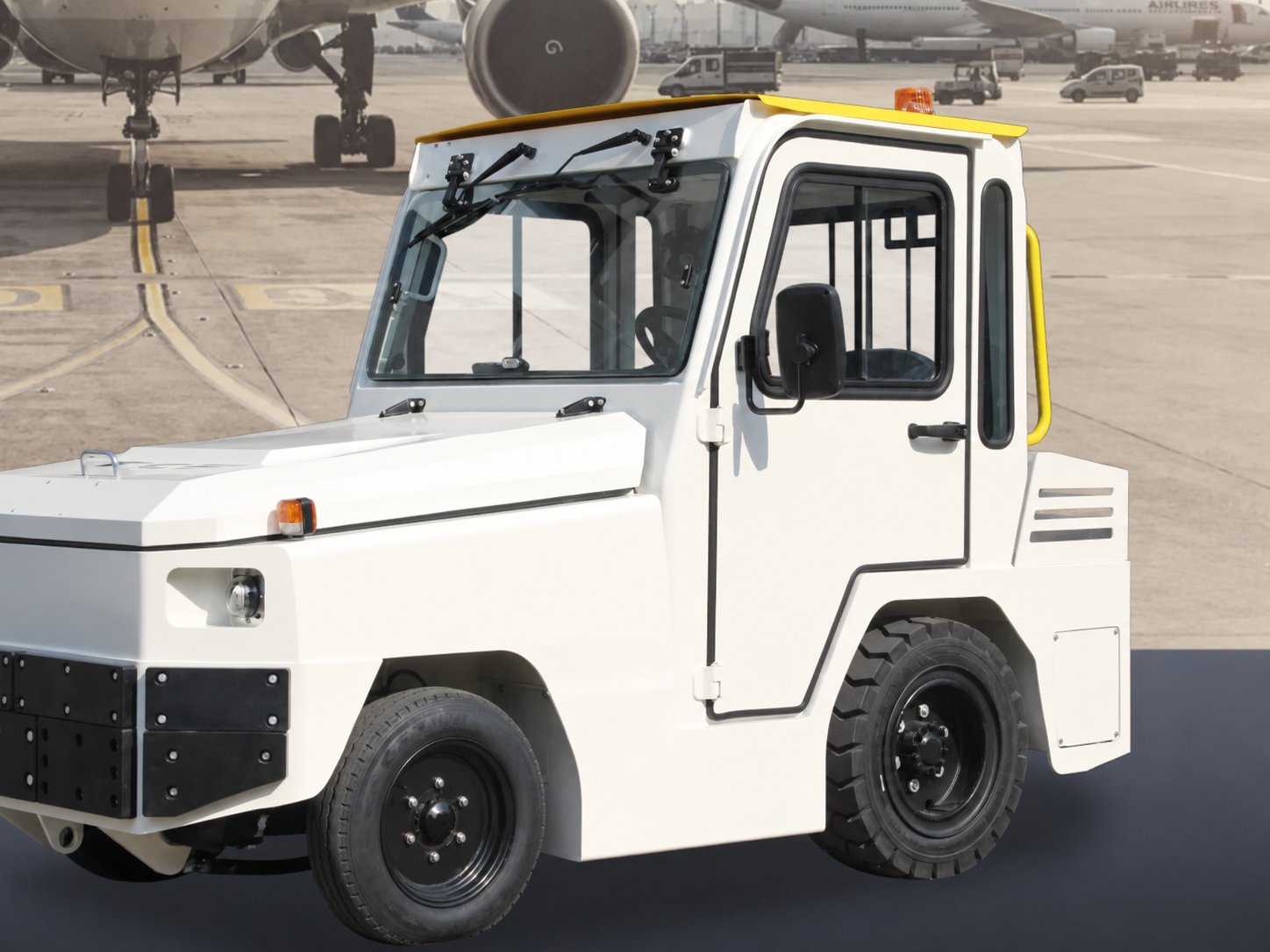
Decisions regarding slow moving airport equipment can have serious implications for ground handling activities when conducted on the ramp, ie the baggage handling area. The baggage tractor is seemingly the simplest of pieces of airport ground handling equipment; towing around baggage carts, cargo, mail trailers etc on short service routes, within terminals, and undertaking short distance towing between aircraft stands and baggage sorting areas. When flights are operating at tight schedules the type of baggage tractor in use can have hidden effects on cart movement, service staff’s fatigue levels and associated costs when operating on the ramp.
The electric baggage tractor has become a practical solution for airports, ground handling companies, cargo terminals and GSE distributors searching for a clean, quiet and efficient airport ground support equipment. Buying an electric baggage tractor is more than simply replacing a diesel baggage tug with an electric powered vehicle. There are number of factors that need to be compared before choosing the correct vehicle, including towing capacity and drawbar pull, as well as battery type, charging conditions and safety features. Other important factors to consider are the maneuverability of the vehicle and the supplier support service that is available after the sale.
Why Is an Electric Baggage Tractor Important for Airport Ramp Operations?
Ramp airport activities are short-distance activities, most of them are repeated actions. A baggage tractor for example, will pull a baggage cart with baggage from the baggage sorting area to an aircraft stand, wait at that stand for loading, then move to a remote stand for unloading, and back to the terminal area for more activities. That’s how it is for most of the activities on the airport ramp all day long.
Frequent Start-Stop Work on the Ramp
Diesel powered vehicles that are used for aircraft turnaround spend a lot of time idling. This idling results in fuel consumption, noise, heat and emissions even while the tractor is stationary. In contrast, an electric baggage tractor is well suited to the stop and start nature of baggage handling. The electric motor provides optimum performance at low speed and as such is ideal for starting off with a row of baggage carts all loaded up and traveling slowly around aircraft, through areas that aircraft crews and ground staff are operating in as well as through areas where other service equipment may be operating.
For airports reducing their emissions by switching to electric power is more than just a good deed. The biggest advantage is that operations become so much smoother. On the one hand, the drivers of the baggage carts have it easier: they no longer have to put up with all the vibration from the engines. On the other hand, the airport’s maintenance teams also have fewer service items related to the engines.
Cleaner and Quieter Airport Ground Support Equipment
Ramp areas are busy with aircraft service teams, as well as aircraft equipment such as loaders, fuel trucks, belt loaders, and other airport ground service equipment. There are also ramp shuttle buses and baggage tractors operating in these areas. When working in areas of low noise it is important to remember that many of the people working in these locations are operating large pieces of equipment. If they cannot hear signals, radio communications, warning beeps and other noises associated with the movement of others in the area, they could be seriously injured.
The use of Electric GSE allows to keep terminals, enclosed baggage areas, hangars and FBO facilities free from exhaust and noise emitted by traditional GSE. For airports that are interested to reduce the amount of diesel used for GSE, the airport electric tow tractor is one of the easier categories to start electrifying, since it follows a fixed route.
What Tasks Should the Airport Baggage Tractor Handle?
To compare specifications of different models, first, write down the real work the tractor will have to do. This could be a small airport, a cargo terminal or a large international airport all needing an electric baggage tractor but with very different duty cycles.
Moving Baggage Carts and Cargo Dollies
The typical work of a baggage tractor is to move baggage carts from the aircraft stands to the baggage hall and along the terminal service roads. In addition to the baggage carts the tractors can also be used to move other types of dollies, such as mail carts, and small service trailers and equipment carts. Some airports use the tractors for pulling passenger baggage and also light cargo during off-peak hours.
A practical equipment review should include:
- Average number of carts per trip
- Maximum loaded cart weight
- Typical ramp slope and surface condition
- Distance between terminal, stand, and cargo area
- Number of working shifts per day
- Weather conditions such as rain, heat, snow, or dust
More than just a catalog number. While a tractor might be able to pull itself up a flat, dry ramp for instance, it may fall short when used to pull a long train of carts down a wet pavement or up a slight incline.
Supporting Ground Handling and Cargo Terminal Work
The airport baggage tractor is able to be used in other applications like cargo terminals, warehouse yards, logistics parks, ferry terminals and other industrial sites where wheeled trailers are moved over short distances. By having a single flexible electric tow tractor to move around several facilities, as opposed to several specialized pieces of equipment, the number of vehicles that a buyer needs to manage can be greatly reduced.
How Much Towing Capacity Does an Electric Baggage Tractor Need?
When first looking into purchasing a product to tow behind a vehicle the first number that is usually looked up is the towing capacity. While the towing capacity is an important factor to look at it is not the only factor and should be looked at in conjunction with the drawbar pull, the ramp conditions and how many carts you intend to carry around.
Rated Towing Capacity vs Real Ramp Conditions
Rated towing capacity is defined by specific conditions. The actual operating conditions at airports are far from ideal. An airport tractor towing a loaded cart train is likely to start from a standstill, make sharp turns, cross uneven ramp joints and travel over wet and smooth concrete. In these situations the tractor requires a good amount of reserve power to prevent slow starts and wheel slip.
Higher towing capacity allows for fewer towing trips at airports with high activity. Instead of pushing fewer carts and doing more trips, a single tug can pull more heavily loaded carts within the applicable operating parameters to save time during the turnarounds of aircraft.
Why Drawbar Pull Matters More Than Many Buyers Expect
Drawbar pull is the amount of force available at the hitch of a tractor. More importantly, it determines how well a tractor can start off with a heavy load and then maintain a slow speed in the field with a loaded cart. Therefore, when comparing airport baggage tractors, it is not enough to ask how many tons a tractor can tow. A more appropriate question would be: What drawbar pull is available to the tractor when it starts off with loaded carts.
When operating on certain ramps, the following considerations should be taken into account.
- Full baggage carts during peak travel periods
- Cargo dollies with uneven weight distribution
- Wet or dusty pavement
- Small inclines near service roads
- Frequent stop-and-go movements near aircraft stands
Offer Heavy-duty electric baggage tractor with towing capacity 30,000 kg and max. drawbar pull 25 kN for demanding work at airports and cargo terminals.
Which Battery System Is Better for an Electric Baggage Tractor?
The battery system is more of a everyday operation item than people believe. It determines how long you can use your tractor. How it will get charged. How much it will need to be serviced. And whether it will fit into your current routine of maintenance.
Lead-Acid Battery vs Lithium Battery
If your team uses Lead-Acid Batteries then they will likely be familiar with some of the idiosyncrasies with using them for equipment power including requiring more maintenance and longer re-charging times and sometimes requiring a Battery Room with associated ventilation etc along with periodic watering and careful handing and storage.
Lithium battery baggage tractors are more practical for today’s modern Airport fleets. Lithium batteries on these tractors allow for opportunity charging during drivers’ breaks, for shorter charge times and lower routine maintenance, than the traditional lead acid batteries. This can be especially important for ground handling teams working multiple shifts of work.
Why LiFePO4 Battery Is Suitable for Airport GSE
For electric GSE, airport operators choose LiFePO4 battery technology. It features stable thermal behavior as well as long service life. Above all, LiFePO4 batteries are perfectly suited for partial charging. In many cases, vehicles do not return to their base with a full charging window. Therefore, flexible charging of the vehicle’s battery is crucial and can be easily implemented in everyday airport life.
Buyers should not only pay attention to the capacity of a battery. Also the battery management system, the compatibility with the charger, the service the buyer gets and a well planned replacement must be checked before buying a battery.
What Safety and Maneuverability Features Should Be Checked?
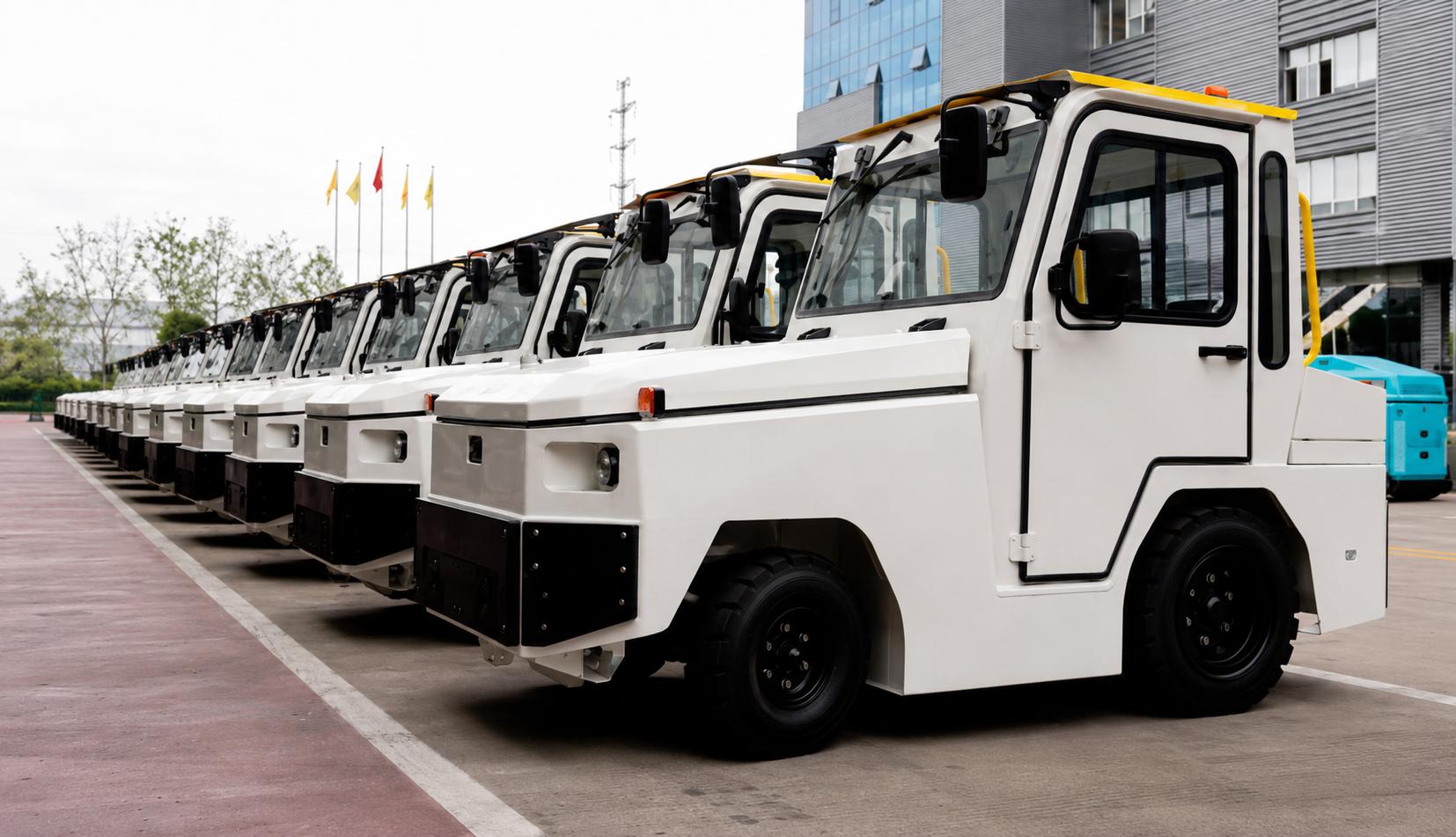
The airport ramp is not a general yard. It is a very controlled area that includes the wings of the aircraft and all of the services required to support said aircraft as well as other vehicles, people, etc. It also includes the time critical nature of moving baggage in the most safe and efficient manner possible. Therefore, a good baggage tractor must be able to tow as well as maneuver in very tight spaces.
Turning Radius for Narrow Ramp Areas
When using tractors for moving around aircraft stands, terminal roads, baggage halls and cargo apron corners the turning radius is an important aspect. A small turning radius enables smooth turns with a cart train and prevents hazardous backing up.
For airport ramp activities maneuverability can be as important as power. A tractor with a 3000 mm turning diameter can perform operations in narrow service zones where larger vehicles for towing will not have enough space to maneuver.
Suspension and Driver Comfort
With many hours spent traveling between stands and the baggage area, long hours driving a poorly suspended tractor can be exhausting. Independent front suspension and strong rear suspension design reduces shock and ensures stability to allow the smooth operation of the tractor in a variety of situations even when towing heavily loaded trailers.
Comfort is not an optional extra on a company car. A tired driver may be less able to react to situations than normal, may drive erratically and make adverse errors near aircraft and/or ground crew.
Braking, Lighting and Operator Visibility
An safe electric baggage tug needs reliable braking, clear lights, good mirrors or visibility, sufficient warning devices and a good driver space. Also the hitch area has to be easily accessible, because the connection of a baggage cart has to be made many times per shift.
How Does an Electric Baggage Tractor Compare with a Diesel Baggage Tractor?
Many airports still use diesel-powered baggage tractors for outdoor/ heavy duty work. However, for regular baggage and cargo work, the electric tractors are becoming more of a preferred choice.
Maintenance and Operating Cost Differences
Diesel Tractors which are used for general tractor services have oil, filters, fuel system parts, exhaust system parts etc. and many more parts that are prone to vibration wear and tear. Electric Baggage Tractors on the other hand have electric motor, controller, battery system etc. and fewer parts of engine servicing.
While electric equipment doesn’t require any maintenance, that’s not to say that other parts of the electrically powered vehicle do not. Indeed, batteries, brakes, tires, connectors, chargers and other control systems all need to be periodically checked. But, typically, that’s all done as part of a cleaner and more routine daily service job.
Noise, Emissions and Indoor-Area Use
We do not state that all electric tractors are suitable for all locations. They are obviously quieter and produce no emissions from the tailpipe during use. Therefore they are particularly suitable for use in terminal-side areas and baggage halls as well as within fully enclosed logistics facilities and for airports with environmental goals that are very stringent.
Buyers should compare more than the purchase price when comparing the total cost of ownership. In addition to fuel cost, maintenance labor cost, downtime cost, battery life, charger cost, and spare parts availability must also be taken into account.
Which Specifications Should Be Compared Before Buying?
A clear specification table enables the buyer of airport vehicles to quickly and easily compare different vehicles without being swamped by marketing claims.
| Especificación | What to Check Before Purchase |
| Rated towing capacity | Match it with loaded carts, cargo dollies, and safety margin |
| Maximum drawbar pull | Check low-speed starting force under heavy load |
| Battery type | Compare lithium, LiFePO4, service life, and charging habits |
| Voltage system | Match low-voltage or high-voltage design with fleet needs |
| Turning radius | Confirm suitability for narrow ramps and baggage areas |
| Suspensión | Review stability, driver comfort, and vibration control |
| Travel speed | Match ramp safety rules and daily route length |
| Hitch design | Check compatibility with baggage carts and cargo trailers |
| Supplier support | Confirm spare parts, export service, and after-sales response |
A comparison of these features will be useful for airports, airline service companies, cargo handlers as well as GSE suppliers and distributors preparing tender documents or a fleet replacement strategy.
Why Choose JinChengYu FORKLIFT as an Electric Baggage Tractor Supplier?
CARRETILLA ELEVADORA JinChengYu is located in Qingdao China, nearby land, sea, air and rail transportation. JinChengYu FORKLIFT are serving the world markets in materials handling, GSE, warehouse equipment and spare parts supply. We provide forklifts, warehouse handling equipment, airport ground service support equipment, aerial work platforms, construction machinery and other industrial equipment in warehouse handling.
Knowledge of a wider range of equipment is valuable for potential buyers of electric baggage tractors. Given the nature of the work in airports and logistics, the scope of required equipment is broad. Often customers require more than one type of vehicle, i.e. baggage tractors, belt loaders, forklifts, reach trucks, rough terrain handling equipment etc. plus spare parts and a description of service.
JinChengYu FORKLIFT, China electric baggage tractor supplier, is specialized in designing airport baggage tractor and cargo handling electric tractors with realistic specifications: high baggage towing capacity, sufficient drawbar pull, Lithium battery options, flexible voltage for different demands, compact turn radius and user friendly operation. We are able to assist B2B buyers to choose suitable electric tractors based on airport size, work shift, number of carts in use, charging needs and export requirements.
Conclusión
Buying an electric baggage tractor is a job-specific purchase. After mapping out the towing route, the weight of the cart being towed, the state of the ramps, the shift in work hours, and the amount of time to recharge the batteries, one can then compare the following features of the various tractors: towing capacity, drawbar pull, battery type and configuration, voltage system, turning radius, suspension and other features. Additionally, buyers should compare the support provided by the various suppliers.
An airport electric tow tractor that is well suited for airports, ground handling companies, cargo terminals and GSE distributors alike can reduce noise, reduce the dependence on diesel, reduce maintenance requirements and improve the flow of ramp traffic. A supplier with practical experience of GSE and material handling can translate the specifications of potential airport electric tractors into a workable fleet decision.
Preguntas frecuentes
What is an electric baggage tractor used for?
The electric baggage tractor is used to pull baggage trolleys, cargo trolleys, mail trolleys and other light service trailers and equipment around airport ramps, terminals, stores and handling facilities. It is used as part of the airport’s ground support equipment for short distance transport.
How much towing capacity does an airport baggage tractor need?
When it comes to choosing the right towing capacity for your specific needs there are a number of factors to take account – the loaded weight of the cart, how many carts you need to tow, the angle of the ramp, the surface that the carts will be traveling over and your normal duty cycle. For heavy baggage and cargo work a 30,000 kg class electric baggage tractor provides a healthy safety margin.
Is LiFePO4 battery better for an electric baggage tug?
LiFePO4 batteries are a practical solution for electric GSE. Their characteristics ensure stable performance, low maintenance and partial charging capability. Therefore these batteries are appropriate for applications where tractors are in use around the clock, like airports.
What is the difference between an electric baggage tractor and a pushback tractor?
A general information on the use of an electric baggage tractor: this type of tractor is normally used for the movement of baggage carts, cargo dollies and service trailers. A pushback tractor on the other hand is specifically designed for the movement of aircraft and therefore has different parameters for weight, traction, coupling and safety.