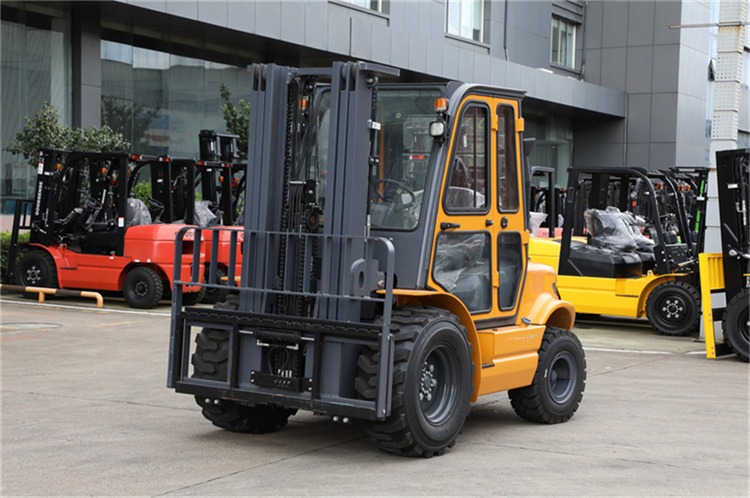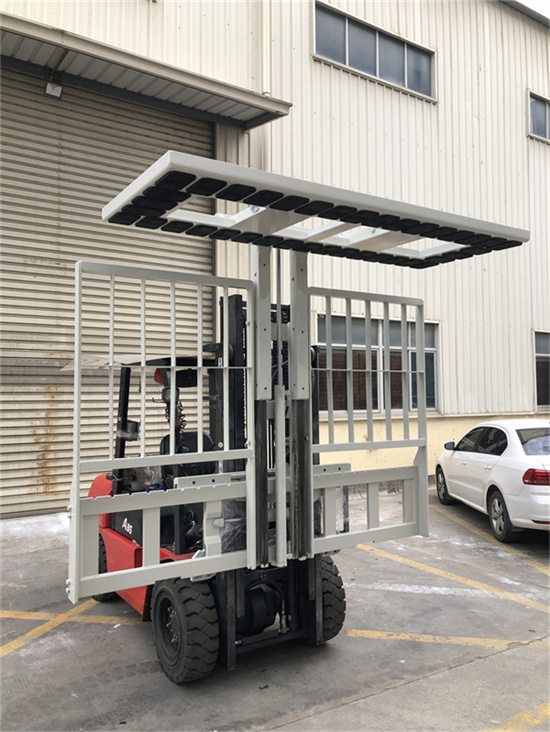
Observe the route and full shift before selecting an electric vs diesel forklift. Include backup coverage in the fleet comparison.
Define the Duty Cycle for an Electric vs Diesel Forklift Comparison
Build a duty-cycle sheet before asking for models:
– maximum normal load and its dimensions;
– load center and center-of-gravity variation;
– lift height and mast requirement;
– fork length and attachment;
– loaded and unloaded travel distance;
– ramps, grades, cross-slopes, and thresholds;
– floor or yard surface;
– aisle, doorway, and turning limits;
– hours, shifts, breaks, and peak periods;
– indoor and outdoor time by route.
Mark peak, continuous, idle, and break periods separately.
Where Electric Forklifts Are Strong
Electric drive offers quiet low-speed operation without direct vehicle exhaust.
The JinChengYu product includes electric equipment. Match battery, charger, working time, controls, and site supply by configuration.
Use shift breaks and existing infrastructure to compare lithium opportunity charging with established lead-acid rooms and change procedures.
Where Diesel Forklifts Are Strong
Diesel may fit sustained outdoor work and fast fueling. Indoor operation needs an environmental and regulatory review.
JinChengYu lists both power types. Request the capacity chart and full configuration data for the proposed truck.
Compare Energy Infrastructure
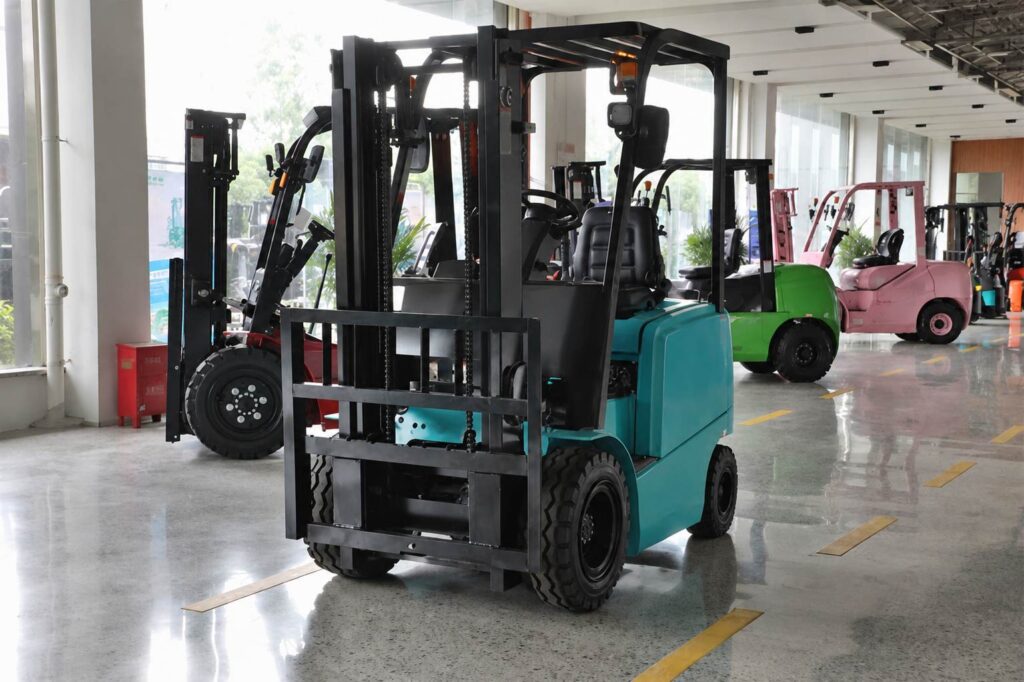
Map the full charging system for electric and the storage, delivery, spill, and cleanliness controls for diesel. Compare energy per productive output.
Include Maintenance and Downtime
List scheduled work, parts, diagnostics, and technician response for each powertrain.
Use the same downtime record for both candidates:
– truck ID, hour meter, shift, and operator;
– planned or unplanned stop;
– fault symptom and diagnostic result;
– part, tool, or outside technician required;
– time from stop to diagnosis;
– time waiting for parts or service;
– repair time and return-to-work check;
– load or production affected during the stop;
– temporary replacement used;
– repeat occurrence and corrective action.
Apply a realistic parts policy to the selected fleet. A low-cost component with a long delivery time can create more lost work than an expensive part kept locally. Identify critical charger, connector, battery, filter, belt, hose, sensor, and tire items by the final configuration, then agree who stocks them and how quickly technical support responds.
Review the first months of records against the purchasing assumptions. Update the energy, service, and spare-capacity model when the measured duty differs from the study.
Match Tires and Chassis to the Surface
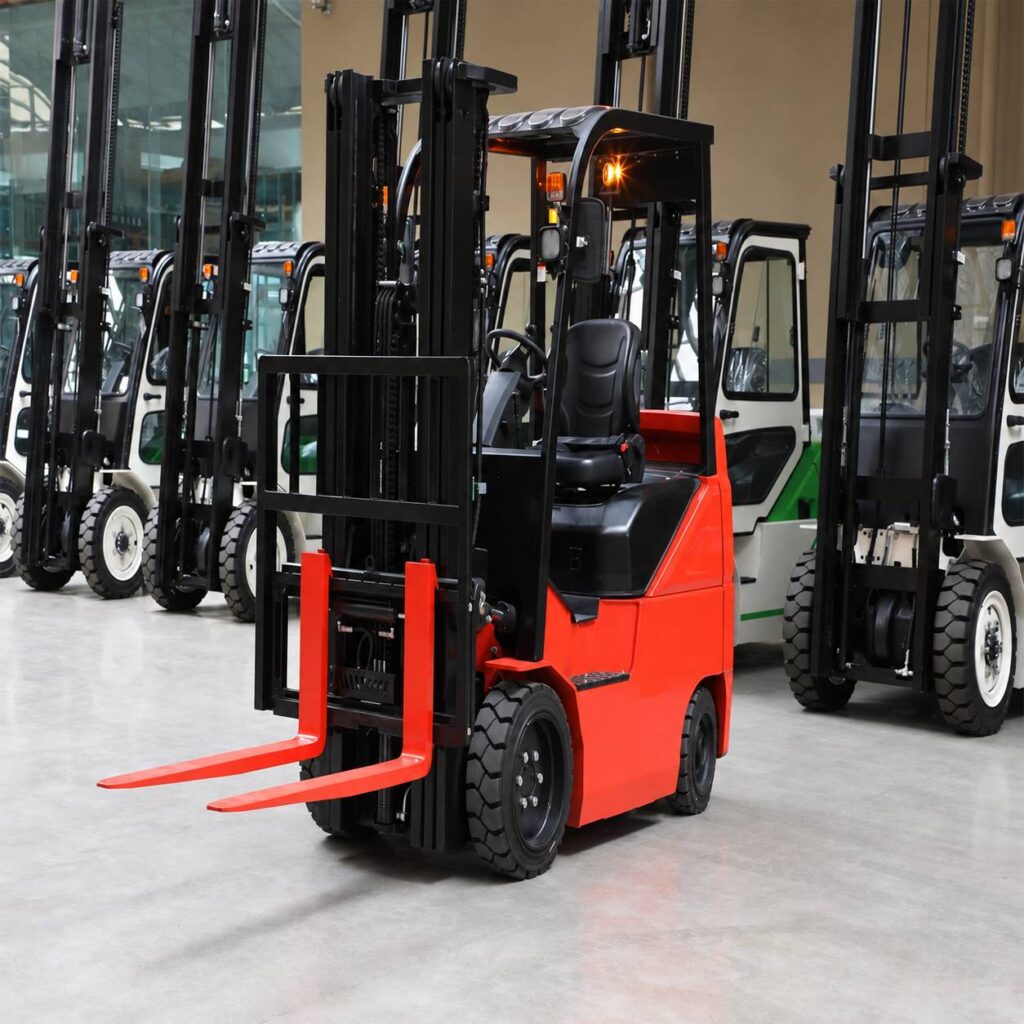
Select chassis and tires from the measured route.
For unprepared ground, compare rough terrain forklift options against standard trucks on axle, tire, and clearance needs.
Calculate the Fleet, Not Only One Truck
Model normal, peak, and one-truck-down operation for both fleets, then track operator behavior after deployment.
Build the comparison in fleet rows rather than one purchase-price cell:
– number of trucks required in the normal shift;
– additional coverage needed at the peak hour;
– productive hours per truck and expected idle time;
– electricity or fuel used per productive hour;
– chargers, electrical upgrade, fuel storage, or delivery setup;
– traction battery, spare battery, or engine-service allowance;
– planned service hours and likely unplanned downtime;
– tires and wear items for the actual surface;
– ventilation, emissions, spill, and fire-control costs;
– operator and technician training;
– parts stock and service response time;
– residual value and replacement assumption.
Trial the hardest route at the busy hour and retain its energy, cycles, lift, travel, idle, service-stop, operator, load, weather, tire, and surface data.
Photograph and label each observation point on the route:
– rack face and highest pick;
– narrowest aisle and doorway;
– tightest turn with the longest load;
– steepest ramp and any cross-slope;
– roughest pavement, gravel, mud, or drainage channel;
– indoor-to-outdoor transition and threshold;
– battery charging or fuel location;
– normal parking and maintenance access;
– pedestrian crossing and shared work area;
– location where a failed truck would block operations.
Add distance and gradient to route photographs. Conflicting indoor and yard duties may justify two truck types.
Capture operator delay and fatigue notes beside the technical data.
After the trial, compare planned and measured cycles. Investigate large gaps before scaling the result to an annual fleet. A missed peak, unusually light load, or temporary clear route can make either power type look better than it will in normal production.
Conclusion
An electric vs diesel forklift decision should use the route, load, shift pattern, energy infrastructure, service plan, and required spare capacity.
Send the completed duty sheet to JinChengYu for configuration review.
The quotation should return enough information to check the proposed truck against that sheet:
– model and exact power configuration;
– rated capacity plus the chart for mast and attachment;
– overall dimensions, turning radius, and aisle requirement;
– mast lowered height, free lift, and maximum height;
– ground clearance, tires, brakes, and grade information;
– battery chemistry, voltage, capacity, charger, and connector, or engine and aftertreatment;
– expected working and recharge time under the stated duty;
– hydraulic functions and attachment connections;
– cabin, lighting, alarms, visibility, and operator-protection equipment;
– scheduled maintenance intervals and service points;
– included spare parts, manuals, diagnostic support, and warranty terms;
– packed dimensions, transport preparation, and commissioning needs.
Check every deviation rather than accepting a “similar” configuration. A different mast changes capacity and lowered height. Another tire changes ride, clearance, and traction. A different battery or charger changes the energy model. The commercial comparison is valid only after those technical differences are visible.
Before final acceptance, repeat the critical route with the delivered configuration, attachment, and representative load. Confirm capacity documentation, braking, steering, mast functions, warning devices, charging or refueling procedure, and operator training. Record the starting condition so future maintenance has a clean baseline.
FAQ
Q: Are electric forklifts always cheaper to operate?
A: No. Compare energy, batteries, chargers, shift coverage, service, downtime, and spare capacity per productive hour. Include charger installation, battery handling or opportunity charging, ventilation where relevant, maintenance labor, consumables, and the cost of a truck waiting for power or repair.
Q: Can a diesel forklift work indoors?
A: Only after a site review covering ventilation, emissions, heat, noise, engine specification, and local rules. Map the actual operating time, doors, enclosed zones, pedestrians, product sensitivity, and air movement. Obtain approval from the responsible site and safety personnel before indoor operation.
Q: What information determines forklift capacity?
A: Supply weight, dimensions, center of gravity, lift height, mast, forks, and attachment; request the matching capacity chart. Add travel surface, grade, side slope, aisle, stacking height, load stability, and any unusual handling motion. Verify capacity at the required configuration, not only the truck nameplate.
Q: Is lithium-ion better than lead-acid for every forklift?
A: No. Compare the actual shift and infrastructure for compatible lithium charging or established lead-acid handling. Review charging windows, connector and charger compatibility, room layout, temperature, battery management, service support, replacement availability, training, emergency response, and the supplier’s approved operating instructions.
Q: When is a rough terrain forklift necessary?
A: Use route inspection to assess grades, cross-slopes, ground bearing, tires, clearance, traction, and axle needs beyond a standard truck. Add ruts, soft edges, drainage, turning points, overhead limits, pedestrians, and seasonal conditions. Then run a controlled loaded trial on the representative route.