
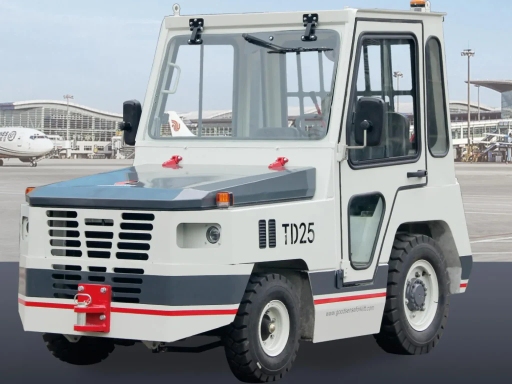
If you’re in the logistics game, especially around ports or airports, you’ve probably seen those sturdy machines pulling massive loads without breaking a sweat. We’re talking about diesel towing tractors – real workhorses that keep things moving. At JinChengYu Machinery, we specialize in equipment like this, designed to handle the toughest jobs. Check out our full lineup on the products page to see how these fit into broader operations. In this post, we’ll dive into what makes these tractors tick, from their core roles to why they’re a smart pick over other options. Stick around; you might just find the edge your setup needs.
What Is a Diesel Towing Tractor?
Picture a compact yet mighty vehicle built specifically for hauling heavy stuff across industrial sites. A diesel towing tractor runs on a diesel engine, pulling trailers, carts, or even aircraft without the need for lifting. Unlike forklifts that hoist loads up, these focus on ground-level transport, making them essential in spots where efficiency and strength matter most.
These tractors shine in demanding environments. For instance, models like the TCF-TD25/30 come equipped with a Cummins F2.8 engine, hitting Tier 4 Final emission standards. That’s not just jargon – it means cleaner runs without skimping on power. With dimensions around 3220 x 1450 x 1990 mm, they’re maneuverable but tough enough for daily grinds.
Transitioning from basics, let’s get into what they actually do on the job. It’s one thing to know the build; it’s another to see how it plays out in real scenarios.
Key Functions of Diesel Towing Tractors
Diesel towing tractors aren’t just about brute force; they handle a variety of tasks that keep operations smooth. Think of them as the backbone for moving goods where space is tight and loads are heavy.
Towing Heavy Loads Efficiently
At their core, these tractors excel at pulling heavy trailers or baggage trains. With rated capacities from 32,000 kg to 38,000 kg, they manage max drawbar pulls of 25 kN to 30 kN. Imagine an airport ramp: one of these could tow a string of luggage carts weighing tons, zipping from plane to terminal without a hitch. The automatic hydraulic transmission ensures seamless shifts, reducing operator fatigue during long hauls.
Supporting Airport and Port Operations
In aviation and shipping, airport towing tractors are game-changers. They push back aircraft or haul ground support gear, often in all-weather conditions. Ports use them for container trailers, cutting down on manual labor. A quick example – during peak hours at a busy hub, a diesel model can cycle through multiple tows faster than electric alternatives, thanks to quick refuels. No waiting around for batteries to charge.
But functions alone don’t tell the whole story. What really sets these apart are the perks that come with diesel power. Let’s shift gears to why they’re worth the investment.
Of course, no machine is perfect. Sometimes, in super-tight spots, you might wish for even sharper turns, but that’s where design tweaks like a ventilated cab come in handy, keeping things practical.
Top Advantages of Diesel Towing Tractors
Why go diesel? It’s not just tradition; the benefits stack up, especially for heavy-duty work. From raw power to long-term savings, these tractors deliver where it counts.
Superior Torque and Power Delivery
Diesel engines pack serious high torque at low RPMs, ideal for heavy-duty towing. Unlike gas models that rev high to build power, diesels kick in early – think starting a pull from standstill with a 38-ton load. This low-end grunt means smoother starts and less strain on components. In real terms, it translates to fewer breakdowns during intense shifts, like towing cargo in a rainy shipyard.
Enhanced Durability and Reliability
Built rugged, these tractors thrive in harsh spots. The Cummins engine in our models boasts low maintenance and global parts availability, cutting downtime. Durable diesel tow tractors handle dust, mud, and extreme temps better than electrics, which might falter in wet conditions. Industry pros often note how diesels clock 500,000+ miles with proper care, outlasting competitors in ports where uptime is money.
Fuel Efficiency and Cost Savings
Here’s a big win: better fuel economy for towing. Diesels squeeze more miles from each gallon, especially under load. For example, running a full day at an airport might use 20% less fuel than a gas equivalent. Over time, that adds up – lower operating costs, plus quick refuels versus hours charging batteries. And with emission controls like Tier 4 Final, they’re eco-friendlier without losing punch.
Safety and Operator Comfort Features
Safety isn’t an afterthought. Features like vacuum-assisted hydraulic disk brakes ensure stops even with max loads. Add in anti-decoupling traction pins and low-brake alarms, and risks drop. On the comfort side, cabs with front windshields and insulated roofs keep drivers focused. One operator I chatted with mentioned how the ventilation beats sweating through summer tows.
To break it down further, here’s a quick comparison table of diesel vs. electric towing tractors based on common industry metrics:
| Aspect | Diesel Towing Tractor | Electric Towing Tractor |
| Towing Capacity | Up to 38,000 kg | Often lower, around 20-30,000 kg |
| Operating Time | Long shifts with quick refuels | Limited by battery life (4-8 hours) |
| Terrain Suitability | Excellent on uneven, outdoor surfaces | Best indoors or flat areas |
| Maintenance Cost | Low, with widespread parts | Higher battery replacements |
| Initial Cost | Moderate | Higher due to tech |
This table highlights why diesels often edge out in industrial settings. Sure, electrics are quieter, but for raw reliability, diesel wins hands down.
Shifting from advantages, it’s clear these tractors aren’t just tools – they’re investments. But who makes them reliable? Let’s talk about a key player in the field.
JinChengYu FORKLIFT: Your Reliable Diesel Towing Tractor Supplier
Based in Qingdao, Shandong Province, JinChengYu FORKLIFT has been a go-to name since 2002 for materials handling and GSE gear. We handle everything from imports/exports to sales networks, focusing on quality and customer satisfaction. Our diesel towing tractors, like the TCF-TD25/30 series, blend Cummins power with smart designs for ports, airports, and warehouses. With a global reach – think South America to the Mid East – we provide not just machines, but full support including spares and rentals. It’s all about building that international brand with energy-saving, eco-friendly standards.
Conclusion
Wrapping it up, diesel towing tractors offer unmatched functions for heavy hauling and clear advantages in power, durability, and efficiency. Whether you’re optimizing airport ops or port logistics, they keep things rolling reliably. If you’re eyeing upgrades, consider how these fit your needs – they could transform your workflow.
FAQs
What are the main functions of a diesel towing tractor?
These tractors primarily handle towing heavy loads like baggage trains or trailers in airports and ports. They provide strong pull at low speeds, ensuring efficient transport without lifting.
What advantages does a diesel towing tractor have over electric models?
Diesel versions shine with higher torque, longer run times, and better durability in rough conditions. They’re also more cost-effective for continuous outdoor use, with quicker refuels.
How does the Cummins engine enhance diesel towing tractor benefits?
The Cummins F2.8 boosts reliability with low maintenance and Tier 4 Final compliance, offering global parts access and strong performance for heavy-duty tasks.
Are diesel towing tractors suitable for airport operations?
Absolutely. Their all-weather capability and high towing capacity make them ideal for pushing aircraft or hauling gear, reducing downtime in busy ramps.
Where can I learn more about diesel towing tractors?
Head over to our contact page for inquiries, or explore real-world applications on our site.