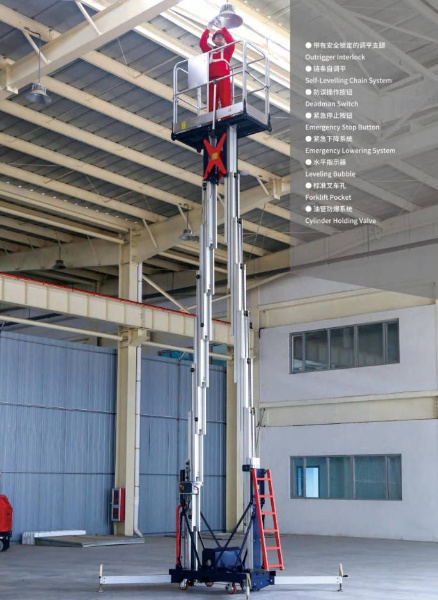
In terms of maintenance, there will be fast jobs that have to be done in confined or difficult areas. For instance, changing lights in the lobby, inspecting HVAC vents, repairing cameras in a warehouse, and inspecting ceiling services. This is what happens daily in busy buildings.
It is important to note that for many facility managers, having an aluminum vertical mast lift means having a device with good combination of portability, lightweight, vertical reach, and easy mobility from one point to another. For buildings where people are still working or visiting, these features may be as important as the maximum height of the lift.
What Makes an Aluminum Vertical Mast Lift Different?
An aluminum vertical mast lift is a small aerial work platform. It raises a platform straight up along one or more mast sections. Portable versions are often used for indoor maintenance. The work point sits right overhead and space is limited.
Such mast lifts prove themselves effective for use in hotels, terminals, offices, shopping centers, schools, gyms, and warehouses. They make it possible for teams to get to hard-to-reach places without using bulky equipment.
The facility managers face the same routine challenges. They should be able to switch quickly from one room to another or from one floor to another. The hard positioning may turn a fast fix into a prolonged and irritating procedure.
Why Facility Managers Prefer Portable Mast Lifts
Facility teams often move across several rooms or floors in one day. When a lift is hard to position, a simple fix can drag on for hours. Portable aluminum mast lifts help solve that problem in clear ways.
Easier Access Through Narrow Indoor Routes
Service corridors, office doors, retail aisles, storage areas, and elevator entrances often create bottlenecks. A compact lift for narrow spaces takes up less floor area. It is easier to place right under ceiling fixtures.
Portable aluminium mast lifts can easily get through small doorways. In cases where the size and capacity requirements permit, they are also able to go from one floor to another using regular elevators. This is ideal for technicians involved in installing lights, cameras, sensors, or ceiling inspections within the same building. The lifts can be raised without needing any assistance.
Many buildings have older doorways or tight corners. A smaller machine simply fits better. That saves time and reduces the chance of damaging walls or door frames during transport.
Lower Weight Helps on Finished Floors
Machine weight matters a lot indoors. Commercial building maintenance often involves tile, polished concrete, upper floors, showrooms, or hotel lobbies. Floor load limits and surface condition need careful checks.
Buyers should still review the total operating weight. That includes the operator, tools, platform contents, and any point-load limits for the floor. Lighter machines put less stress on finished surfaces. They lower the risk of scratches or marks that would need later repairs.
In multi-story buildings, weight also affects elevator use. A lighter lift is more likely to stay within safe limits. This keeps the whole process smoother and safer.
Moving Between Jobs Takes Less Effort
A portable aluminum mast lift can be pushed between suitable work areas. It can move through interior routes or load for transport more easily than many larger machines. For preventive maintenance teams, that mobility can cut setup time across several departments.
Technicians often handle several small tasks in one shift. They may fix lights on one floor, then check cameras on another. A machine that rolls easily and fits through normal doors helps them finish more work in less time. Less time spent moving equipment means more time spent on actual maintenance.
Well Suited to One-Person Maintenance Tasks
Many indoor jobs need height, not a large deck. Lighting maintenance may require only one technician, a replacement fitting, and a few tools.
Other common tasks include:
- ceiling and sprinkler inspections
- CCTV camera adjustment
- HVAC grille and vent maintenance
- indoor signage installation
- electrical checks and light repair work
For this type of overhead maintenance, a one-person aerial lift can provide direct access. It does so without taking up unnecessary floor space. The smaller platform keeps the focus on the job. It also reduces the chance of tools or materials falling because the work area stays compact and controlled.
When only one person is needed, a large platform becomes extra bulk. Portable mast lifts match the real size of most daily tasks.
Different Mast Options Match Different Heights
Portable aluminum mast lifts come with different mast arrangements. These balance working height, platform capacity, stability, and stowed size.
Some product ranges cover roughly 6 m to 20 m of working height. Lighter single-mast versions work for compact access. Multi-mast configurations are used when greater height or capacity is needed. The right lift reaches the task without being oversized for the building.
Choosing the correct height range matters. A machine that is too tall may be hard to store or move. One that is too short forces workers to use less safe methods. Matching the mast option to the building’s real needs keeps operations practical.
Stable Setup Supports Controlled Work at Height
Compact equipment still requires careful setup. Portable mast lifts may use stabilizing outriggers, leveling devices, platform controls, and ground controls to support safe operation.
Prior to lifting the platform, it is important that the work area be inspected for floor condition, slope, overhead obstructions, foot traffic, and sufficient clearance for the necessary support structure. The operator must also be trained according to the manufacturer’s specifications and regulations in the area.
Correct procedures not only keep the worker safe but the facility as well. Even small machines can become unstable when there are imperfections in the flooring, and outriggers are not set up correctly. This makes the job easier and safer for everyone.
Less Disruption in Occupied Buildings
A compact indoor lift may take up less space in a corridor, lobby, store, or terminal. It can usually be repositioned quickly after the task. That helps reduce the time equipment remains in public or operational areas.
In hotels, offices, or retail spaces, visitors and staff keep moving. Large machines can block paths or force temporary closures. A smaller lift lets maintenance happen with less notice and less interruption to normal activities. This is one reason facility managers often prefer portable aluminum designs.
Where Portable Aluminum Mast Lifts Fit Best
Typical applications combine vertical access, restricted floor space, and frequent movement between work points. The table below shows common settings and the kinds of work these lifts handle well.
| Facility | Typical maintenance work |
|---|---|
| Hotels and offices | Lobby lights, ceiling panels, cameras, signs |
| Malls and retail stores | Lighting, displays, CCTV, overhead checks |
| Schools and gyms | High-level lights, speakers, ceiling inspection |
| Warehouses | Lighting, sensors, racking-area inspection |
| Terminals | Signs, cameras, electrical and ceiling services |
A portable lift for high ceilings works best when it can be placed almost directly under the task. If the job requires substantial horizontal reach over machinery, seating, or conveyors, another type of aerial work platform may be more suitable.
In many buildings the work is straight overhead. Cameras, lights, vents, and sensors sit above walkways or open floor areas. A vertical mast lift reaches those points cleanly without needing extra outreach arms.
Vertical Mast Lift vs. Scissor Lift for Building Maintenance
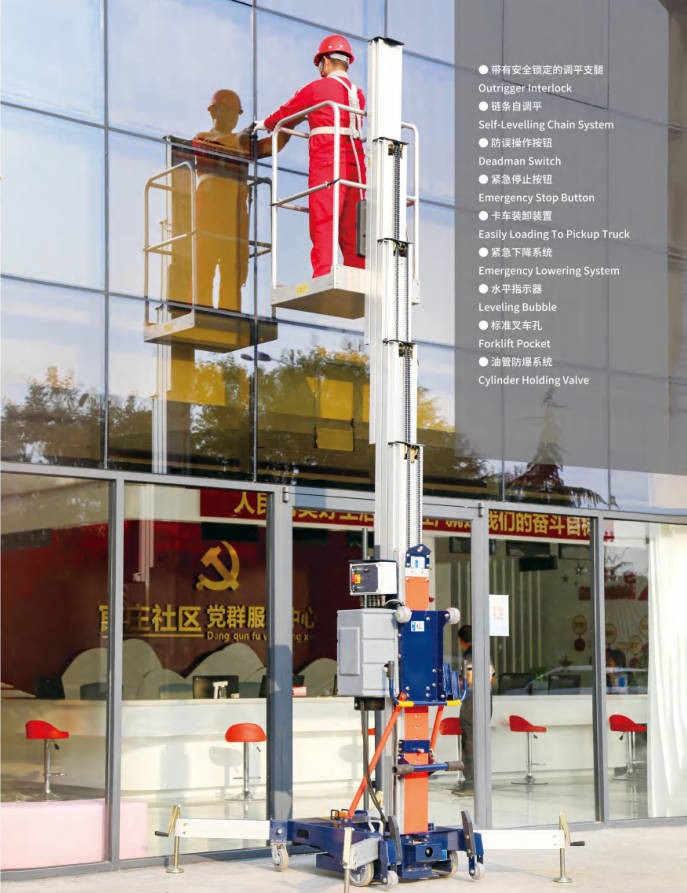
Both machines can handle indoor work. They solve different access problems. The choice should start with the route, floor, load, and task rather than equipment type alone.
When a Vertical Mast Lift Makes More Sense
A vertical mast lift is usually the better fit when aisles are narrow. Work is mainly straight overhead. One operator is enough. The machine must move regularly through the building. Its compact footprint and relatively low weight are often the main advantages.
These lifts shine in finished spaces where appearance and floor protection matter. They also help when elevators or doorways limit the size of equipment that can be brought in.
When a Scissor Lift May Be Better
A scissor lift can make more sense when technicians need a larger platform. They may need greater material capacity or extra room for tools. Open warehouse bays and fit-out work may favor the bigger deck.
The key question remains simple. Which lift reaches the work point while fitting the route and floor conditions? Facility managers who answer that question first usually choose the right machine.
What Should Facility Managers Check Before Buying?
Start with the building, not the brochure. Measure the complete route from the unloading point to the work area. This survey helps prevent choosing enough height but too much width or weight.
Check these points carefully:
- required working height and platform capacity
- narrowest doorway, corridor, and elevator opening
- elevator capacity if floor-to-floor transport is planned
- floor-load restrictions and surface condition
- AC or battery power needs
- number of operators and tools
- outrigger footprint and setup space
- service, spare-parts, and transport requirements
Taking time to measure doorways and elevators avoids costly surprises later. A machine that looks perfect on paper may not fit through the actual path it must travel every day. Real measurements keep the purchase practical and useful for years.
JinChengYu FORKLIFT as an Aluminum Vertical Mast Lift Supplier
JinChengYu FORKLIFT is based in Qingdao, China. It supplies material-handling, warehouse, ground-support, and aerial work equipment to overseas markets. Its aluminum vertical mast lift offering focuses on portable vertical access. Compact transport dimensions, low weight, and different working-height needs are important for many sites.
Available solutions use high-strength aluminum structures. They offer different mast configurations, stabilizing outriggers, leveling devices, and controls at the platform and ground. AC power and battery options also allow buyers to match the equipment to fixed indoor work or more mobile maintenance schedules.
For procurement teams, working height, capacity, power, doorway width, elevator limits, and the jobsite route should all be reviewed before selection. Matching the machine to the real building conditions leads to better daily performance and fewer problems after delivery.
Conclusion
Portable aluminum mast lifts suit building maintenance because they address the constraints facility managers face every day. Narrow corridors, finished floors, elevators, changing work locations, and overhead jobs that do not need a large platform all favor compact vertical access.
When working height, access dimensions, floor loading, platform capacity, power supply, and setup space point toward this type of machine, an aluminum vertical mast lift can give maintenance teams a practical way to reach lighting, HVAC components, signs, cameras, and ceiling systems. It does so with less disruption to normal operations. The result is faster jobs, safer work, and buildings that stay open and functional while essential upkeep continues.
Frequently Asked Questions
What Is the Best Lift for Indoor Building Maintenance?
There is no single best lift for every site. A portable aluminum mast lift is a strong choice for narrow indoor spaces, mainly vertical work, and one-person maintenance. Larger platforms or jobs requiring horizontal outreach may need different equipment. The right answer depends on the specific building and the most common tasks.
Can a Portable Aluminum Mast Lift Fit Through Standard Doorways?
Many compact models are designed for narrow doorway access. Dimensions still vary. Compare the lift’s stowed width and height with every doorway on the planned route. Measuring the actual doors prevents delays on the first day of use.
Can an Aluminum Mast Lift Be Taken in an Elevator?
Some portable mast lifts can travel in standard elevators. Check machine dimensions, total weight, elevator door size, car dimensions, and rated elevator capacity before use. Confirming these details in advance keeps movement between floors safe and simple.
Is a Mast Lift Better Than a Scissor Lift for Facility Maintenance?
A mast lift generally suits tight routes and compact one-person work. A scissor lift provides more platform space and often greater capacity. The better choice depends on the building and the task. Facility managers who measure routes and list daily jobs first usually select the machine that fits best.