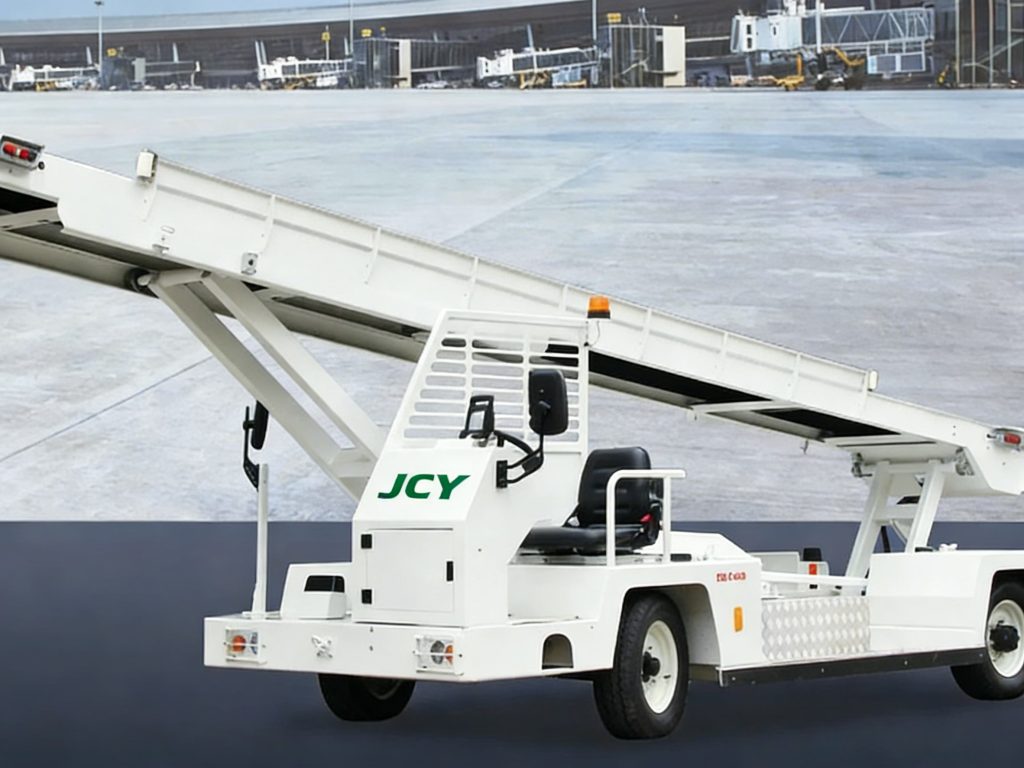
Buying a diesel belt loader for ramp operations is no longer only about height range, belt speed, and uptime. Emissions compliance can decide whether the machine gets approved in a tender, cleared at the port, or accepted airside. Many high-ranking pages on this topic perform well because they translate regulations into simple checks, list the proof buyers actually need, and connect compliance to real delays and operational risk. This article follows that practical format and keeps the focus on actions that prevent import and deployment problems.
Why emissions compliance can block delivery and ramp access
Emissions rules for nonroad diesel engines affect more than the environment. They show up in procurement terms, import clearance, airport access rules, and even resale.
Before looking at standards, it helps to understand how non-compliance usually hurts buyers.
The real cost is schedule disruption
Most issues do not start with fines. They start with a hold. A shipment can be delayed because a label photo is missing, an engine family reference is unclear, or serial numbers do not match. That can break a peak-season plan. If the conveyor belt loader was meant to cover additional flights, ground handlers may have to rent equipment at short notice, shift staff, or slow turnarounds until the unit is released.
Tenders increasingly name engine tiers
Many airports and service contractors now write engine tier requirements into bid documents for diesel ground support equipment. This is especially common where public reporting and local air-quality targets are strict. If the purchase order only says “emissions compliant” without naming the standard, suppliers may deliver a configuration that is hard to import or hard to approve.
Tier 4 Final and Stage V in plain terms
Online articles often repeat standard names but do not explain how to use them during sourcing. The goal here is simple: make the terminology useful in procurement, shipping, and customs discussions.
What Tier 4 Final usually means
Tier 4 Final is a U.S.-aligned emissions level for many off-road diesel engines. In practice, it is not just a label. It is an engine configuration choice that can include aftertreatment hardware, and it is backed by certification records and labeling tied to the engine family and model year. For buyers, the key question is not “can a Tier 4 Final engine be provided,” but “can proof be supplied that matches the engine installed on the delivered machine.”
What Stage V usually means
Stage V is the EU emissions framework for many non-road mobile machines. It is tied to placing equipment on the EU market, so documentation and labeling consistency matter. Even when the hardware is capable, a weak paperwork trail can create problems later if authorities request proof after delivery.
Why “close enough” can still fail
Stage V and Tier 4 Final are often compared because both aim at low emissions. However, the paperwork expectations can differ by destination. A unit built for one market may still fail checks elsewhere if labeling, declarations, or certification references are not in the format that local brokers and authorities expect.
The compliance file: what gets checked first
Most import delays are caused by incomplete or inconsistent documentation rather than the machine itself. A compliance file is not complicated, but it must be clean and consistent.
Label and nameplate: the first proof
Customs or compliance reviews often start with the emissions label and the engine data plate. Buyers commonly search for emissions label location on diesel engine because they want to confirm the label exists before shipping. Clear photos matter. They should be close enough to read every line, and they should match the identifiers on the invoice and packing list. One wrong digit can create a long dispute at the port.
Certificates and declarations: what to request
For U.S.-linked imports, buyers often look for an EPA-style certification reference tied to the engine family. People search engine certificate of conformity because they assume each unit has a unique certificate. In most cases, certification is issued for an engine family, and the buyer needs documentation that the installed engine belongs to that certified family and is correctly labeled.
For EU-linked imports, buyers often focus on declarations that support placing the machine on the market. The practical point is the same: paperwork must match the delivered configuration, and serial information must be consistent.
Customs paperwork that reduces clearance risk
A typical shipment file should include a commercial invoice, packing list, bill of lading, a clear product description as non-road equipment, engine identification details, destination-relevant emissions documents, and readable photos of the label and data plate. In many destinations, brokers also ask for rated power, engine type, and whether the machine uses DEF/AdBlue.
How to verify compliance before shipment
Emissions compliance should be treated like a spec item. Verify it while configuration can still be adjusted.
Put the destination standard into the purchase order
The purchase order should state the required engine tier, the destination country or region, and the import purpose if relevant. This reduces last-minute engine swaps and prevents the supplier from assuming a different standard.
Confirm whether aftertreatment affects ramp operation
Cleaner diesel configurations may use DPF, SCR, or both. That can change maintenance routines and operator behavior. Teams often search diesel particulate filter maintenance after the unit is already on the ramp. It is better to ask in advance how regeneration works, what indicators mean, and what happens during long idle-heavy cycles. On busy aprons, a forced regeneration at the wrong time can interrupt work.
Match serial numbers across every document
One of the most common causes of delay is mismatch between engine serial, machine serial, and paperwork. Require a serial-number sheet listing both machine and engine serial, then attach matching photos. When the numbers align, brokers can clear shipments faster and with fewer follow-up questions.
Importing scenarios that commonly cause trouble
Compliance issues tend to repeat in predictable ways, especially when equipment crosses regions. Seeing the typical failure points helps buyers design a compliance package that survives both customs review and later audits.
EU-bound shipments: questions can come after delivery
In EU contexts, clearance is only step one. Local authorities may request declarations, label photos, and technical details later. If the compliance file is weak, the buyer can lose time proving the unit is correctly configured. A practical approach is to store the compliance file with the asset record, along with manuals and parts lists.
U.S.-linked shipments: certification alignment is critical
For U.S.-linked pathways, brokers may focus heavily on labeling and certification references. A reliable tactic is to involve the broker early, share label photos and engine identifiers before shipment, and fix missing items while the unit is still at origin.
Fleets operating across regions: consistency pays off
Ground handlers that move equipment between stations or resell units benefit from standardized documentation. A complete compliance file reduces downtime when a unit is transferred and makes resale easier because proof is already organized.
Fuel and service realities that affect compliance in practice
Emissions compliance is not only paperwork. It also affects how the engine behaves and what the maintenance team must plan for. Buyers who connect compliance to fuel supply and service capability avoid unpleasant surprises after delivery.
Fuel quality and consumables are part of compliance
Some configurations depend on low-sulfur diesel and may require DEF/AdBlue. Buyers should confirm local fuel supply and plan storage and refilling routines. Poor fuel or missed refills can cause warnings, derates, and avoidable service calls.
Regeneration behavior matters during peak shifts
DPF regeneration is not difficult, but it needs awareness. Ramp work often includes short cycles and long idle periods. That pattern can increase soot load and trigger active regeneration. Training supervisors and operators on correct responses prevents repeated interruptions.
JinChengYu FORKLIFT as a diesel belt loader supplier
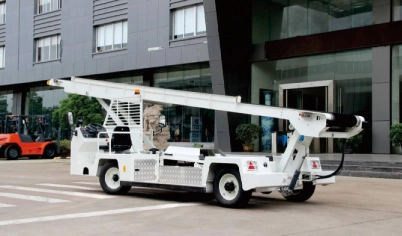
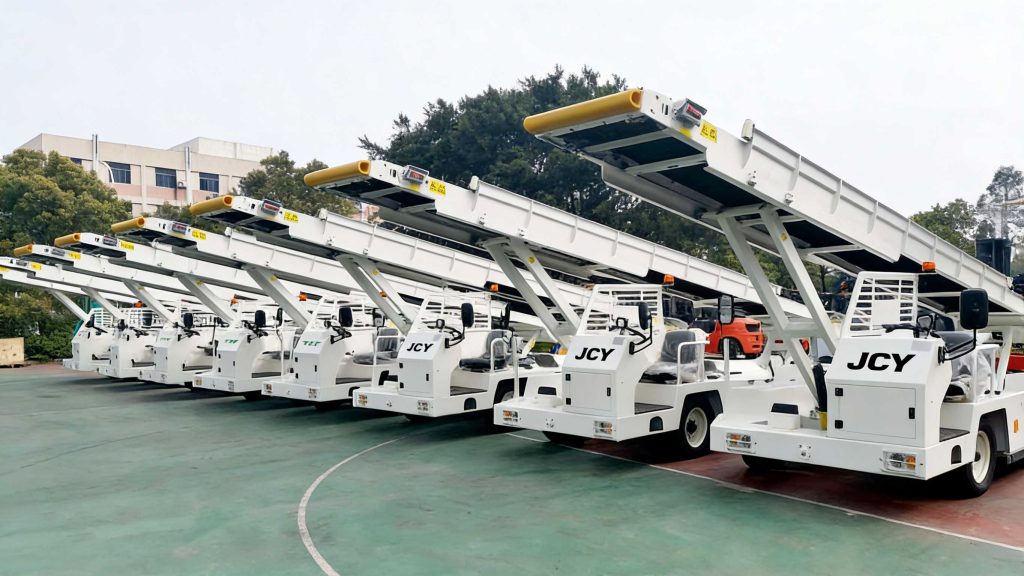
According to this website, JinChengYu FORKLIFT is based in Qingdao and supplies material handling equipment, airport ground support equipment, and warehouse equipment, with export-oriented service and spare parts support for overseas customers. The site describes a diesel self-propelled belt loader designed for baggage and cargo handling, with a transfer height up to 4560 mm, payload capacity around 1080 kg, belt speed in the 200–500 mm/s range, and safety features such as an emergency hand pump and belt interlocking. It also notes that Tier 4 Final compliant engine options are available, which is relevant for buyers who must align engine configuration with local emissions rules and customs checks.
Conclusion
For a diesel belt loader, emissions compliance is a practical gate, not a formality. It affects tender approval, import clearance, and the ability to work airside without disruption. The buyers who avoid delays follow a simple pattern: define the required standard in writing, verify label and serial data early, and build a complete compliance file that matches the delivered configuration. With those steps in place, delivery becomes predictable and operations can stay focused on safety, uptime, and fast turnarounds.
FAQs
What is the fastest way to confirm emissions compliance before shipping?
Request readable photos of the engine emissions label and data plate, then cross-check all identifiers against the invoice and packing list.
Is Tier 4 Final the same as Stage V?
No. They belong to different regulatory systems. Hardware can be similar, but paperwork expectations and required declarations can differ by region.
What causes the most common customs delays?
Missing label photos, serial number mismatches, and compliance documents that do not match the delivered configuration.
Will cleaner diesel configurations change daily operations?
They can. After treatment may require higher fuel quality, sometimes DEF/AdBlue, and correct handling of regeneration events.
When should a broker be involved?
Before shipment, ideally before production release, so missing documents can be fixed at the source.