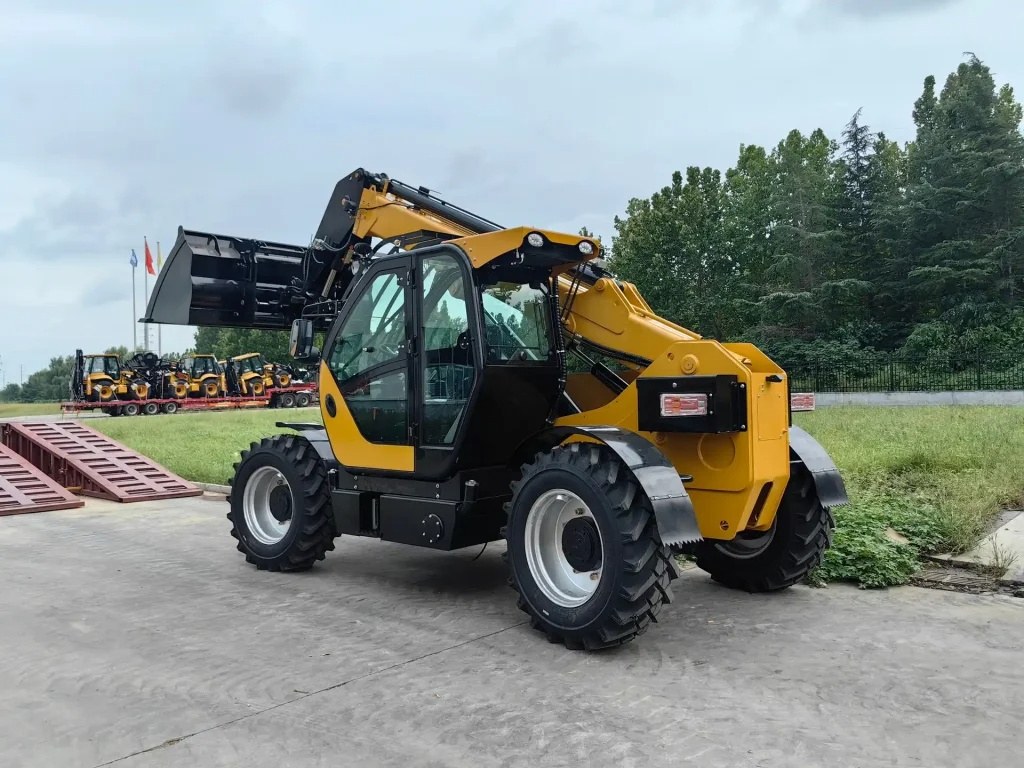
 A telescopic handler load chart looks simple at first glance. A few lines, a few numbers, maybe a shaded area. But this chart decides whether a load can be lifted safely, placed cleanly, and moved without wasting time on site. For buyers, fleet managers, and operators, reading it well matters just as much as engine power or tire type.
A Telehandler load chart shows how much weight a machine can carry at a certain lift height, forward reach, boom angle, and load center. That is why the rated capacity printed on a brochure is only the starting point. A machine may lift that figure close to the chassis, but not at full reach. This is the point many buyers miss when comparing a 7m telehandler, 10m telehandler, 13.5m telehandler, or 17.5m telehandler.
What a Telescopic Handler Load Chart Really Means
Before comparing machine sizes, it helps to slow down and read the chart as a jobsite tool, not just a spec sheet.
A telehandler load chart explained in plain language is this: it tells the operator how much the machine can lift at a certain position in space. The telehandler capacity chart connects weight, lift height, forward reach, and boom angle. The further the boom goes out, the less weight the machine can usually place safely.
Lift height
Lift height is the maximum vertical height the load can reach. On a busy site, that may mean placing palletized blocks onto a second floor slab, lifting bagged cement over a wall, or setting feed into a high agricultural storage bay.
Forward reach
Forward reach is the horizontal distance from the front of the machine to the load placement point. This matters when the machine cannot get close enough because of mud, stacked material, a trench, or a curb.
Rated capacity
Rated capacity is the maximum load the machine can carry under defined conditions. It does not mean the machine can lift the same weight at every height and every reach.
Load center and fork carriage
Load center is the distance from the face of the forks or fork carriage to the center of gravity of the load. A longer or badly balanced load changes the numbers quickly. The telehandler load capacity chart always makes more sense when the load center is checked first.
Attachment impact
A fork set, bucket, jib, or work platform changes the effective load and geometry. One attachment can cut usable capacity even before the payload is added. That is why a telehandler reach chart should never be read without confirming the attachment in use.
How to Read a Telehandler Load Chart Step by Step
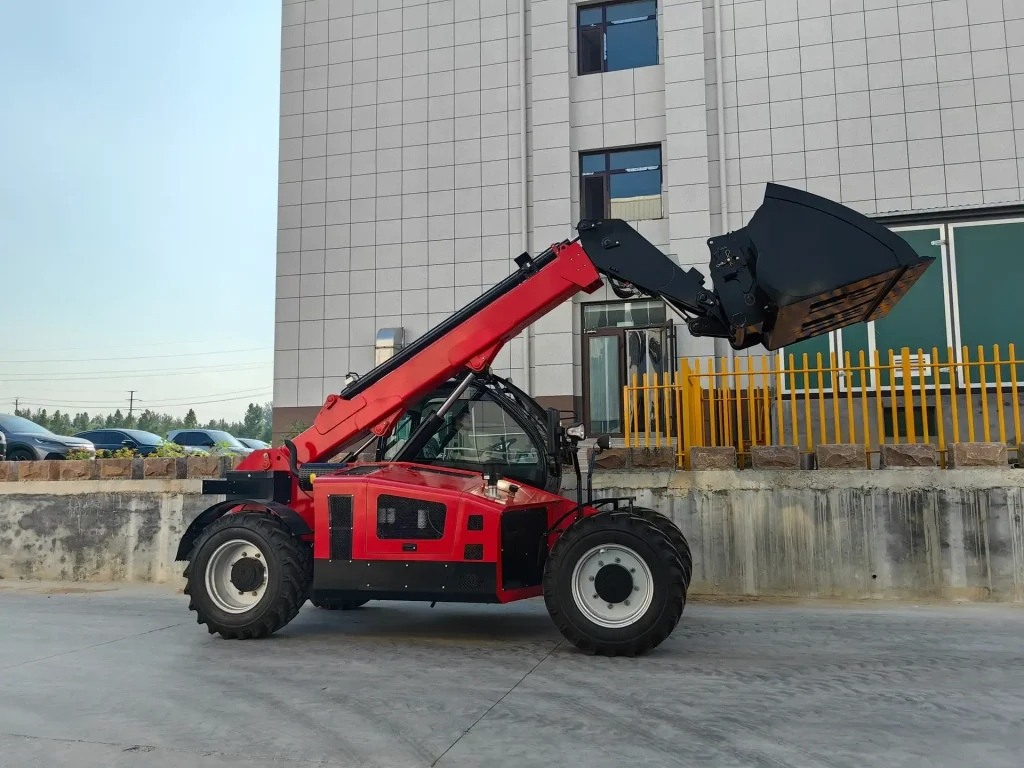 Once the basics are clear, the next question is practical: how to read a telehandler load chart on a real job, with a real load, under time pressure?
The safest way is to follow the same order every time. That reduces guesswork and makes the chart far easier to use.
Step 1: Confirm the actual load and attachment
Start with the real load, not an estimate. A pallet of bricks, a bundle of pipes, and a feed bag stack may all look similar from a distance, but their weight is different. Then confirm the attachment. Standard forks, a bucket, or a hook change the working range.
Step 2: Check the load center
A short compact pallet behaves differently from a long suspended item. If the load center shifts outward, telehandler stability drops. This is one reason long material often surprises inexperienced buyers.
Step 3: Mark the required lift height
Ask one simple question: how high does the load need to go? If the load only needs to reach a truck deck or a low rack, a smaller machine may be enough. If the task is setting material onto a slab edge or a high roof area, lift height becomes the first filter.
Step 4: Measure the forward reach or working radius
Now check how far out the machine must place the load. If the machine can drive close, the required forward reach stays low. If it must stay back from a ditch, wall, stacked pallets, or soft ground, the working radius increases.
Step 5: Find the safe zone on the chart
On the telehandler load chart, match the needed lift height and forward reach to the curve or operating zone. If the target point sits outside the safe zone for that load, the machine is too small for that task.
Here is a quick reading sequence many site teams use:
- Identify load weight
- Confirm attachment
- Check load center
- Measure lift height
- Measure forward reach
- Read the safe operating area
- Leave a margin for real jobsite conditions
Why Capacity Drops at Full Reach
This is where many wrong buying decisions begin. A telehandler may have a strong rated capacity near the machine, yet the usable load at full reach can be much lower.
As the boom extends, the load moves farther from the center of the machine. That creates more overturning force. The machine is still strong, but the balance point changes. A longer boom angle, larger working radius, or heavier attachment can reduce safe lifting numbers fast.
The table below shows the buying logic behind this.
| Position of Load | Typical Effect on Capacity | What It Means on Site |
|---|---|---|
| Close to machine, low height | Highest usable capacity | Good for truck loading, yard transfer, short placement |
| High lift, short reach | Moderate reduction | Common in block stacking or upper floor supply |
| Medium height, long reach | Larger reduction | Common when reaching over barriers or stored material |
| Full reach, high lift | Lowest usable capacity | Needs careful chart reading and more machine size |
This is why telehandler load chart explained articles rank well in search: buyers want to know the difference between brochure numbers and real placement ability.
7m, 10m, 13.5m, or 17.5m: Which Size Fits the Job?
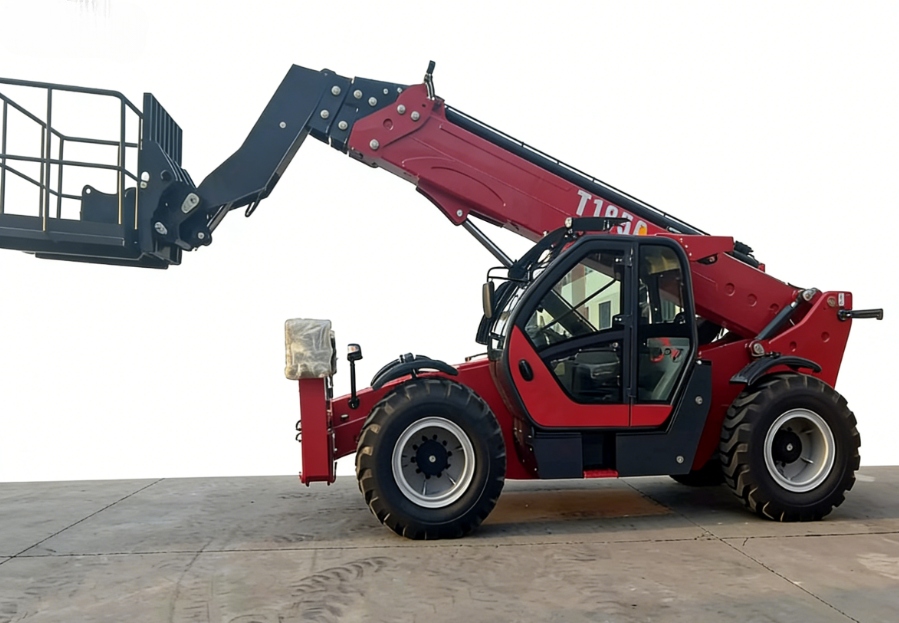
After learning how to read the chart, the next step is machine selection. This is where a telehandler size guide becomes useful.
The answer to “which size telehandler do I need” depends less on headline capacity and more on reach, site layout, and daily load type.
7m telehandler
A 7m telehandler is often the practical choice for compact work zones. It suits builders’ yards, smaller farms, low-rise projects, and material transfer in crowded spaces. A compact telehandler is easier to move around feed lanes, narrow access roads, and tight loading points.
Typical use cases include:
- Loading pallets onto standard trucks
- Handling seed, feed, or fertilizer
- Moving block, timber, or bagged goods on smaller sites
- Indoor-outdoor transfer where space is limited
For many users, this is the best telehandler for agriculture when the work is frequent but not very high.
10m telehandler
A 10m telehandler sits in the middle of the market. It gives more lift height and more forward reach without becoming too large for daily handling work. It often suits mixed jobs: unloading trucks in the morning, lifting pallets to upper levels later, then handling loose material around the yard.
This size is a common fit for:
- Mid-rise construction material delivery
- General contractor fleets
- Farm operations with stacking and loading needs
- Sites that need a balance of reach and maneuverability
13.5m telehandler
A 13.5m telehandler moves into a more demanding zone. At this height, buyers are often dealing with higher placement points, larger loads, or rougher ground. Machines in this class are more likely to be chosen when reach is not occasional, but part of daily output.
This size often suits:
- Structural material placement
- Façade and roofing support work
- High pallet handling on uneven sites
- Projects where frame leveling or outriggers add working confidence
A telehandler for uneven ground in this size range is often selected because jobsite conditions are less forgiving.
17.5m telehandler
A 17.5m telehandler is closer to a specialist machine. It is usually picked for high placement, bigger envelopes, and jobs where a heavy duty telehandler saves repeated repositioning. On larger projects, extra height and forward reach can cut cycle time in ways that smaller units cannot.
It may suit:
- Large commercial construction
- Higher roof and steel placement support
- Wide work areas with stand-off distance
- Applications where the machine must clear obstacles and still place accurately
Features That Matter Beyond the Chart
A chart matters, but machine design still shapes daily performance. Buyers looking for the best telehandler for construction or the best telehandler for agriculture usually compare these points alongside the telehandler load chart:
| Feature | Why It Matters |
|---|---|
| 4WD and rough terrain setup | Better traction on mud, gravel, farm lanes, and unfinished sites |
| Frame leveling | Helps keep the machine better aligned on uneven ground |
| Outriggers | Improve support in higher-reach working positions |
| Steering modes | Useful in tight yards, storage areas, and crowded sites |
| Attachment range | Broadens the machine’s use across seasons and projects |
A rough terrain telehandler with frame leveling and outriggers may cost more upfront, but it can make the difference between smooth placement and constant repositioning.
A Brief Look at JinChengYu FORKLIFT as a Telescopic Handler Supplier
Before moving to common buyer questions, it is worth placing this topic in a supplier context.
JinChengYu FORKLIFT presents itself as a Qingdao-based supplier serving overseas markets in material handling, GSE, warehouse equipment, and spare parts. On its website, the telescopic handler range covers multiple lifting heights from compact to high-reach machines, with applications that fit construction, farm handling, and yard work. The broader product catalog also includes forklifts, rough terrain equipment, and warehouse handling machinery, which matters for buyers trying to source more than one equipment category from one supplier. The company’s case pages show work in farms, warehouses, raw material storage, steel pipe handling, and paper-related handling, which helps give a clearer picture of the kinds of operating environments its customers face.
Conclusion
A telehandler load chart is not just a safety chart. It is a buying chart. Read it well, and the right machine size becomes clearer. Read it poorly, and the job ends up slower, less stable, and more expensive.
For most buyers, the key is simple: match the machine to the real lift height, real forward reach, real load center, and real site conditions. That is the fastest way to decide between a compact telehandler and a higher-reach model, and the best way to avoid paying for the wrong machine. If the goal is cleaner placement, fewer repeat moves, and better jobsite flow, the chart is the first place to look.
FAQs About Telehandler Load Charts
Questions like these usually come up before a buyer sends an inquiry or compares two size classes.
What is a telehandler load chart?
A telehandler load chart is a safety and planning chart that shows how much weight a telehandler can lift at different lift heights, forward reach positions, and boom angles.
How much can a telehandler lift at full reach?
Usually less than its rated capacity. Full reach capacity depends on the load center, attachment, boom angle, and machine size.
Do attachments change telehandler capacity?
Yes. Every attachment adds weight and can shift the load position. That changes the telehandler load capacity chart in real use.
Can a telehandler work on uneven ground?
Yes, but the machine, tires, and support features matter. For sloped or broken ground, buyers often look for a rough terrain telehandler with frame leveling and, in some cases, outriggers.
Which size telehandler is right?
A 7m telehandler suits tighter daily handling work. A 10m telehandler is a balanced all-rounder. A 13.5m telehandler fits higher placement and harder sites. A 17.5m telehandler is better for larger reach demands and heavier project work.