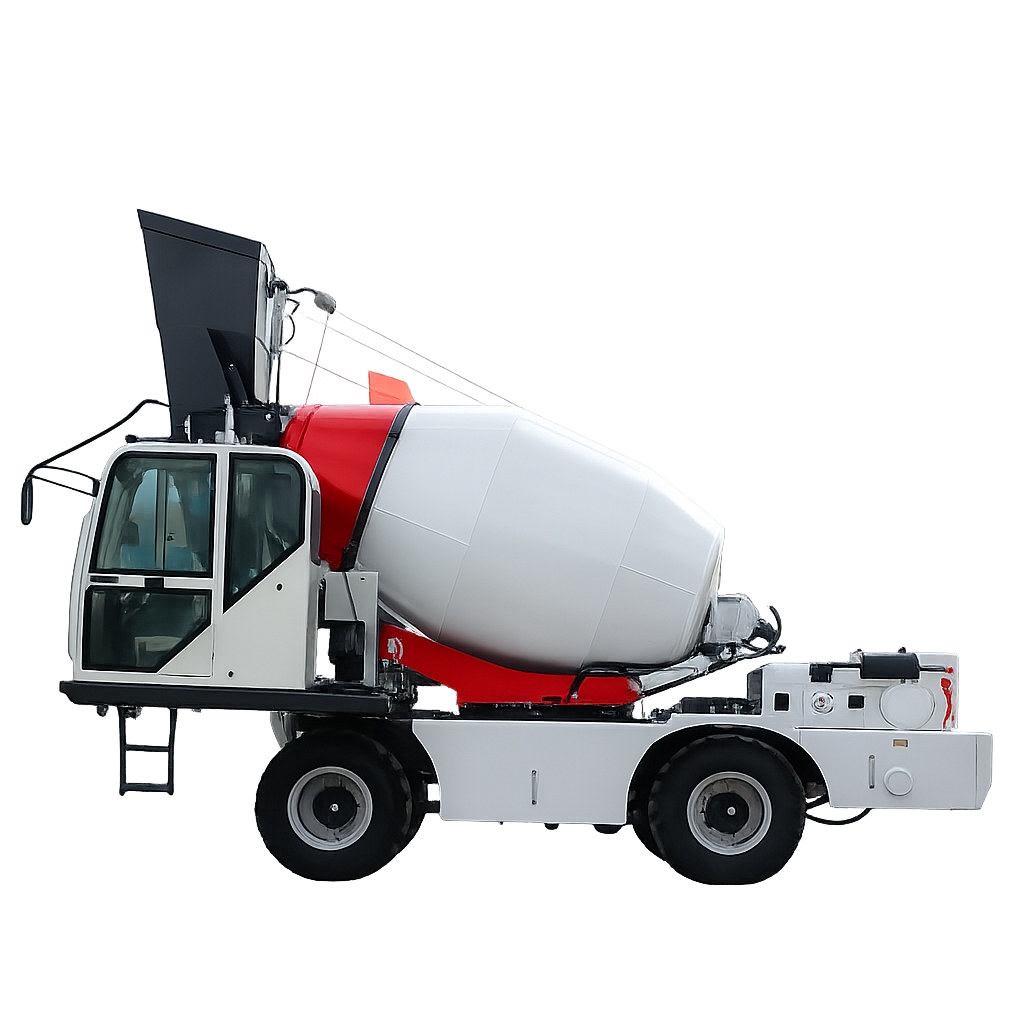
A self loading concrete mixer offers builders a handy tool to make new concrete right at the work area. You do not wait for pre-made mix trucks or build a set mixing station. One unit loads rocks and sand, adds water, blends the mix, hauls it around the site, and drops it close to where you pour.
For street jobs, country building tasks, base pads, farm builds, and far-off road work, this moving mixer stands out. It bridges the space between what you need and what you get.
What Is a Self Loading Concrete Mixer?
A self loading concrete mixer serves as a full-package unit for making concrete. It blends a scoop bucket, turning barrel, water setup, driver area, fluid power parts, and drop ramp into one ride. In everyday tasks, it acts like a tiny moving concrete making spot. But it shifts better over bumpy land.
How the Machine Works on Site
The steps stay simple. The driver steers the unit to the supply heap. He uses the front scoop to grab sand, stones, or other bits. Then he tips them into the spinning barrel. Cement and water go in based on the mix plan. Once blended, the unit hauls the concrete to the pour spot and lets it out via the ramp.
This flow helps when the site holds many spread-out pour areas. Take a country road team. They might need concrete for gutters, pipes, edges, and tiny slabs over a few miles. A self loading concrete mixer truck travels with the group. Workers avoid trips back to one set mix point.
Why Contractors Choose a 4×4 Self Loading Concrete Mixer
Lots of build sites lack flat paths. Mud, loose stones, tight trails, damp soil, and hills slow a standard concrete mixer truck. A 4×4 self loading concrete mixer fits these spots well.
Better Mobility in Rough Terrain
All four wheels pulling gives the unit firm grip on dirt roads or lumpy ground. This aids in:
- Rural road construction
- Mountain road repair
- Farm building projects
- Bridge and culvert work
- Water canal and drainage projects
- Small housing foundations
- Remote construction sites without ready-mix access
The quick cycle counts too. Mixing near the pour cuts wait time, waste, and mix stiffening risks before you set it.
Less Dependence on Extra Equipment
Old-school concrete tasks often call for a scoop loader, stand-alone blender, water hold, haul truck, and many hands. A self loading mobile concrete mixer cuts that list. One skilled driver manages scoop, blend, shift, and drop. This does not skip smart site plans. But it eases small and mid tasks.
Key Features That Affect Concrete Quality
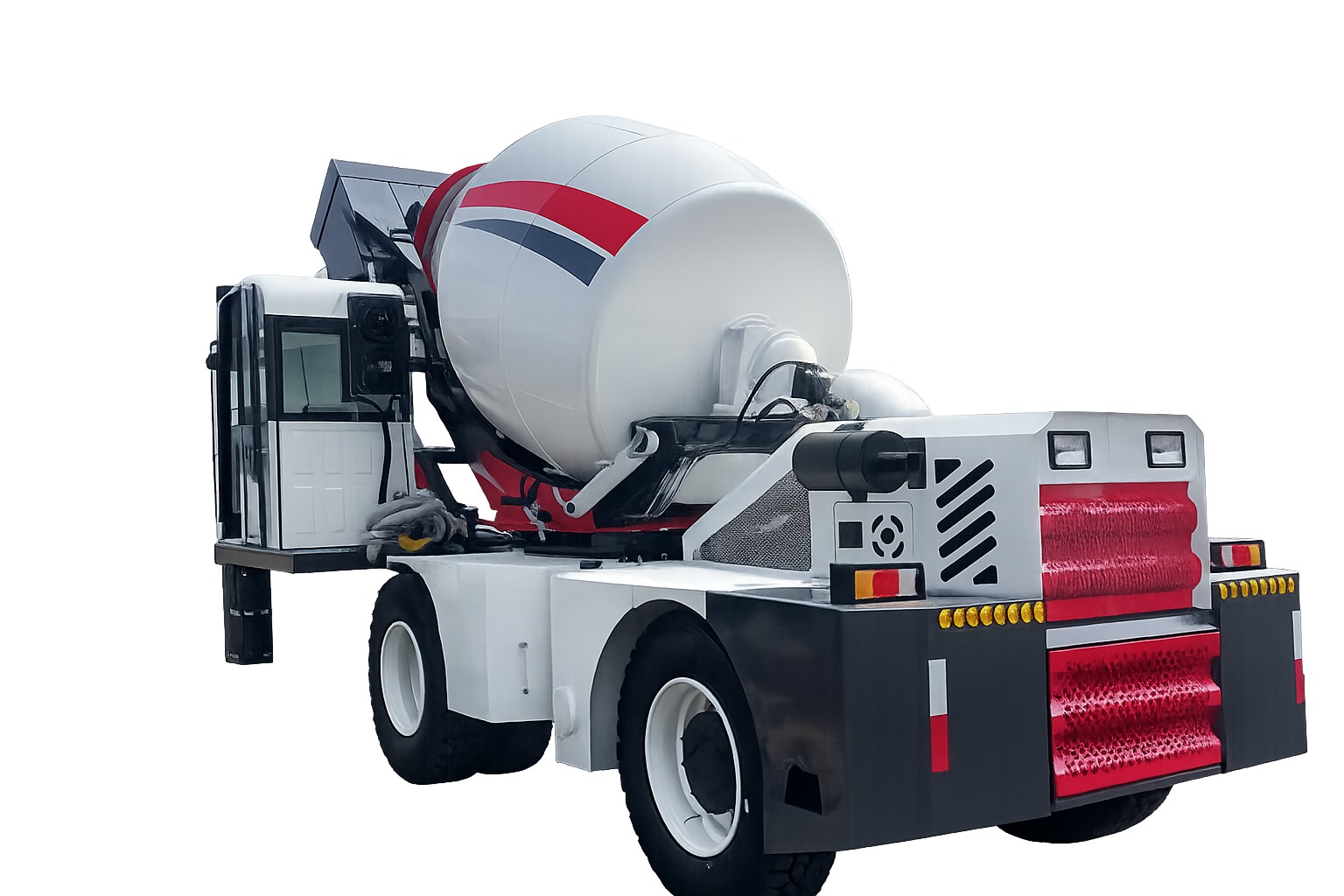
Not all self loading concrete mixers do the job alike. Buyers must note parts that shape blend grade, measure rightness, and unit length.
Loading Bucket and Mixing Drum
The scoop bucket needs to hold up to repeated grabs of sand and stones. Easy bucket shifts save time and cut spills. The turning barrel must spin steady and hold enough for the day’s concrete needs.
A solid barrel shape lets stuff tumble and flip inside. It avoids just circling the sides. That matters for even concrete, above all with varied stone sizes.
Water Metering and Weighing System
Concrete grade rests much on water-cement balance. Extra water softens the end result. Too few drops make the blend tough to spread and pack. A water measure setup lets the driver add drops with care.
Many auto self loading concrete mixer builds use fluid or electric scales to guide stuff input. On tiny jobs, this shifts rough “site blend” concrete to steadier batches.
Diesel Engine and Hydraulic Drive
A diesel self loading concrete mixer fits outdoor builds best. It runs where power lines lack. Check engine strength, fluid reply, cool flow, and fix reach before buy.
In warm spots, dusty paths, or long work days, easy fix spots matter. Look at filters, tubes, lube points, wheels, stops, and fluid links. They should check simple.
Choosing the Right Capacity for the Job
Capacity tops buyer questions. More does not always win. A big blender makes more per run. But it may not suit narrow lanes, town paths, or tight turn areas.
The chart below matches size to usual job kinds.
| Capacity Range | Best Fit | Typical Site Situation |
|---|---|---|
| Around 1.6 m³ | Small jobs and tight spaces | House foundations, farm roads, small slabs, repair work |
| Around 2.4 m³ | Balanced daily use | Rural roads, drainage work, small commercial buildings |
| Around 3.5 m³ | Higher output projects | Road sections, municipal work, bridge support tasks |
| Around 4.0 m³ | Heavy-duty site production | Larger infrastructure work and continuous concrete demand |
Small-Capacity Mixers
A small self loading concrete mixer fits well in narrow spots, mid pour amounts, or frequent shifts. Small-size units haul easy and prove simpler for fresh drivers.
Medium and Large-Capacity Mixers
For teams on road beds, hold walls, long gutters, or repeat base pours, mid and big-size units save daily runs. Match run size to team pour pace. Faster blend than pour speed still brings waste.
Self Loading Concrete Mixer vs. Traditional Concrete Mixer Truck
A traditional concrete mixer truck hauls pre-blended concrete from a making plant to the site. A self loading concrete mixer truck blends concrete on site. This gap shifts costs, times, and job hold.
| Item | Self Loading Concrete Mixer | Traditional Concrete Mixer Truck |
|---|---|---|
| Main role | Loads, mixes, transports, and discharges | Transports ready-mixed concrete |
| Best location | Remote or scattered jobsites | Sites near a batching plant |
| Equipment need | One integrated machine | Depends on plant and delivery truck |
| Terrain ability | Stronger on rough ground with 4×4 drive | Better on paved roads |
| Concrete control | Mixed near the pouring point | Delivery time affects workability |
| Labor demand | Usually fewer operators | More coordination needed |
When a Self Loading Mixer Makes More Sense
A self loading concrete mixer for sale suits jobs with poor reach to pre-mix sources, many tiny pours, spread work zones, or bumpy land. It helps when haul trucks cost high, run late, or miss the pour spot.
For town jobs near a pre-mix plant with big steady pours, old supply lines may fit fine. Pick based on site reach, amount, range, hand costs, and day plans.
Where Self Loading Concrete Mixers Are Used
A self loading concrete mixer shines in tasks where bend counts over big plant flow.
Road and Drainage Work
On country paths, a team may want concrete for edge ditches, pipes, tiny hold walls, shoulders, and crossings. These pours sit far apart. Shifting a small concrete maker down the path cuts down time.
Foundations and Small Buildings
For homes, stores, farm barns, and tiny shops, the unit supplies concrete for bases, posts, floor beams, levels, and ramps. The driver makes concrete as each part readies. This lets teams keep a smooth beat.
Remote Infrastructure Projects
In far spots, pre-mix hauls cost much or fail often. A self loading mobile concrete mixer lets builders use local stones, cart cement to site, and make concrete on call. It aids water tasks, town paths, sun base pads, and tiny bridge jobs.
What to Check Before Buying
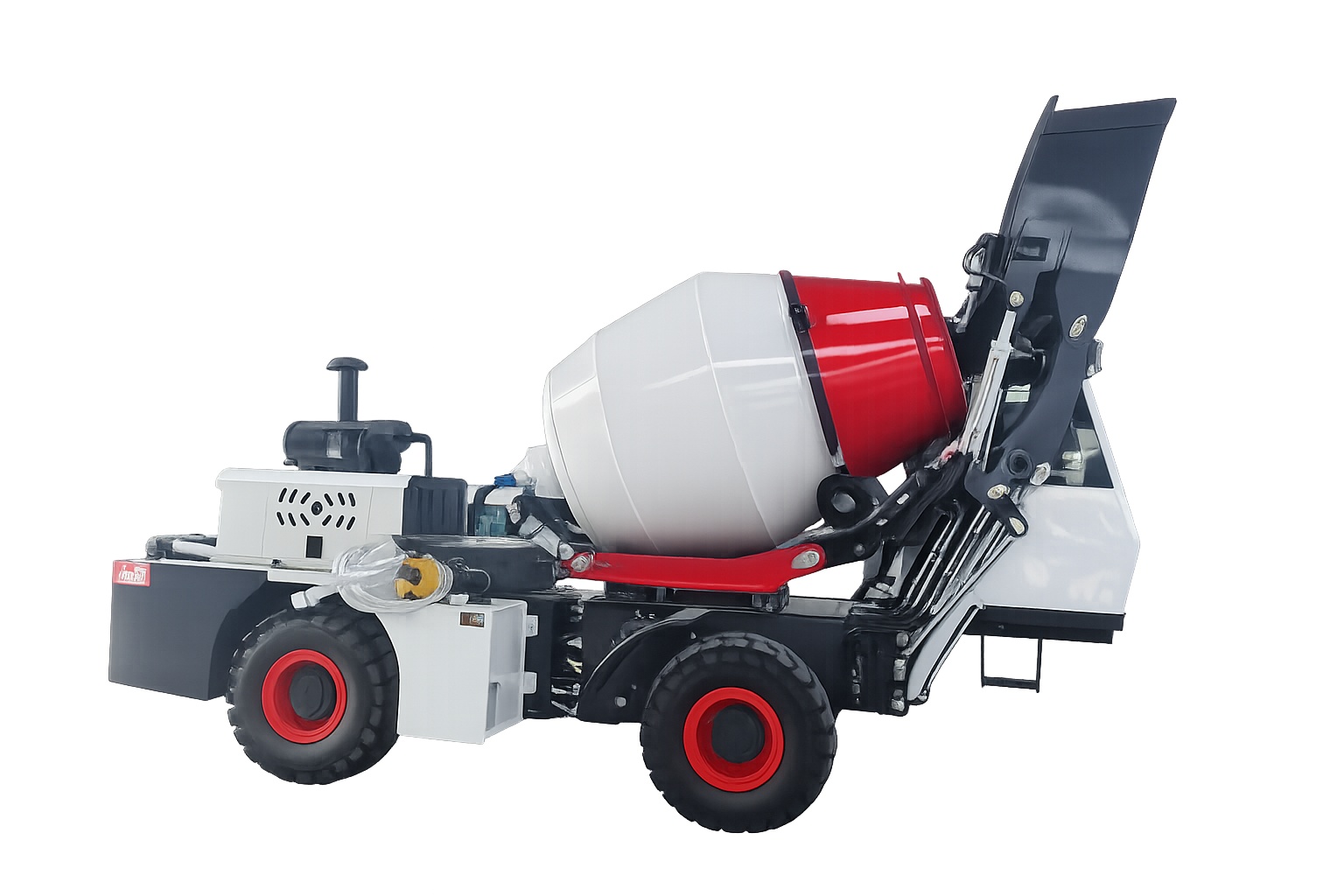
A self loading concrete mixer acts as a work tool, not just a price line. Buyers look past cost to daily-use details.
Practical Buying Checklist
Before picking a self loading concrete mixer manufacturer, go over these:
- Required concrete volume per day
- Site road condition and turning space
- Engine power and fuel use
- Drum capacity and discharge angle
- Water tank size and metering method
- Weighing system accuracy
- Cabin visibility and operator comfort
- Tire type and 4×4 drive performance
- Spare parts supply
- Export packing, shipping, and after-sales support
Price Factors Buyers Should Expect
Self loading concrete mixer price ties to size, engine setup, fluid parts, scale method, barrel build, extra driver features, and ship end. A low buy cost may not save if fix bits hide or the unit breaks often. For long runs, steady work and fix ease top small start savings.
JinChengYu FORKLIFT as a Self Loading Concrete Mixer Supplier
JinChengYu FORKLIFT bases in Qingdao, Shandong Province. This factory town links easy to land, sea, air, and train lines. The firm aids outer markets with lift gear, store tools, ground aid units, fix bits, and build machines.
As a self loading concrete mixer supplier, JinChengYu FORKLIFT offers size picks for tiny, mid, and tough site concrete makes. Its broad goods also cover diesel lifts, power lifts, bumpy land lifts, side haulers, store move tools, wheel scoops, diggers, path rollers, reach handlers, and airport ground aids.
This broad machine know-how helps builders who get more than one gear type. A buyer on path builds, store grows, farm makes, or site flows can talk concrete blend, lift, scoop, and move needs with one source. The firm backs outer buyers with sales, fix, rent fixes, and bit supply. These count for units far from home plant.
Conclusion
A self loading concrete mixer picks well for builders needing new concrete sans full lean on pre-mix hauls or set plants. It aids bumpy land, country paths, spread pour spots, and far sites where time and shift count.
For buyers eyeing self loading concrete mixer trucks, key notes stand: pick right size, check 4×4 pull, look at blend and scale setup, and lock fix back before buy. With the fit unit, site concrete makes speed up, clean up, and ease control.
FAQs About Self Loading Concrete Mixers
What is a self loading concrete mixer used for?
A self loading concrete mixer serves on-site concrete makes. It scoops raw stuff, blends concrete, shifts site-wide, and drops new concrete near pour spots. It fits road tasks, bases, country builds, gutter jobs, and far sites.
Can a self loading concrete mixer replace a batching plant?
For tiny and mid jobs, it acts as a moving concrete making stand-in. It does not swap a big fixed plant on high-flow shop tasks. But it works well where shift, quick set, and site reach count.
Is a 4×4 self loading concrete mixer good for rough terrain?
Yes. A 4×4 self loading concrete mixer builds for bumpy land, muddy paths, stone trails, and sites sans paved ways. It hands builders more say when concrete makes and sets off main roads.
What capacity should be selected?
Tiny jobs pair with a small mixer near 1.6 m³. Mid tasks may call for near 2.4 m³. Path and build jobs often pick bigger near 3.5 m³ or 4.0 m³. Right pick rests on day flow, site room, and pour speed.
How much does a self loading concrete mixer cost?
Cost links to size, pull setup, engine, scale way, barrel shape, driver config, and ship spot. Best price match comes from sharing job kind, goal flow, site state, and end port before quote ask.