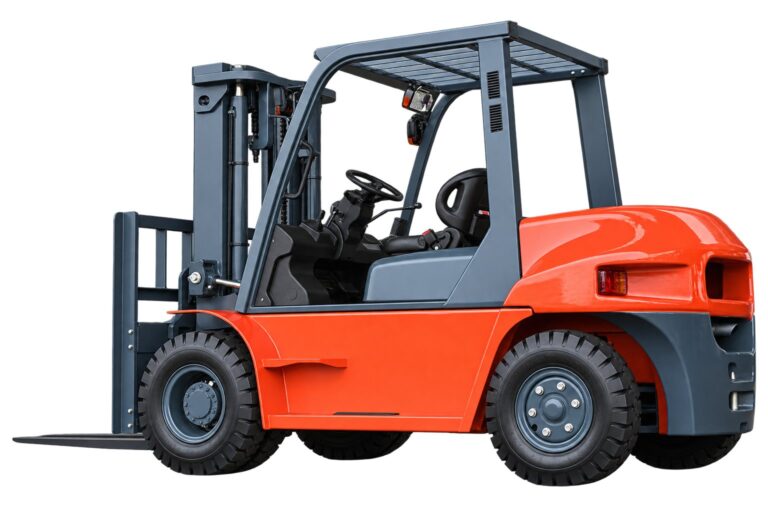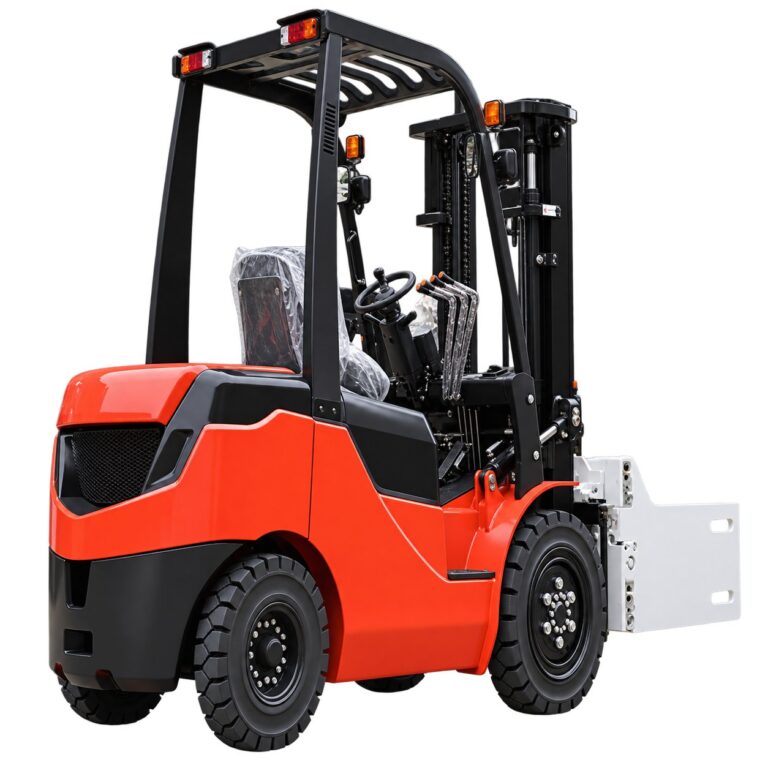
Paper rolls are pretty simple items. Until they are damaged. In a warehouse environment items such as paper, beverage packaging, labels, cartons, waterproof membranes and other rolled items are heavy, can be marked easily and positioning of them on a forklift can be difficult depending on the attachment used. A small dent in the edge of a roll of paper may not seem a problem when unloading but can cause problems as the paper is printed, coated, laminated or packaged. The correct forklift paper roll clamp can make a real difference in the quality of items’ handling in your operation.
A paper roll clamp is so much more than an additional attachment for lifting paper rolls. As a roll clamp changes how you can hold, rotate, stack and place a load instead of just relying on the forks of a forklift to support a roll from below, gripping around the curved surface with precise amount of pressure. That’s why many paper mills, printing plants, packaging warehouses and even building material suppliers use paper roll clamp attachments to reduce product damage and save time with loading.
Why Does Roll Damage Happen During Forklift Handling?
The most common cause of roll damage is unequal force. The fork of a forklift for example makes contact with a very small area of a roll or its packaging. This can cause severe damage when loaded heavily. Edge damage, tears in the outer wrap, and flat marks on the surface of the roll can all cause damage to the first layers of paper, film, label stock, or packaging board.
In a busy warehouse where fast movement through storage, loading docks and production areas is a necessity, this problem will occur more often.
Common Types of Damage in Paper and Packaging Rolls
Edge crush damage is the most common type of damage followed by surface marks, especially on coated paper, tissue, label stock and printed packaging materials. Edge damage can occur when a roll is placed on the floor under too much pressure, up against another roll, or lifted from the wrong angle. Surface marks can occur for a variety of reasons and are often unseen until printed.
Other frequent problems include:
- Tears in the outer wrap
- Roll deformation after poor stacking
- Dirt pickup from floor contact
- Uneven pressure marks caused by standard forks
- Dropped rolls from weak load grip
- Production delay after damaged rolls are rejected
When handling Beverage packaging the problem of roll damage can occur with paperboard, label rolls, carton materials or printed wrapping stock. Building material handling can suffer similar damage with rolled waterproof building materials, insulation rolls, surface protection film or packing rolls. The material does not have to be paper but the same problems exist handling round, heavy, damaged sensitive products where the contact area of the product and the item handling the product is critical.
What Is a Forklift Paper Roll Clamp?
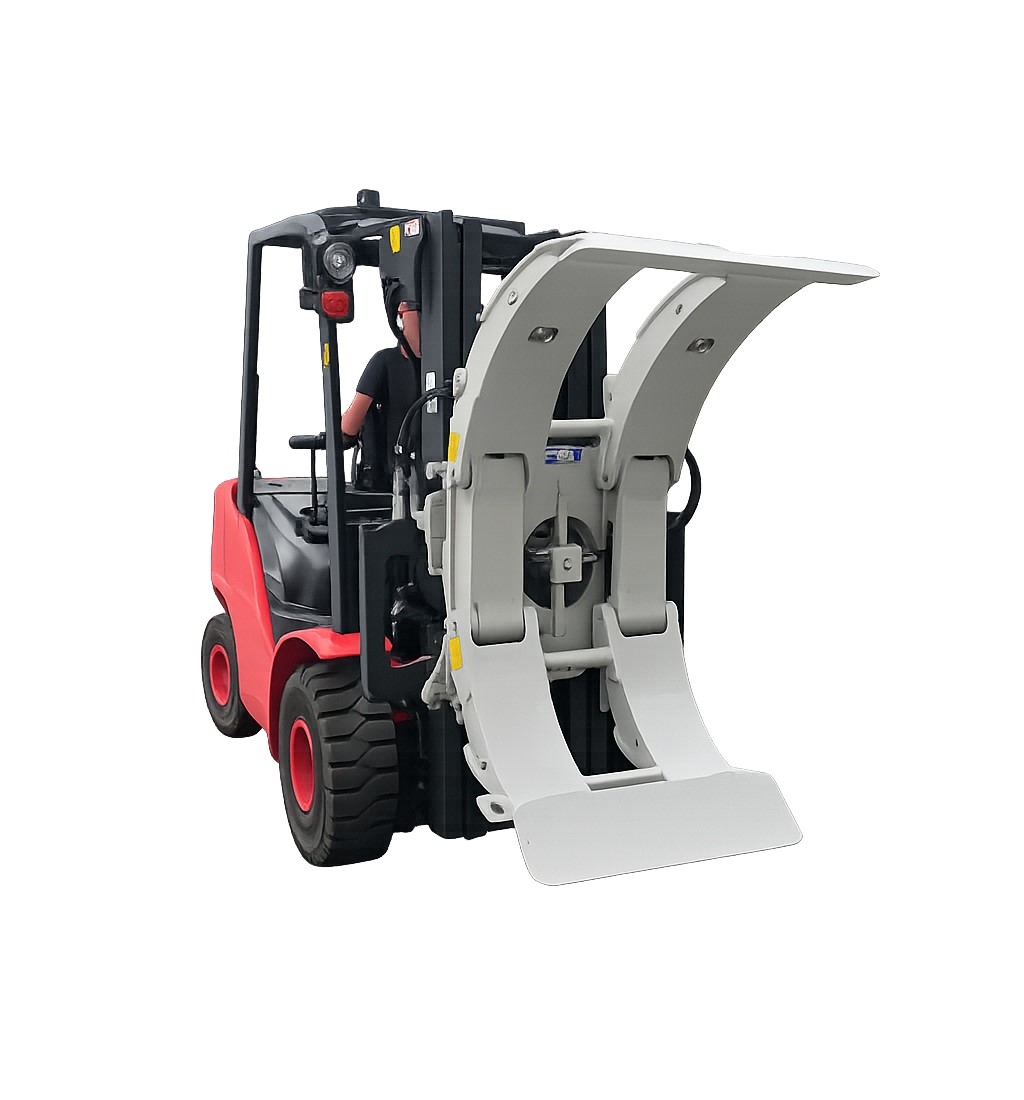
The forklift paper roll clamp is a particular forklift attachment designed to lift cylindrical paper rolls without a pallet. The roll is gripped from both sides by the two arms of the clamp. The opening and closing of the arms is controlled via the forklift’s hydraulic system. As with all forklift attachments for paper rolls, also this clamp is equipped with features to hold the roll, to prevent it from rotating and to position it correctly.
This forklift clamp is used the most when moving rolls from trucks to storage, from warehouses to machines or from production lines to shipping areas.
How It Differs From Standard Forks
Standard forks are designed for use with flat based pallets, crates and other loads. Paper rolls have no bottom surface and thus would typically be packed on a pallet. When using forks to lift round loads, they can roll, shift or experience excessive pressure in a small area of contact.
A paper roll clamp is used differently than a cylinder clamp. Paper roll clamps are typically made with curved clamping arms that are shaped to better match the roll it is to be used on. This allows for a more even distribution of pressure to a larger surface area. Also, many paper roll clamps are able to rotate the roll allowing for the roll to be stacked, loaded on a truck, fed into a printer, etc. while it is on its side or even upside down. This allows for much easier handling of the roll.
| Handling Need | Standard Forks | Forklift Paper Roll Clamp |
|---|---|---|
| Palletless roll handling | Difficult | Suitable |
| Edge protection | Limited | Better contact control |
| Roll rotation | Not available | 360-degree rotation available |
| Loading accuracy | Depends on operator skill | Better with side shift |
| Handling fragile roll surfaces | Higher risk | Lower risk with proper clamp force |
How Does a Paper Roll Clamp Reduce Product Damage?
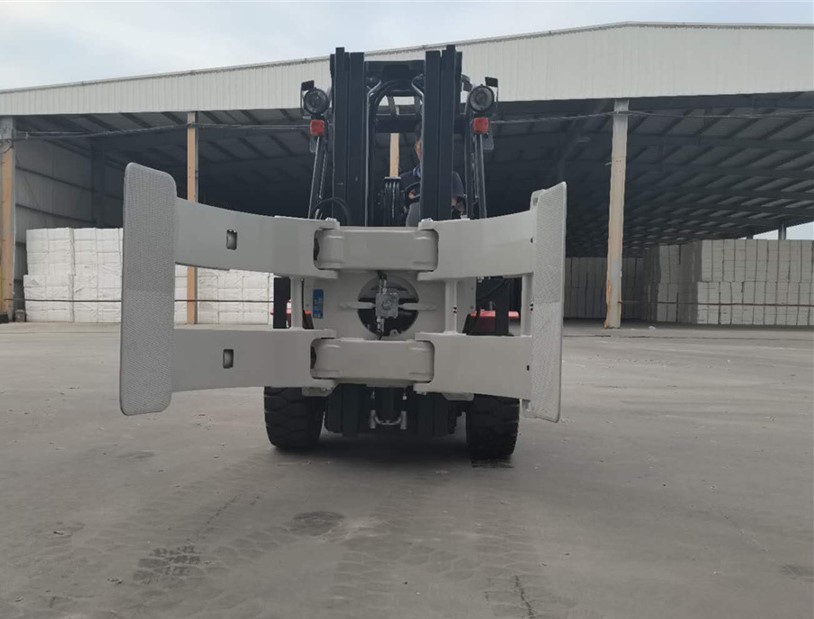
A good paper roll clamp is designed to reduce damage by better distributing force upon the item being held. The goal is to hold the item securely to prevent slipping, while at the same time not pressing too hard upon the paper, film, board or other flexible membrane to prevent being crushed.
This balance of diameter and stiffness must be considered in all industries that use rolls, whether large kraft paper cores or small soft tissue or thin label stocks. For example, a large coated beverage label roll may look strong, but it is easily susceptible to surface marks that can be seen during printing or application.
Curved Clamping Arms Support the Roll Surface
The curved arms are one of the most important parts of the attachment. They help hold the round load with a wider contact area instead of creating sharp pressure points. When the arms fit the roll diameter properly, the roll stays more stable during lifting, turning, and stacking.
This is particularly important in warehouse aisle ways, when loading containers and on the production side when handling materials. A roll that moves by only a few centimeters can easily come into contact with other rolls, rack uprights or the side of a truck body. In contrast, curved clamp arms keep loads secure within the clamp, rather than on the ends of the forks.
Adjustable Clamp Force Helps Prevent Over-Clamping
Clamp force must equal load force. If force is too low, the roll may slip causing damage. If too high, the outer layers of the roll may be crushed or create dents resulting in waste product. Adjustable force allows the operator to work safely within a suitable range for varying roll weights, paper types and surface materials.
For example newsprint, tissue, kraft, carton board and coated label stock all behave differently under pressure. When storing mixed rolls of paper in a warehouse for example, a paper roll clamp with stable hydraulic control is needed to prevent surface damage to the rolls from day to day lifting, turning and storing.
360-Degree Rotation Makes Loading More Controlled
There are many jobs that involve more than just lifting a roll. For example, a roll that arrives standing upright in a warehouse may need to be put down horizontally. In another part of the plant, a roll may need to be turned before it can be put into a truck or moved to a machine. A rotating paper roll clamp allows the operator to turn the roll as needed without having to manually try to turn it or resort to some unsafe practice to achieve the goal.
The 360-degree rotation function is useful in 3 scenarios.
- Loading rolls into trucks or containers
- Stacking rolls in a warehouse
- Feeding rolls toward printing, packaging, or converting equipment
If the roll can be rotated within the clamp then the operator has better control of the final orientation. This avoids edge impact and the subsequent repositioning.
Where Are Forklift Paper Roll Clamps Used?
Although forklift paper roll clamps are primarily used in paper mills, there are many industries that are dealing with large rolls of paper-based, film-based or sheet products. The correct attachment for the forklift can prevent damage to the roll for all of these applications.
When choosing a clamp, the most important things are matching the clamp to the roll material, the roll diameter, weight, working area and the forklift capacity.
Paper Mills, Printing Plants, and Warehouses
Rolls are moved from production to storage in a paper mill. Rolls are moved from storage to trucks in a paper mill. In a printing plant, rolls are moved from warehouse racks to presses or converting lines. The edge quality of a roll is important in both paper mills and printing plants because a crushed edge can cause problems such as feeding difficulties, web breaks and uneven production.
A forklift paper roll clamp is a special attachment for loading and unloading paper rolls without a pallet. This attachment also saves handling because instead of putting a roll of paper on a stack of pallets, moving it, and then taking the pallets off one by one, the operator can simply pick up the roll and put it down where it is wanted.
Beverage Packaging and Label Material Handling
In the beverage industry many types of materials are used in roll form, including label stock, carton board, printed packaging paper, shrink film and outer wrapping materials. Damage to these rolls can cause problems on the packing lines and result in suboptimal packaging.
Paper roll clamp for packaging industry. A tool for warehouse storing mixed paper roll sizes. Warehouse can receive in the morning in a truck, then use the roll clamp to get the rolls off the truck for stowage. Throughout the day the packaging lines may run out of paper, so you would go to the storage and pick up a few more rolls of paper. Then in the afternoon you may be getting ready to ship, so you would use the paper roll clamp to pick up the specific amount of rolls that you need to take out to the packaging line.
Surface inspection is particularly valuable where light surface damage to a beverage label or printed carton could prevent accurate printing, cutting or application.
Building Material Rolls and Cylindrical Loads
Building material warehouses often handle rolls of waterproof membrane, protective film, insulation-facing material, and packaging paper. These loads may be heavier or less delicate than printing paper, but they still need controlled handling. A torn outer layer can reduce product appearance and create customer complaints after delivery.
When selecting a material handling clamp for building materials rolls such as drywall, plywood, etc., it is recommended that the buyer consider the following parameters: Roll weight, Surface friction, Outer wrap strength, Clamp pad material. A clamp designed for handling paper may not function properly with rougher industrial type rolls and may require different pad types or different pad pressures.
What Should Buyers Check Before Choosing a Paper Roll Clamp?
Choosing a forklift attachment on price alone can lead to a poor match causing increased product damage, overloading of the forklift and slowing down the operator. The most important information for choosing a forklift attachment is found in the daily work details of the operator.
As a buyer you should prepare your basic roll data before you contact a forklift attachment supplier.
Roll Size, Weight, and Working Range
The operating range of the clamp opening must be exactly the smallest and largest roll diameter on site. The allowed load of the lift truck for this clamp in addition to the weight of the attachment must be sufficient for the largest roll diameter. This point is frequently overlooked. A lift truck may be rated to lift certain loads with its standard forks, but after mounting a heavy clamp to the forks the actual lift capacity can be significantly reduced.
| Buying Point | What to Check | Why It Matters |
|---|---|---|
| Roll diameter | Minimum and maximum size | Matches clamp opening range |
| Roll weight | Heaviest roll in daily work | Prevents overload |
| Roll surface | Paper, film, board, membrane | Guides pad and pressure choice |
| Rotation need | 180° or 360° work | Affects loading method |
| Working area | Aisle, dock, container, yard | Affects forklift and clamp size |
| Hydraulic supply | Forklift hydraulic setup | Needed for clamp and rotation |
Side Shift and Accurate Placement
Side shift allows the operator to move loads left and right while the forklift remains stationary. This feature is particularly useful in close proximity to storage racks, the wall of a truck, production equipment or tight loading docks. As less repositioning is required there is less chance of bumps and consequently less risk of roll damage to loads.
Narrow applications also benefit from side shift, since the roll can be aligned with the opening of a rack, or with the feed point of a machine more precisely than without side shift.
Clamp Pads and Surface Contact
Clamp pads need to grip but not cut the roll’s surface. When handling with delicate paper soft and clean contact surfaces are needed, whereas for industrial rolls gripping power may be more relevant. In some cases non-marking contact materials are required for optimal performance while in others more friction for heavier loads is required.
It’s the actual product not the attachment name that is the determining factor for the best choice.
Matching the Clamp With the Right Forklift
How well a paper roll clamp is used on a forklift is in large part determined by the forklift itself. It must have sufficient lift capacity, sufficient hydraulic pressure, be sufficiently stable and have sufficient visibility. The working environment too plays a role in the choice.
In indoor warehouses, such as packaging warehouses with smooth floors, electric forklifts are the preferred choice. They are quiet and do not produce direct exhaust. In contrast, outdoor yards and heavy loading/discharging areas such as building material warehouses are typically served by diesel or LPG forklifts. The choice of fuel type depends on several factors including the weight of the loads to be moved, the number of hours the forklift will be in operation, the level of ventilation and the nature of the surface on which the forklift will be operating. In many cases, an electric forklift with the right type of clamp is a practical solution. In other cases, stronger outdoor forklifts are required.
Key Compatibility Questions to Ask?
Before purchasing a paper roll clamp, site managers should check:
- What is the forklift rated capacity after adding the clamp?
- Does the forklift hydraulic system support clamping and rotation?
- Is the mast height suitable for stacking rolls?
- Can the operator see the roll clearly during pickup and placement?
- Is the working aisle wide enough for the forklift and attachment?
- Will the clamp be used indoors, outdoors, or both?
To avoid the common mistakes when selecting a clamp, the following questions should be asked. Is the clamp too heavy for lifting, too wide for entry into places where it will be used or does it require an unsuitable forklift.
When Is a Paper Roll Clamp Better Than Standard Forks?
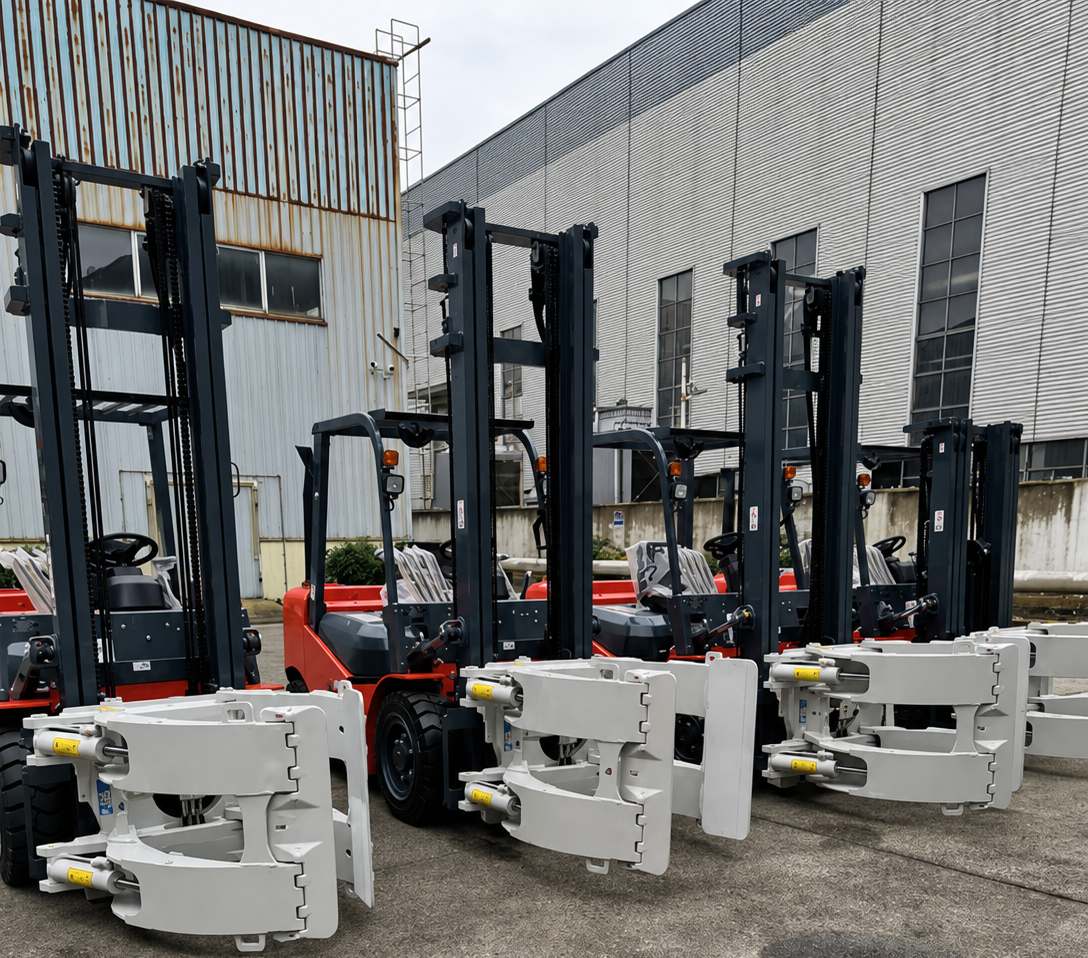
A paper roll clamp is usually preferred when loads are round and very heavy and could be seriously damaged by point pressure. This type of clamp is ideal for fast loading of paper rolls without pallets.
Standard forks are often adequate for storing rolls on pallets, but when storing without pallets, periodic turning, or direct vehicle loading, clamps are far better.
Signs That Standard Forks Are Costing Too Much
A warehouse may need a paper roll clamp for several reasons.
- Roll edges are often dented during unloading
- Operators need extra time to reposition rolls
- Pallets are used only to make roll handling easier
- Rolls slip or rotate on the forks
- Production teams reject rolls due to surface marks
- Truck loading takes too many correction moves
Damage to a roll of stock is not just the cost of the damaged roll, but also the cost of labor to re-pack, time lost by the person to complete the claim, cost of claims processing, and loss of warehouse space while the damage is being processed.
Practical Handling Tips for Less Roll Damage
Even the best of paper roll clamps require reasonable use. When lifting a roll of paper, make sure to approach the roll straight, lift from a point near the centerline of the roll, and lift slowly and consistently. Sudden stops, hard turns, etc. can still cause damage to the roll or negatively affect the load’s stability.
Daily Habits That Make a Difference
Small habits help protect rolls during busy shifts:
- Keep clamp pads clean and free from metal chips or dirt
- Set clamp force based on material type and roll weight
- Avoid dragging the roll across the floor
- Rotate the roll slowly near racks or truck walls
- Do not stack rolls higher than the site’s safe limit
- Inspect hydraulic hoses and clamp movement before work
Even more, training and clear work procedures enable an experienced operator to ‘feel’ when a clamp is too tight and when a roll is not quite centered. New operators can learn from the mistakes of others and avoid making costly errors.
JinChengYu FORKLIFT as a Forklift Paper Roll Clamp Supplier
JinChengYu FORKLIFT is a supplier of material handling equipment. It provides a variety of forklifts and warehouse handling equipment, including new forklifts, used forklifts, forklift spare parts and forklift attachments. For people who are looking for paper roll handling equipment, it is helpful to consider the clamp and the forklift together as a single purchase instead of looking for two separate pieces of equipment.
JinChengYu FORKLIFT is forklift paper roll clamp supplier, our designs address the real needs of moving such rolls safely. This includes gripping securely, rotating 360 degrees, being able to adjust the amount of force that the clamp applies as well as being able to position the rolls accurately. Paper mills, printing companies, beverage packaging warehouses and building material suppliers and others use our fork lift paper roll clamps to try to avoid product damage, particularly when being moved during the loading, unloading, stacking and movement from day to day.
Conclusion
The forklift paper roll clamp is a practical solution to protect your products from damage in the warehouse while handling paper, beverage packaging as well as building materials. Our roll clamp uses curved clamping arms, has variable force on the clamp, smooth rotation and precise positioning of the clamp on the roll. Most warehouses today are still using the standard forks on their forklifts to lift palletless rolls of paper. The hidden costs of using the forks to hold the roll are the edge damage, surface marks, slow lifting and in some cases the material is even rejected because of the previous damage.
A clamp does more than just move a roll of merchandise. It also protects the merchandise value between the time it is lifted and the time it is put away in storage. For the buyer of paper rolls, label stock, carton materials, packaging rolls and building material rolls the correct clamp for use with the correct forklift can provide safe product handling, clean and efficient storage and the saving of lost or damaged merchandise on a daily basis.
FAQs
What is a forklift paper roll clamp used for?
A forklift paper roll clamp is a tool to lift, rotate, move, stack and load large paper rolls or similar objects in cylindrical shape without a pallet. This is mainly used in paper mills, printing shops, packaging warehouses and places where roll material is stored.
Can a paper roll clamp reduce paper roll edge damage?
Yes. A paper roll clamp can reduce edge damage when the clamp size, clamp force, and operator handling method match the roll. Curved arms and controlled pressure help reduce crushing, slipping, and hard impact during placement.
Is a rotating paper roll clamp better for truck loading?
A rotating paper roll clamp is the best tool to use when moving rolls of paper from a vertical to horizontal position and aligning them in vehicles such as trucks and containers. This tool allows for greater control by the operator and eliminates the need to constantly correct for errors when moving a paper roll with a fixed clamp.
How do I choose the right paper roll clamp for my forklift?
To get started we need the following information: roll diameter, roll weight, roll material, required rotation angle, working aisle width, forklift capacity, and hydraulic setup. The clamp we select has to match the load and the forklift. If in doubt about the information above it is always wise to verify.