Moving long materials with a regular forklift often looks simple until the load starts to swing, block the aisle, or push the operator into repeated corrections. Steel pipes, timber, metal profiles, long boards, beams, and bulky industrial materials do not behave like standard pallets. Their length changes the way weight, space, turning, and visibility affect daily handling.
A Side Loader Forklift is built for this exact problem. Instead of carrying long materials across the front of the truck, it lifts and transports them from the side, keeping the load aligned with the direction of travel. For warehouses, steel yards, timber suppliers, pipe distributors, and factories with narrow aisles, this difference can cut risk, save floor space, and make long-load handling more predictable.
Why Do Regular Forklifts Struggle with Long Loads?
A front-loading forklift works well for pallets, crates, and compact goods. The challenge begins when the material is much longer than the fork width or truck body. At that point, the issue is no longer just lifting capacity. Stability, turning space, visibility, and load support all become part of the job.
Long materials extend beyond the safe handling area
When a regular forklift carries a long steel pipe bundle or timber pack, both ends may extend far outside the truck’s normal working width. Even if the total weight is within the rated capacity, the load can still feel unstable because the support points are limited.
Long loads create several common problems:
· The material may swing when the truck turns or brakes.
· The operator may have poor side visibility.
· The load can hit racks, doors, walls, or nearby machines.
· More workers may be needed to guide the forklift.
· The aisle must stay wider than the actual storage requirement.
A forklift for long materials needs more than power. It needs a handling layout that fits the shape of the load.
Turning becomes slower and less safe
In a warehouse storing standard pallets, a front forklift can enter, lift, reverse, and turn with a clear path. Long materials are different. A steel beam or pipe bundle may sweep across the aisle during a turn. In a tight rack area, that movement can damage stock or building structures.
This is why many sites dealing with long materials use more space than they want. They leave extra clearance around storage racks, loading doors, and truck bays because regular forklifts need room to swing the load around.
How Does a Side Loader Forklift Solve Long Load Instability?
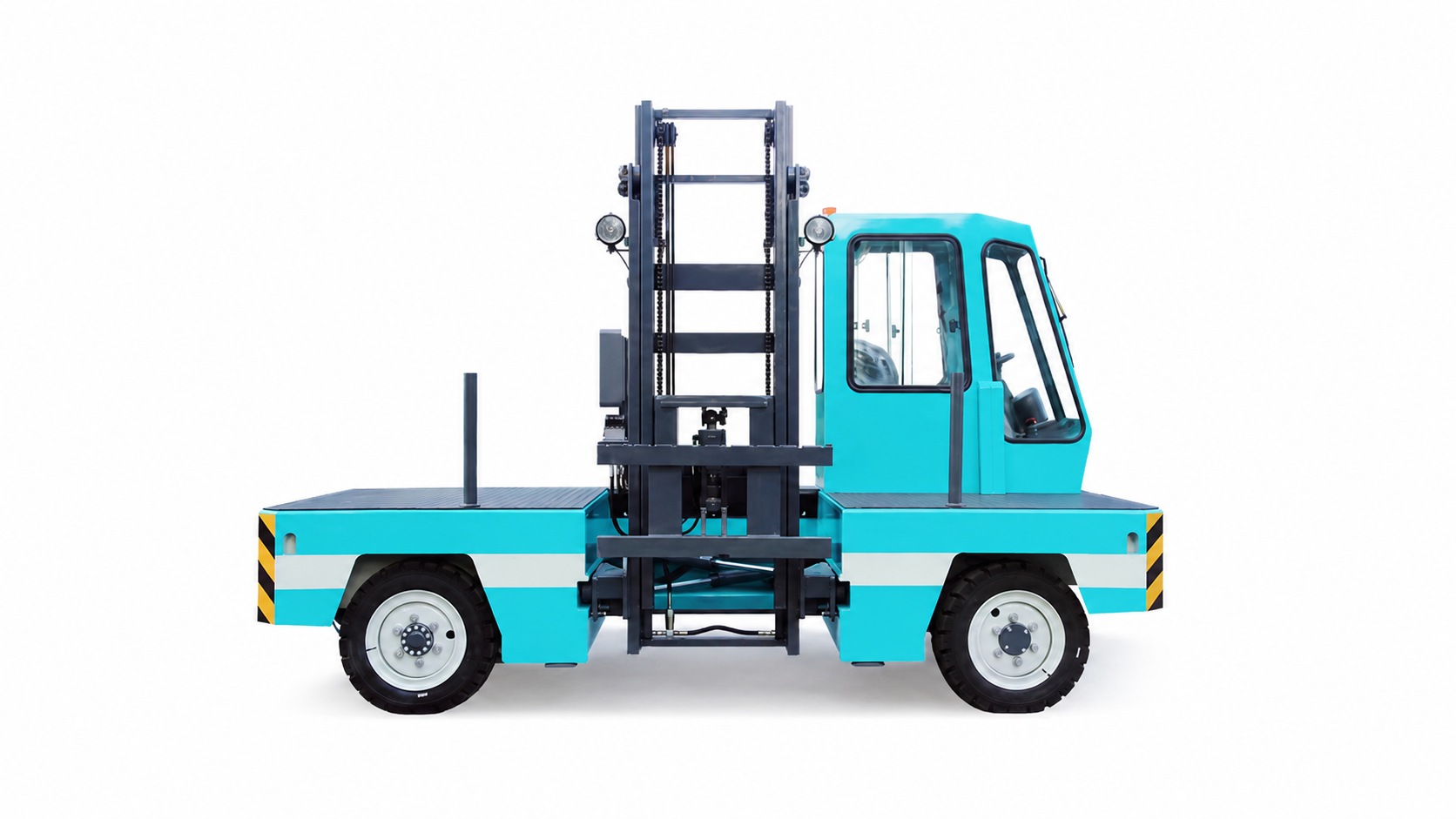
A Side Loader Forklift changes the handling direction. The forks are placed on the side of the machine, allowing the truck to approach the material laterally, lift it from the side, and carry it along the length of the vehicle. This simple structural difference changes the whole handling process.
The load travels parallel to the forklift body
The biggest advantage is load alignment. A side loading forklift carries long materials in line with the truck’s travel direction. Steel pipes, timber packs, long metal profiles, and boards no longer need to project across the front of the machine.
This parallel position reduces the wide side swing that often happens with a regular forklift. The operator can travel through a long aisle with the material sitting closer to the vehicle path. For a warehouse forklift for long materials, that makes the movement calmer and easier to control.
Side support reduces load movement
A Side Loader Forklift also gives long and bulky materials better support during transport. The load is not simply hanging out in front of the mast. It sits along the side loading area, which helps reduce shaking and twisting during travel.
This matters in real industrial yards. A bundle of steel pipes may roll slightly if it is not supported well. Long timber may bend or shift. Aluminum profiles can be scratched if they move against each other. Stable side support helps protect both the material and the people around it.
Side Loader Forklift vs Regular Forklift for Long Loads
Both machines can lift materials, but they are not built for the same job. The table below shows the difference in long-load handling.
| Handling Factor | Regular Forklift | Side Loader Forklift |
|---|---|---|
| Best use | Pallets, crates, compact loads | Long loads, bulky loads, narrow aisles |
| Load position | In front of the truck | Along the side of the truck |
| Turning with long materials | Needs wider space | More controlled in straight aisles |
| Risk of load swing | Higher with long materials | Lower due to parallel travel |
| Typical materials | Palletized goods | Steel, pipes, timber, boards, profiles |
| Space demand | Larger turning area | Better for dense storage layouts |
Stability is about shape, not only weight
A common mistake is to choose a bigger regular forklift when the real problem is load length. A heavier truck may lift more weight, but it does not remove the side swing created by long materials. A long load forklift must match the geometry of the material.
For example, a steel pipe bundle may not be extremely heavy, but it may be several meters long. The challenge is keeping the pipe bundle controlled while moving through racks, doors, and loading areas. A Side Loader Forklift solves this by changing how the load is carried.
Space efficiency improves daily workflow
When long materials are carried lengthwise, aisles do not need to be widened only for turning. This is useful for steel stockholders, timber yards, door and window profile warehouses, and manufacturing plants where long stock is stored in parallel rows.
A narrow aisle forklift for long loads can help fit more usable storage into the same building. The gain is not only in storage density. Operators also spend less time correcting the truck angle, reversing several times, or waiting for spotters to clear the path.
Where Is a Side Loader Forklift Most Useful?
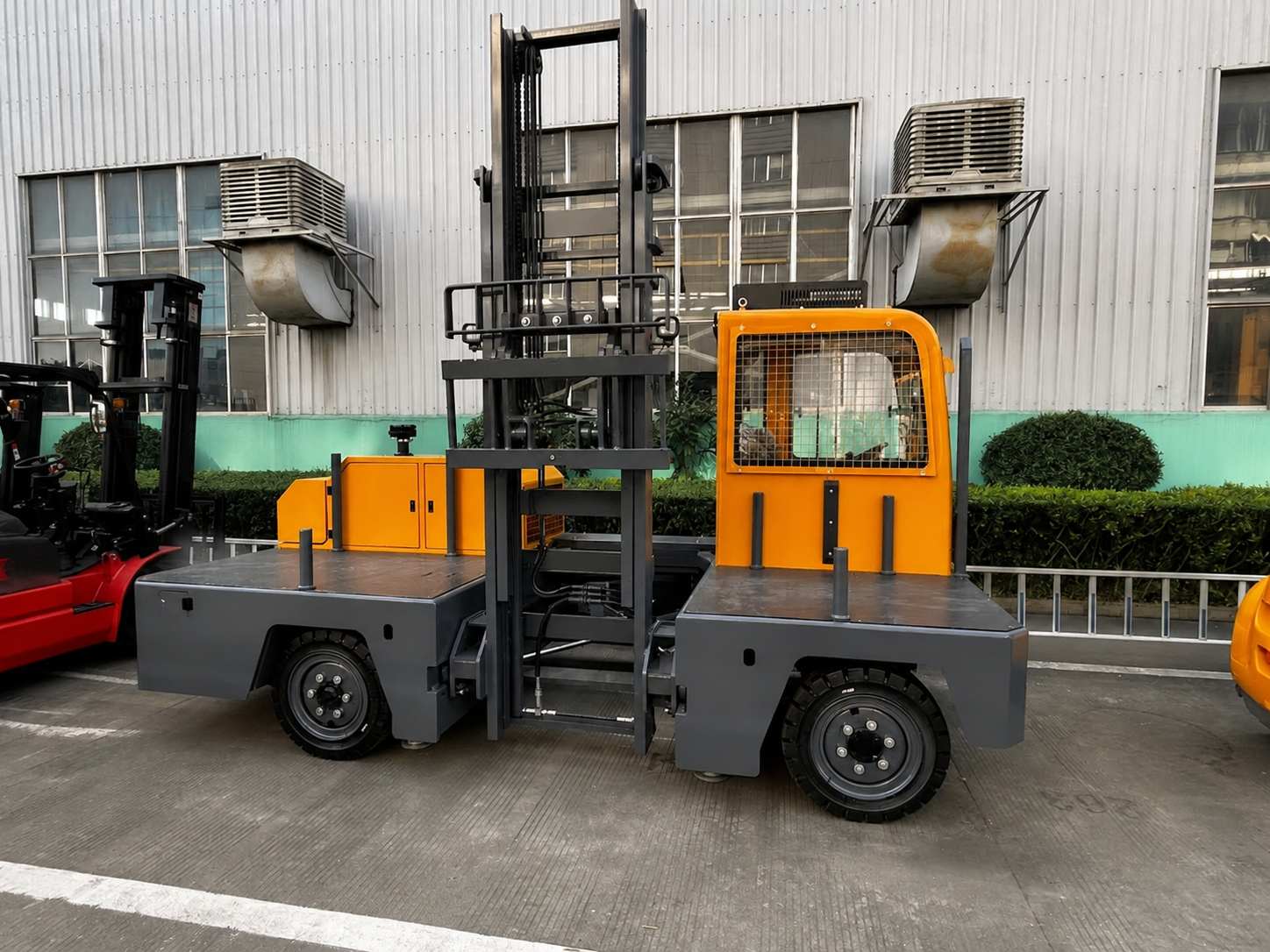
Side loaders are not general-purpose replacements for every forklift. Their value is strongest where the material shape creates handling difficulty. If most goods are standard pallets, a regular counterbalance forklift may be enough. If long items dominate the workflow, a side loader becomes more practical.
Steel pipe, beam, and metal profile yards
Steel pipe distributors and metal profile warehouses need safe movement between cutting areas, storage racks, and outbound loading zones. Pipes and beams are often stored in long rows, with limited space between stacks.
A side loader forklift for steel can pick from the side and travel along the aisle without turning the full load across the yard. It is useful for:
· Steel pipe bundles
· Long steel beams
· Aluminum and metal profiles
· Rectangular tubes
· Structural materials for fabrication
In these sites, even a small collision can damage expensive material or stop production. Controlled travel is a direct safety and cost issue.
Timber, lumber, and wood panel handling
Timber yards and wood processing sites face a similar problem. Long wooden boards and lumber packs need steady support. If a regular forklift carries them across the front, the load may swing at the ends, especially on uneven outdoor ground.
A side loader forklift for timber handling keeps the material aligned with the travel path. This helps when moving lumber from outdoor stacks to processing lines, drying areas, loading docks, or storage sheds.
Pipe, construction material, and outdoor storage areas
Outdoor yards often have mixed ground conditions, tight stack rows, and frequent truck loading work. Diesel side loader forklift options are commonly used in these areas because they fit long-shift, heavy-duty, outdoor work.
For construction material suppliers, pipe yards, and industrial distributors, the right forklift for steel pipes or long building materials can reduce the need for manual guiding and repeated repositioning.
How to Choose a Side Loader Forklift for Long Materials?
Choosing a Side Loader Forklift should start with the load and the site, not only the rated capacity. Buyers need to look at how long the materials are, where they are stored, how often they move, and whether the work happens indoors or outdoors.
Match the truck to load weight, length, and surface
A useful selection process starts with these questions:
| Selection Point | What to Check |
|---|---|
| Material type | Steel, timber, pipe, metal profile, board, container, long bundle |
| Load size | Weight, length, width, and bundle shape |
| Work area | Indoor warehouse, outdoor yard, factory aisle, loading bay |
| Aisle condition | Rack spacing, turning area, doorway clearance |
| Ground surface | Smooth concrete, asphalt, yard surface, uneven outdoor area |
| Power choice | Electric for clean indoor work, diesel for tough outdoor tasks |
| Shift pattern | Occasional handling, daily loading, or continuous operation |
The best choice is usually clear after the site’s actual traffic route is reviewed. A machine that works well in a wide outdoor yard may not be the best fit for a narrow indoor warehouse.
Electric side loader forklift for indoor work
Electric side loaders are a good fit for indoor warehouses and factories that need low noise, clean operation, and controlled travel. They are often chosen for metal profiles, pipes, boards, and lighter long materials stored in racking systems.
Indoor buyers should pay close attention to aisle width, turning areas at the end of rack rows, floor levelness, charging schedule, and daily travel distance. A clean power source is useful, but the handling layout still has to match the load.
Diesel side loader forklift for outdoor and heavy-duty work
Diesel side loader forklifts are better suited to outdoor yards, rougher surfaces, heavier long stock, and frequent truck loading. They are often used in steel yards, timber sites, pipe storage areas, and construction material depots.
For heavy long-load handling, durability, torque, frame strength, and ground clearance matter. Buyers should also review tire type, operator visibility, cabin comfort, and maintenance access. Long shifts in open yards place more stress on both the machine and the operator.
What Handling Problems Can a Side Loader Forklift Reduce?
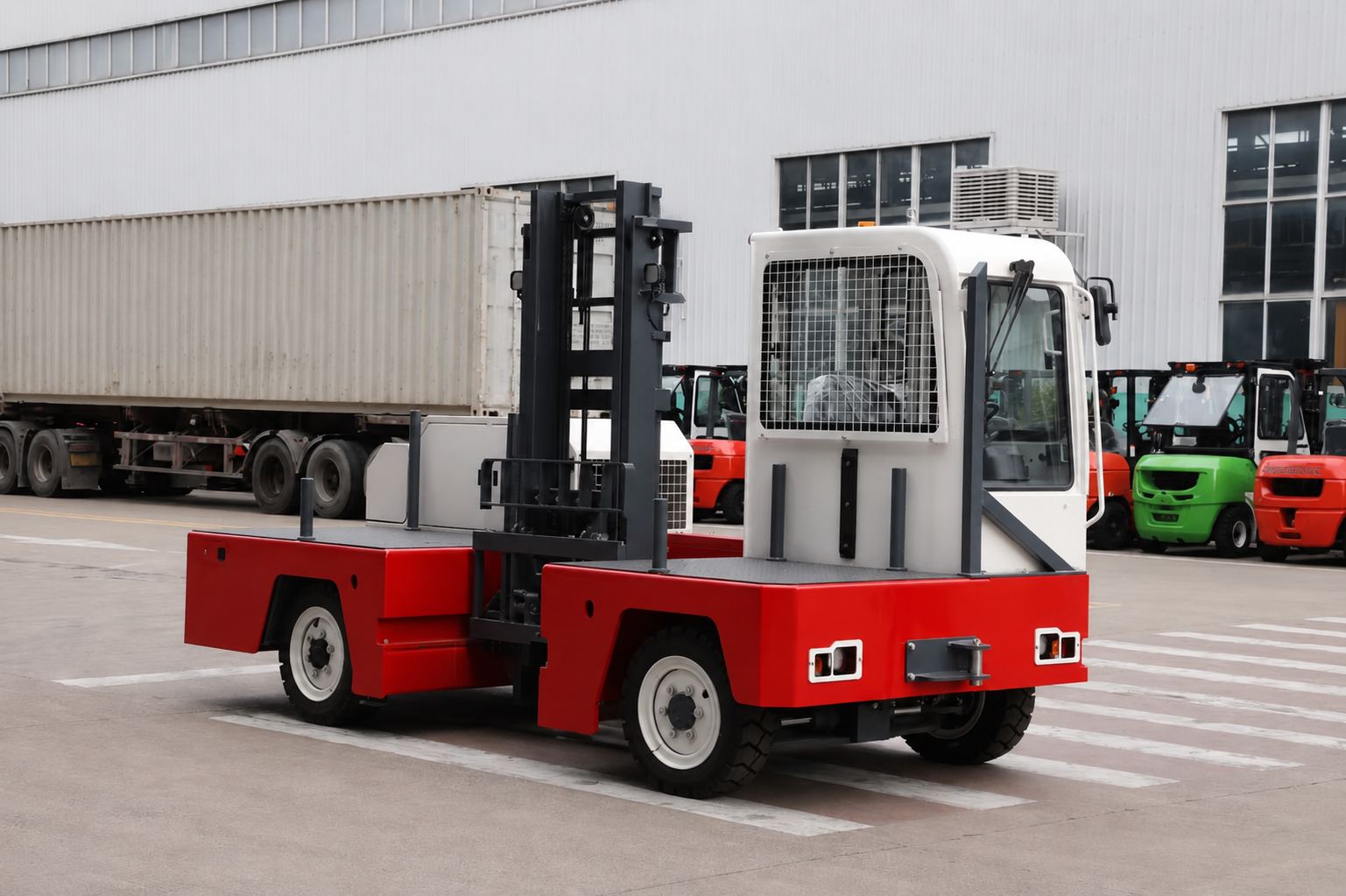
Long materials create small daily problems that become expensive over time. The value of a Side Loader Forklift is often seen in fewer interruptions, cleaner traffic flow, and less material damage.
Fewer corrections during loading and unloading
With a regular forklift, operators may need to approach a rack, reverse, turn, correct the angle, and approach again. When long materials are involved, this process takes longer and leaves more room for mistakes.
A side loading forklift can move along the storage direction and place the material with fewer corrections. This is especially useful in pipe racks, timber rows, and metal profile storage zones.
Lower risk of damaged materials
Long steel profiles can bend or scratch. Timber surfaces can be marked. Pipes can roll or shift if handled carelessly. Since a Side Loader Forklift carries long materials in a more natural position, it helps reduce sudden movement during travel.
Material protection is not only a quality issue. Damaged long stock may need rework, sorting, cutting, or replacement. In busy warehouses, that can delay shipments and affect customer orders.
Better use of narrow aisles
A side loader forklift for narrow aisles helps facilities store long materials in tighter, more organized rows. Instead of leaving wide turning zones for a front-loading forklift, the warehouse can be planned around straight travel routes.
This is one of the main reasons long material handling equipment is different from pallet handling equipment. The storage layout and the truck must work together.
Practical Buying Tips for Long Material Handling
A buyer comparing forklifts should ask for more than a basic quotation. Long-load handling depends on the real job site. A good supplier will need enough information to match the machine to the application.
Details to prepare before asking for a quotation
Before contacting a supplier, prepare:
· Main material type, such as steel pipe, timber, aluminum profile, board, or beam
· Average and maximum load weight
· Average and maximum material length
· Indoor or outdoor use
· Aisle width and rack layout
· Ground surface condition
· Daily working hours
· Required lift height
· Local safety and service expectations
· Photos or videos of the current handling route
Clear job information helps reduce back-and-forth communication and makes the recommendation more accurate.
When is a side loader better than a larger regular forklift?
A larger regular forklift may help when the issue is pure weight. It is not always the answer when the issue is material length. If the current problem includes side swing, blocked aisles, repeated steering corrections, rack collisions, or unsafe turning, a Side Loader Forklift is often a better direction.
The question should not be, “Can a regular forklift lift it?” The better question is, “Can it move the long material safely through the full route every day?”
JinChengYu FORKLIFT as a Side Loader Forklift Supplier
JinChengYu FORKLIFT supplies material handling equipment for warehouses, industrial yards, logistics operations, and overseas buyers who need practical forklift solutions for different working conditions. Its product range covers diesel forklifts, electric forklifts, rough terrain forklifts, LPG forklifts, side loader forklifts, warehouse handling equipment, used forklifts, attachments, and related equipment.
For long material handling, JinChengYu FORKLIFT offers Side Loader Forklift options for indoor warehouse use, outdoor yard work, and heavy-duty industrial applications. The product direction fits common long-load industries such as steel pipe storage, timber handling, metal profile warehouses, construction material yards, and manufacturing plants.
The company is located in Qingdao, a city with strong transport access by land, sea, air, and rail. For overseas buyers, this location supports export business and international logistics. JinChengYu FORKLIFT also provides sales, after-sales, rental, and service support, which matters for companies buying equipment that must keep working in daily production.
Conclusion
A regular forklift is not always the right machine for long materials. The problem is not only lifting power. Long loads bring side swing, poor visibility, wide turning needs, rack collision risks, and slow handling. These issues appear every day in steel yards, timber warehouses, pipe storage areas, metal profile facilities, and construction material depots.
A Side Loader Forklift solves the problem by changing how the load is carried. It lifts from the side, keeps long materials parallel to the travel direction, improves support, and reduces the need for wide turning space. For companies handling long and bulky goods, this can make storage safer, traffic smoother, and loading work more efficient.
Choosing the right side loader starts with the real job: material type, load length, weight, aisle width, ground condition, indoor or outdoor use, and daily workload. When these details are clear, the forklift becomes more than a lifting machine. It becomes a better way to move long materials without the constant instability that regular forklifts often face.
Frequently Asked Questions
This section answers common buyer questions about Side Loader Forklift selection, safety, and long-load handling.
Why is a regular forklift unstable when carrying long materials?
A regular forklift becomes unstable with long materials because the load often extends far beyond the truck body. The ends can swing during turning, braking, or uneven travel. The operator may also lose clear visibility around the material. Even when the weight is acceptable, the shape of the load can still create safety problems.
What is the best forklift for long loads?
A Side Loader Forklift is usually the better choice for long loads such as steel pipes, timber, metal profiles, boards, and beams. It carries the load along the side of the vehicle, keeping the material parallel to the travel direction. This reduces wide turning movement and makes long-load handling easier in aisles and yards.
Can a side loader forklift work in narrow aisles?
Yes. A side loader forklift is designed for long materials in narrow aisles and confined spaces. Because the load travels lengthwise, the truck does not need to swing the material across the aisle like a regular forklift. This helps warehouses store long stock in more compact layouts.
Should a buyer choose electric or diesel power?
Electric side loaders suit indoor warehouses, cleaner work areas, and lower-noise operations. Diesel side loaders are better for outdoor yards, heavy-duty materials, longer shifts, and rougher working conditions. The right choice depends on the load, site surface, ventilation, duty cycle, and storage layout.
What materials can a Side Loader Forklift handle?
A Side Loader Forklift can handle many long and bulky materials, including steel pipes, timber, lumber, boards, steel beams, aluminum profiles, metal tubes, long containers, and construction materials. The final choice should match the material length, weight, lifting height, and site route.