Price on quote for a self loading concrete mixer is only the first step in the purchasing process. For overseas contractors, dealers and rental companies the total cost from factory to jobsite is what really matters. FOB price, shipping, import duties, customs clearance, local delivery, spare parts, maintenance and after-sales service all need to be taken into account.
Break down the self loading concrete mixer total cost into practical elements for better comparison between offers and to choose the best offer for your budget and working site.
What Does the Total Cost Include?
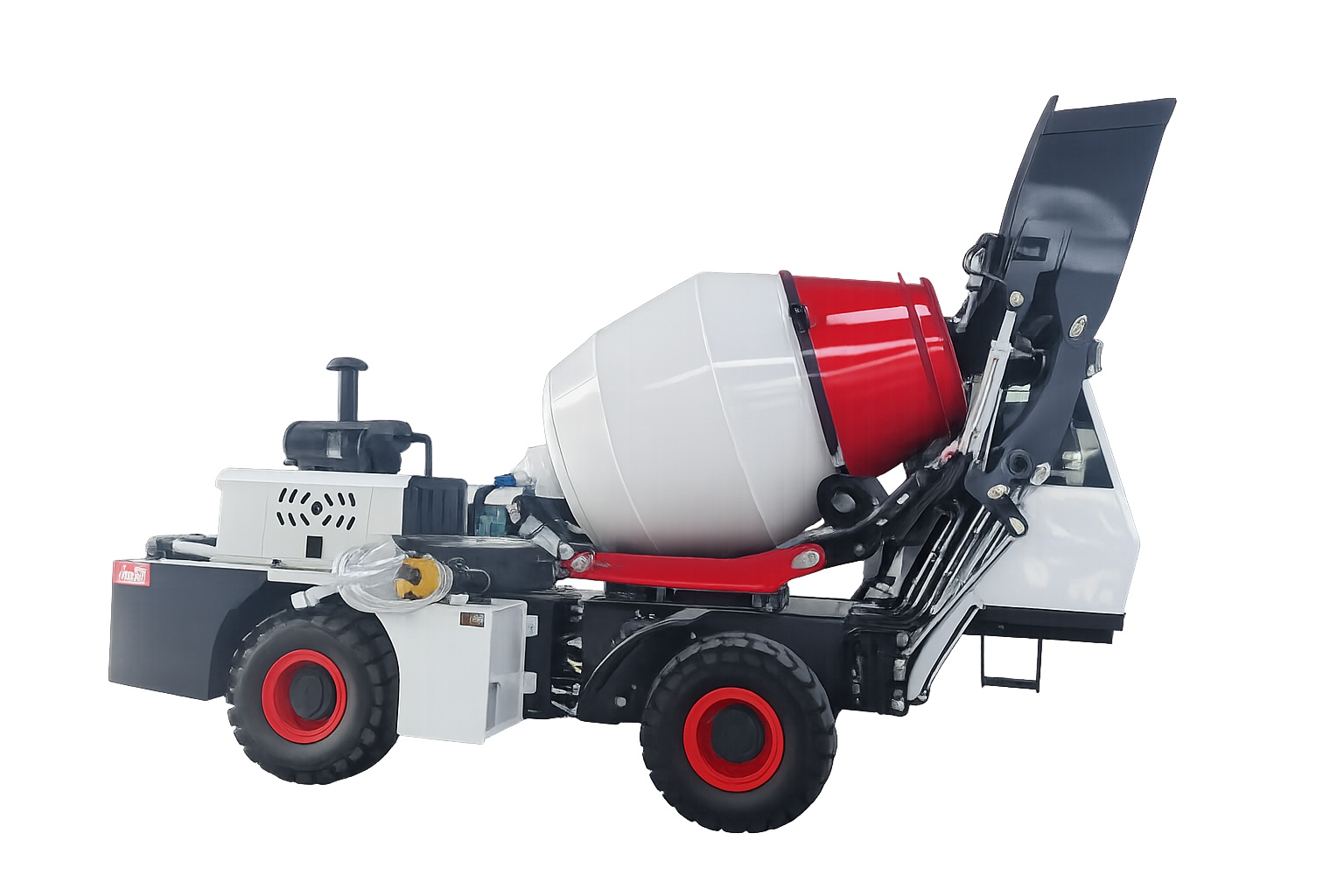
Self loading concrete mixers are a combination of a loader, mixer, transporter and discharge unit all in one. Their ability to save on labor is a major advantage of their use but their cost to purchase has many layers. At first glance a low purchase price of a machine may appear to be a good option but there are many other factors that can quickly add up and make that initially low purchase price very expensive. Items such as freight, customs, downtime, lack of spare parts for example.
The following simple cost formula must be added to the discussion: total cost = FOB price + sea freight + insurance + import duties + port charges + customs clearance + local delivery + spare parts + maintenance + after-sales support.
| Cost item | What buyers should check |
| FOB price | Capacity, engine, hydraulic system, tires, cab, documents |
| Shipping cost | Loading port, destination port, sea freight, insurance, packing |
| Import duties | HS code, duty rate, VAT or GST, broker fees |
| Spare parts | Filters, seals, hoses, wear parts, water and brake parts |
| After-sales support | Warranty, guidance, parts supply, troubleshooting |
The cheapest quotation is not always the best quotation. It is best to check each cost before paying by having them clearly explained to you in your quotation.
FOB Price: The Starting Point of the Quotation
The FOB price of a machine is the price of the machine delivered at the named port of loading. For heavy equipment used in construction, it is common to quote FOB, since many buyers are already working with a freight forwarder and want to take care of the sea freight themselves.
What Affects the FOB Price?
Even similar drum sizes can have very different price tags. Most differences stem from the actual hardware, not from the seller’s margin. The most important price factors are output of fresh concrete, power of the diesel engine, full-time 4×4 drive, articulated steering, design of the hydraulic pump, oil cooling, quantitative water supply, the quality of the tires, the brake system, the operating weight of the machine, the price of spare parts and the cost of export documents.
A compact self loading concrete mixer will probably be suitable for village roads, farm lanes, drainage channels, small foundations and scattered repair work. Although a larger machine will pour more concrete per cycle, the extra cost of transport, increased turning circle and higher fuel consumption may outweigh benefits. Choose a mixer capacity which will meet the daily requirements for the amount of concrete needed, rather than the largest figure calculated.
Shipping Cost: Why the Destination Port Matters
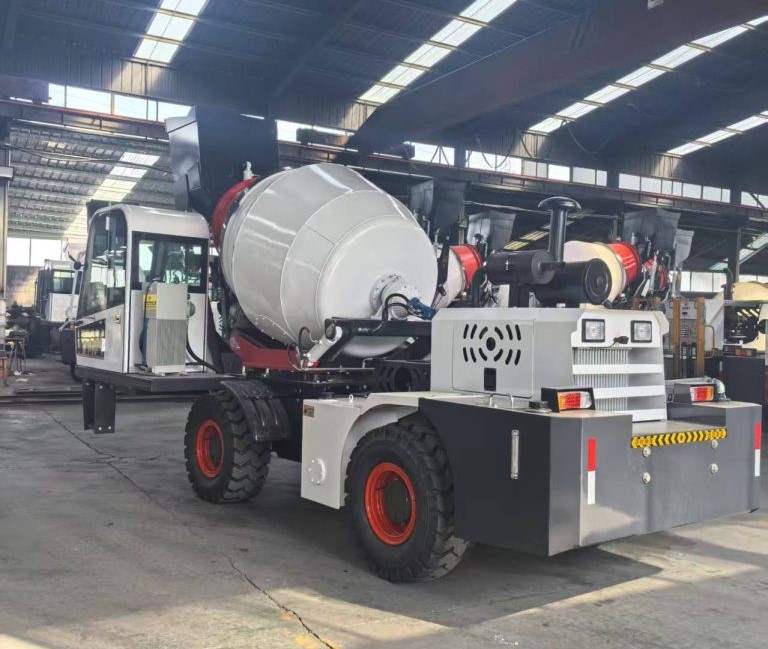
The cost to ship a machine tends to go up much faster than the decreasing price of new machines. The cost to ship a machine is determined by the country and port where the machine is being shipped, as well as other factors outside of our control such as port congestion, the time of year, availability of space on vessels, fuel costs, as well as the external dimensions of the machine in question. A self loading mixer truck for example has a large weight, height and large tire dimensions so we must check with various shipping lines to get a price before we can give you a price for the shipping of a self loading mixer truck.
What Should Be Confirmed Before Shipping?
Before placing an order for industrial equipment the buyer should request a shipping plan not a price quote for a machine. The shipping plan should answer the following questions:
- Which loading port will be used?
- Is the quotation FOB, CFR, CIF, or EXW?
- Does the freight include cargo insurance?
- Are export packing and port handling included?
- What documents will be provided for customs clearance?
- Are destination port charges excluded?
- How will the mixer be moved from port to jobsite?
A quotation that says “CIF destination port” may still leave the buyer to pay import duties, unloading charges, customs broker fees, and inland trucking. This is why landed cost matters more than the first self loading concrete mixer price.
FOB, CIF, CFR, and EXW: Which Term Fits Your Order?
Trade terms determine who pays for what part of the transportation and where the risk will transfer from seller to buyer. A buyer with a good freight agent might prefer FOB, but a first time importer might prefer CIF to make the ocean freight portion of the transportation easier.
Common Trade Terms for Self Loading Concrete Mixers
EXW looks cheap because the supplier just delivers the machine at the supplier’s factory. However, then the buyer has to deal with local pick up, export customs, sea freight, shipping insurance, import clearances and local delivery.
FOB is generally cleaner as supplier only delivers machine at loading port and then exporter handles rest of export formalities. Buyer then controls sea freight, insurance, destination additional charges, duties and local delivery.
CFR includes machine cost and sea freight to the destination port, but not insurance. CIF includes machine cost, sea freight, and insurance to the destination port. Even under CIF, buyers normally still pay import duties, taxes, port handling, customs clearance, and inland transport.
No Incoterm is better than the others. It all depends on a buyer’s freight network, local customs expertise and desired level of cost control.
Import Duties and Customs Clearance
One of the common hidden costs when purchasing self loading concrete mixers from China is import duties on the product. These costs are typically not included in the quoted FOB or CIF price for the machine and can vary depending on a number of factors such as the country of purchase, product classification, local tax laws and import policy.
What Documents Are Usually Needed?
Most importers will need a commercial invoice, packing list, bill of lading, product specification sheet, and certificate of origin if required locally. Some countries may ask for inspection documents, import permits, or special equipment registration papers.
Local customs brokers will need to check the HS code and estimate local duty, VAT, port charges as well as clearance fees. These costs play a large part in estimating the final landed cost of goods to destinations in Africa, Southeast Asia, The Middle East and South America where port charges and inland delivery can greatly affect the overall final cost.
Spare Parts and After-Sales Support
A spare parts package may add to the initial price of your new purchase but a package of essential parts can mean the difference of having your equipment serviced within a hour instead of waiting a week or more on a remote jobsite for replacement parts to arrive.
Some of the most common parts that are required for daily service of your machinery are: Air Filters, Fuel Filters, Oil Filters, Hydraulic Oil Filters, Seals, Hoses, Water Pump Parts, Brake Parts, Electrical Parts / Sensors, Bolts, Fittings and even Mixer Drum Wear Parts. A blocked filter or damaged hose can leave a contractor pouring concrete for a rural road job stuck. Often the cost of lost time can be greater than the cost of carrying these parts in stock.
After-sales service is more than just a warranty. How fast a machine can be put into operation again after a defect occurred is crucial. Helpful service support are operation videos, maintenance manual, wiring- and hydraulic diagrams, remote service support, parts identification and detailed warranty terms. For beginners without mechanics a proper operator training is required as well.
How to Compare Quotations from Different Suppliers
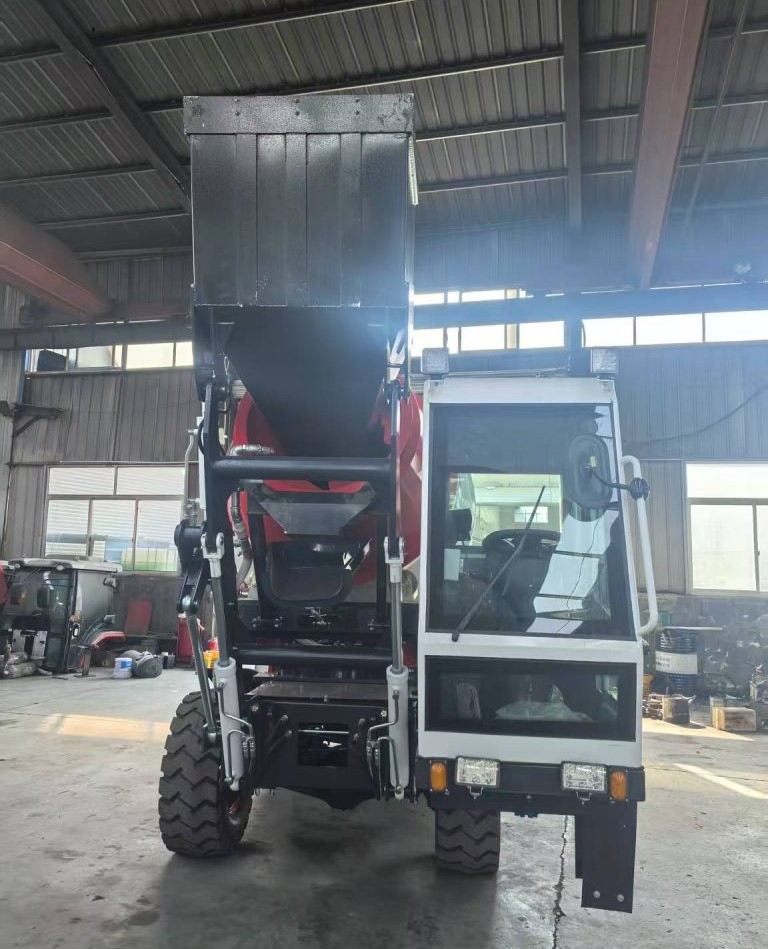
When comparing suppliers a simple price line is not enough. It is recommended that buyers put out quotations side by side and check the major costs and specifications before making a decision.
Practical Quotation Checklist
Batch output, drum volume, engine power, service access, drive system, steering, tire rating, brake design, hydraulic cooling, filter access, water metering, operating weight, shipping term, spare parts list, warranty, delivery time, packing, export documents and videos of the machine working on various jobsites.
Check the quotation that is significantly lower than the others. Does this quotation exclude for example freight, insurance, port charges, spare parts, warranty details or even stronger version of the machines needed for tough applications.
JinChengYu FORKLIFT as a Self Loading Concrete Mixer Supplier
JinChengYu FORKLIFT is a Qingdao, Shandong, China based supplier of material handling equipment, ground support equipment, warehouse equipment, construction machinery and spare parts to overseas markets. The company is strategically located near the sea as well as the roads, railways and airports.
Self loading concrete mixers from our product range are designed for on-site production of concrete for areas where delivery of ready-mix concrete is too slow, too expensive or just too difficult. Our mixers are designed for operation in the most compact space possible, feature 4×4 wheel traction and are articulated for steering around corners. All functions are hydraulically operated and the mixing drum is of high quality with precise control of the amount of water added. Applications for our self loading mixers include rural roads and other infrastructure, road repair, small building sites, farm access tracks and any other work where the jobs are spread over a large area.
When enquiring for a quote a supplier with export experience can help you to get a more accurate quotation by asking for your capacity, port of destination, project type, access to site, site road conditions, working hours etc. which gives you a true cost for purchasing a machine before it leaves China.
Conclusion
When considering the true cost of a self loading concrete mixer, it is not just the price of the product. The cost must also include the FOB price, the cost of shipping, import duties, customs clearance, the cost of spare parts, maintenance, and after-sales service. By comparing these costs prior to payment the buyer can avoid problems down the line such as delays, missing parts, and additional charges.
To get a sensible quote for your clear quotation request, we need the following information: required capacity, destination port, your project type, site conditions and your preferred trade term. A sensible supplier is then able to recommend an appropriate machine, work out a shipping plan and list all required parts and the corresponding service items required on a daily basis.
FAQ
How much does a self loading concrete mixer cost?
Price is dependent upon many factors, including capacity, engine size, drive type, hydraulic requirements, tank size, water metering, spares, export terms, import duties and after sales service. We recommend that serious buyers request a quotation based on the port to which the machine will be shipped and the jobsite on which it will be used.
Is FOB price the final cost?
Note that the FOB price is only the starting point. In addition to the sea freight there are also costs for insurance, import duties, port charges, customs clearance, local delivery, spare parts and maintenance.
Is CIF better than FOB for first-time buyers?
CIF may be easier to use than FOB, as it includes the sea freight and insurance to the destination port. However, in CIF trade the buyer is responsible for local clearance and for payment of customs, duties, port charges, etc. plus for the inland delivery.
What information is needed for an accurate quotation?
A supplier usually needs required capacity, destination country, destination port, project type, daily concrete demand, road condition, preferred shipping term, and spare parts requirement.