Airport electrification is no longer a side project. Electric baggage tractors, belt loaders, and other ramp vehicles are moving into daily service, and the charging plan behind them now affects uptime, labor, and apron flow. That is why airport teams keep asking the same question: is a fixed GSE charging station the right long-term asset, or is a mobile GSE charger the better operational fit?
For many airports and ground handlers, mobile charging is becoming the more practical answer. Ramp work is not static. Parking positions shift, remote stands stay busy, construction changes traffic flow, and fleet conversion usually happens in phases. In that setting, a charger that goes to the equipment can solve problems faster than a charger that waits in one place.
The Real Charging Question at Modern Airports
The debate is often framed as fixed hardware versus mobile hardware. In reality, the real issue is whether charging supports live airport operations without adding avoidable delays.
Electrification changes the bottleneck
With diesel equipment, the energy task is refueling. With electric ground support equipment charging, the bottleneck becomes charger access, parking patterns, and the time lost moving vehicles to the wrong place. A belt loader that must leave its work area to find power is not just burning time. It also adds labor steps and non-productive travel.
That is why good airport GSE charging solutions start with duty cycle and parking behavior. A tractor that returns to the same bay every night has one charging pattern. A vehicle moving between gates, remote stands, and overflow parking has another.
Charging downtime is an operations problem
Many airports already have electricity on site. The harder question is whether power is available where equipment actually stops. A fixed GSE charging station can work well in a tightly organized layout, but ground handling rarely stays that tidy every day.
When crews must bring every unit back to a central charger row, small delays pile up. A missed charging window on one shift can become a shortage on the next. Mobile charging changes that pattern by taking power to the vehicle.
Fixed Charging Stations: Where They Work Best
 Fixed infrastructure still matters. In the right environment, it is a solid choice.
Stable, centralized operations
A fixed GSE charging station usually makes sense when equipment returns to predictable parking bays, traffic flow is steady, and the airport has the time and budget for electrical and civil work. This setup fits centralized depots, maintenance zones, and stable overnight parking areas.
In those places, fixed chargers bring order. Cable management is simpler, training is easier, and the charging point becomes part of the normal routine.
The weakness of a fixed-only plan
The main issue is rigidity. Once the charger is installed, the workflow has to fit the charger. If stand use changes, the fleet grows, or remote positions become busier, the network can feel too far away from the work.
There is also the cost and timeline problem. A fixed installation may involve trenching, switchgear, protective barriers, permits, and coordination with airport operations. For airports trying to electrify step by step, that can slow the whole program.
Why Mobile GSE Chargers Match Ramp Reality
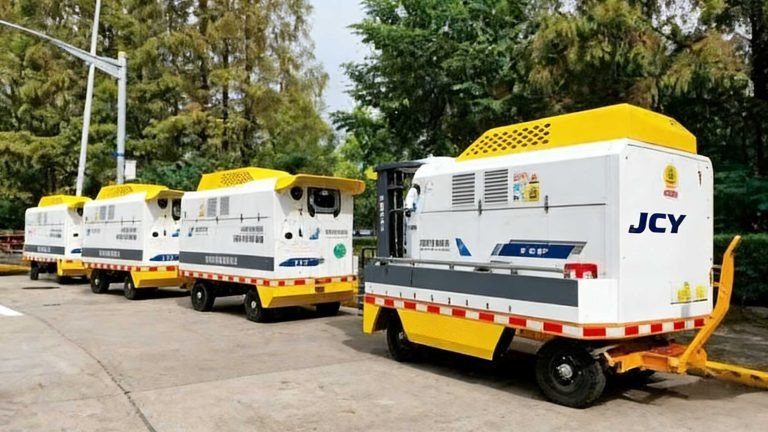
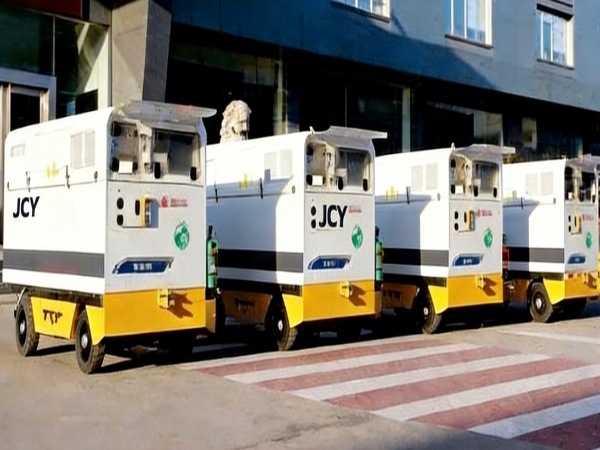
A mobile GSE charger is not only a backup tool. In many airports, it is the fastest way to make electrification usable before the final infrastructure picture is clear.
Better fit for remote stands and changing layouts
Remote stands are one of the strongest cases for mobile charging. Equipment working far from terminal-side charger locations often has no easy way to recharge during a busy shift. A mobile unit can be positioned near those work areas and used where the demand appears.
The same advantage matters during seasonal peaks, terminal renovation, gate reallocation, overnight parking changes, and temporary apron restrictions. In each case, the charger follows the operation instead of forcing the operation to bend around fixed infrastructure.
Lower infrastructure spend, faster rollout
This is where the business case becomes more compelling. A mobile airport charger helps airports start with less site work and less early capital tied to permanent construction. Instead of building a full charging network before usage is proven, operations can add charging capacity in steps.
That matters in real procurement decisions. Many fleets are electrified in phases. First a share of tractors or loaders goes electric. Then managers study usage, dwell time, and charging windows. After that, permanent charger locations can be added where demand is consistent. Mobile charging supports that phased path.
A practical bridge during fleet transition
Most airports spend time in a mixed-fleet stage. Not every vehicle is electric, and not every stand needs a permanent charger. Mobile charging gives teams room to expand electric GSE where it makes sense first, without waiting for a site-wide rebuild.
It also lowers the risk of putting fixed infrastructure in the wrong place too early. That is a costly mistake, especially in airports where apron use changes over time.
Mobile vs Fixed: A Simple Decision Table
The difference becomes clearer when operational factors are compared side by side.
| Factor | Mobile GSE charger | Fixed GSE charging station |
|---|---|---|
| Charger location | Moves with the fleet | Stays in one installed position |
| Best use case | Remote stands, changing layouts, phased rollout | Stable, centralized, repeat parking patterns |
| Upfront site work | Usually limited | Often higher |
| Speed to deploy | Faster | Slower |
| Expansion | Add another unit as demand grows | May require new construction |
| Equipment travel to charge | Lower | Higher when vehicles must return to charge |
| Use during apron changes | Strong | Limited |
A quick scenario check is also useful.
| Airport situation | Better fit |
|---|---|
| New electric fleet pilot | Mobile |
| Remote stand operations | Mobile |
| Seasonal overflow charging | Mobile |
| Centralized maintenance yard | Fixed |
| Large stable overnight parking zone | Fixed |
| Mixed operating conditions | Hybrid of both |
What Airport Operators Should Check Before Buying
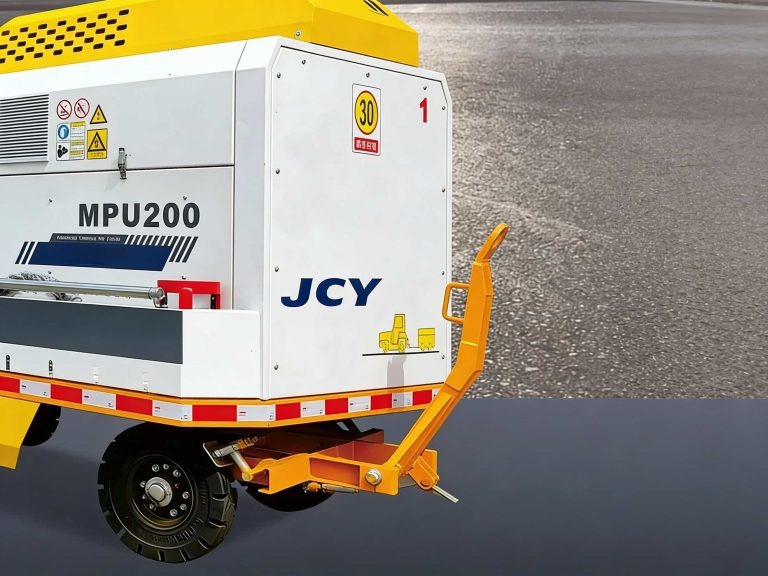
The best charger decision usually comes from observing the operation, not just comparing specifications.
Five questions that reveal the right answer
- Where does each equipment type actually park between jobs?
- Which units spend time at remote stands or low-infrastructure areas?
- How much non-productive travel is created by returning equipment to charge?
- Is fleet electrification happening all at once or in phases?
- Will stand allocation, apron layout, or terminal use change soon?
If the operation is still changing, a mobile GSE charger usually has the edge. If parking patterns are stable and unlikely to move, fixed infrastructure becomes easier to justify.
Why many airports end up with both
For many airports, this is not an either-or decision. Fixed chargers can cover base demand in central parking areas. Mobile chargers can handle remote work, overflow demand, and the early stages of airport electrification.
That hybrid model is often the most realistic. It lets managers learn from actual usage before making larger infrastructure commitments.
About JinChengYu FORKLIFT
JinChengYu FORKLIFT is a Qingdao-based supplier serving overseas customers in material handling, GSE, warehouse equipment, and spare parts. Its website presents the company as a one-stop logistics handling solution provider and includes airport ground service support equipment within its product range. The company also highlights export business experience, global sales coverage, and after-sales support.
For airport buyers, that matters because choosing a mobile GSE charger is not only about one machine. It is also about whether the supplier can support broader ground handling needs, international delivery, and phased equipment planning.
Conclusion
A fixed GSE charging station is valuable when the layout is stable, parking is centralized, and infrastructure work is already planned. But many airports do not operate under those conditions all day, every day. Remote stands stay active. Fleet conversion happens in steps. Construction interrupts plans. Demand moves.
That is why the mobile GSE charger has become such a practical option for airport and ground handling teams. It cuts non-productive travel, reduces the need for immediate infrastructure spend, supports phased airport electrification, and keeps electric ground support equipment closer to the point of work.
For decision-makers weighing fixed vs mobile GSE charging, the key is straightforward: choose the charging method that fits the real operation, not just the site drawing. In many airport environments, that points directly to mobile charging.
FAQs
Is a mobile GSE charger only for emergency use?
No. It can support emergency charging, but it is also useful for daily remote-stand work, peak-hour coverage, and temporary gaps while fixed infrastructure is still being built.
Does a fixed GSE charging station cost less over time?
It can in large, stable operations with high charger utilization. But that only holds if the installed location continues to match the real workflow.
When is mobile charging the best first step?
Usually when the airport is starting electrification, testing fleet behavior, working with limited apron power, or trying to avoid major early infrastructure spending.
Can airports use both mobile and fixed charging?
Yes. Many operations use fixed chargers for the base load and mobile chargers for flexibility, overflow, and remote positions.