 A warehouse can have good people, enough orders, and decent storage space, yet still lose time every hour. The bottleneck is often not inventory or labor. It is movement. When pallets wait at receiving, when operators walk extra meters to reposition loads, or when racking space stays half-used because access is awkward, throughput drops fast. That is why warehouse handling equipment has become a core part of modern warehousing rather than a supporting detail. Across current industry guides and buying articles, the strongest pages tend to win by doing four things well: they explain the equipment clearly, tie each machine to a real warehouse task, connect selection to layout and labor cost, and keep the writing practical instead of promotional.
What warehouse handling equipment actually does
At a basic level, warehouse handling equipment covers the machines used to move, lift, stack, and position goods inside a warehouse or distribution site. In practice, that means much more than “moving pallets.” It affects how fast goods enter storage, how safely loads are placed on racking, how easily stock is retrieved, and how much floor space is wasted during the process. Industry references consistently frame its value around productivity, safety, lower manual handling, and better use of storage capacity.
Before looking at individual machine types, it helps to think in terms of daily warehouse tasks. Most operations repeat the same chain: unload, transfer, stack, replenish, pick, and dispatch. The right equipment shortens each step and reduces the number of touchpoints per pallet.
The jobs that matter most in daily operations
- Moving pallets from dock to storage
- Stacking goods in limited aisle space
- Reaching loads on higher racking
- Replenishing picking areas without delay
- Reducing strain from repetitive manual movement
- Lowering the risk of product damage during transport
Why the right equipment changes warehouse performance
The impact of warehouse handling equipment is easiest to see in ordinary situations. A small warehouse handling 80 to 120 pallets a day may not look complex, but repeated short moves consume hours. A manual process that adds even two extra minutes per pallet quickly becomes a major labor drain over a full shift. In a busier site, the problem grows: docks fill up, pick faces wait for replenishment, and outbound loading starts slipping behind schedule.
This is where equipment choice starts affecting business results, not just warehouse convenience. The best operations do not buy machines only for lifting power. They choose them for travel distance, aisle width, stack height, traffic pattern, and shift intensity.
Faster flow from receiving to dispatch
When pallet movement is smooth, everything downstream improves. Electric pallet trucks speed up short horizontal travel between receiving, buffer zones, and shipping areas. Stackers help place loads where floor storage is no longer enough. Reach trucks make upper racking usable instead of theoretical. Good flow means fewer delays at the dock and less idle stock waiting for handling. Articles that rank well for this topic usually connect equipment to speed of movement and reduced handling steps, because that matches how warehouse managers think on the floor.
Better use of space, especially in tighter warehouses
Space pressure is one of the biggest reasons companies upgrade from basic handling tools. Narrow aisles and taller racking can raise storage density, but only if the equipment can work there reliably. Reach trucks are widely associated with narrow-aisle access and higher lift work, while stackers are often chosen for compact storage zones and moderate stacking heights. That makes the machine part of the storage strategy, not just the transport step.
Lower labor pressure and less operator fatigue
Labor cost is not only about headcount. It is also about fatigue, repetition, and pace loss by the middle of a shift. Electric warehouse handling equipment reduces pushing, pulling, and repeated manual repositioning. In practical terms, that helps operators maintain steadier output over the day, particularly in loading bays, replenishment routes, and transfer lanes. Many current buying guides now place lower physical strain alongside cost and safety, because it has a direct effect on consistency.
Main types of warehouse handling equipment and where they fit
Different machines solve different movement problems. A common mistake is trying to make one machine cover every task. That usually leads to congestion, underused racking, or avoidable wear.
Reach truck
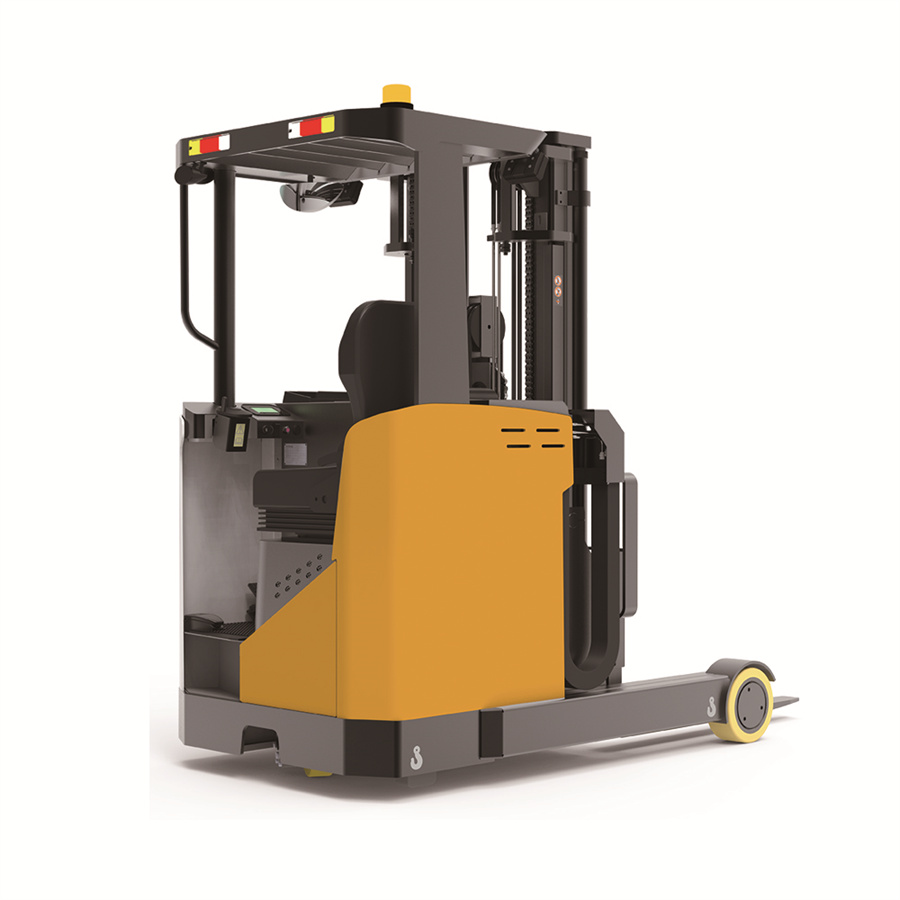
A reach truck is often the better fit when a warehouse wants to use vertical space more effectively. It is commonly used for placing and retrieving pallets in racking where aisle width is limited and lift height matters. In practical warehouse terms, it suits sites that have outgrown floor stacking but do not want to expand building area just to create more storage. Industry references consistently connect reach trucks with high-bay storage and narrow-aisle work.
Electric stacker
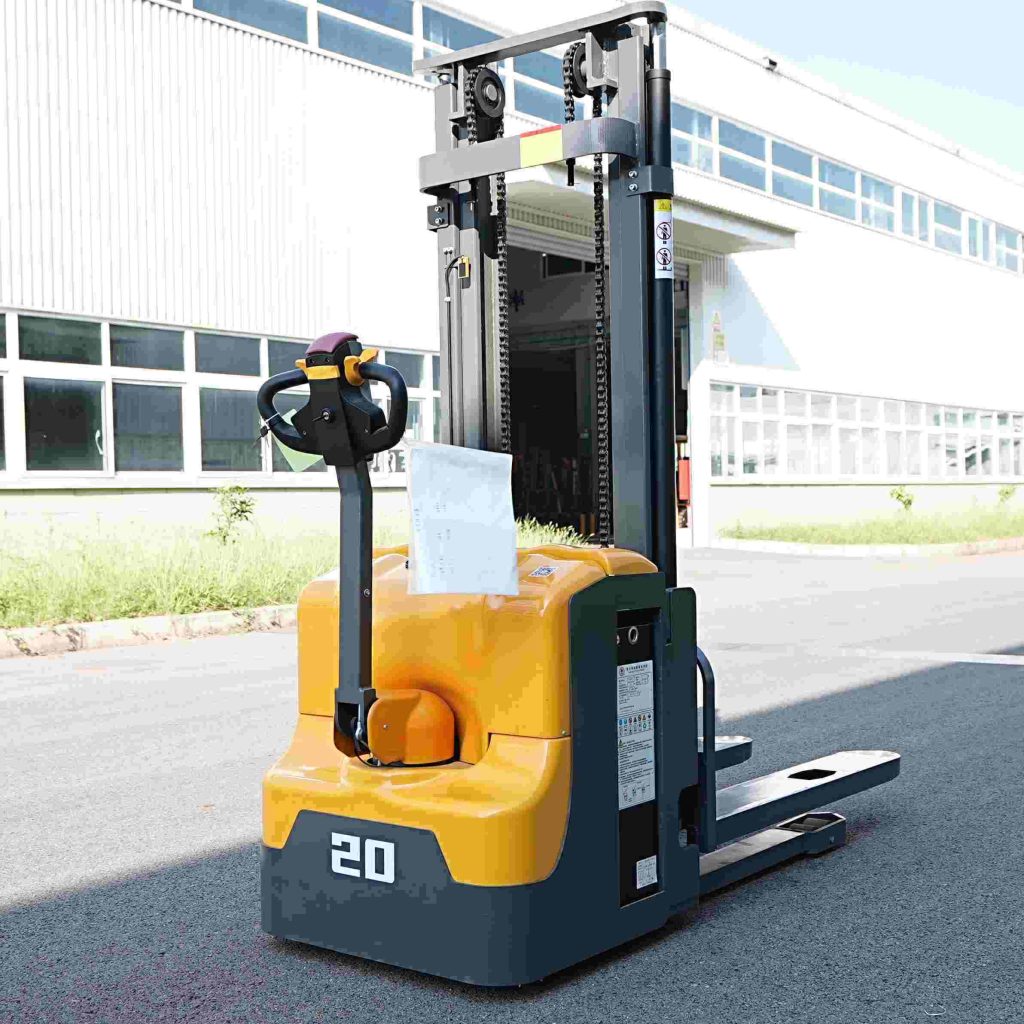
An electric stacker is usually a strong choice for lighter to medium-duty stacking, backroom handling, production support, and short-distance pallet placement. It is often used in smaller warehouses, retail storage zones, and operations that need lifting and stacking without moving into the cost or scale of a larger forklift fleet. The appeal is simple: compact size, straightforward operation, and enough lift for many everyday storage tasks.
Electric pallet truck
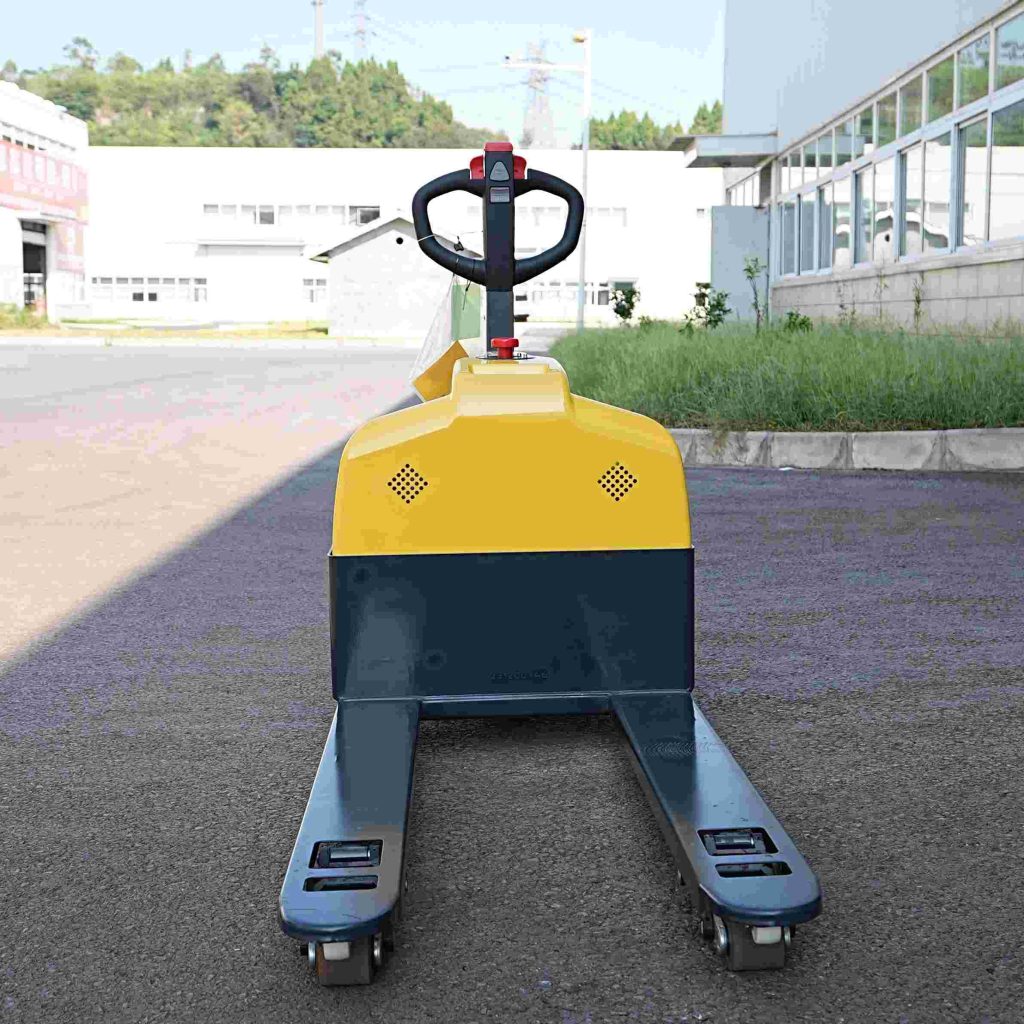
An electric pallet truck is built for frequent horizontal movement. That sounds basic, but it is one of the highest-frequency tasks in warehousing. Receiving, transfer, order staging, and truck loading all depend on fast, repeatable pallet transport. In many operations, this is the machine that touches the greatest number of pallets per shift, which is why it often has an outsized effect on labor use and turnaround time.
Lithium pallet truck
Where shift rhythm is tighter and downtime matters more, lithium pallet trucks attract attention for practical reasons: quicker charging routines, easier daily use, and flexibility for warehouses that want electric handling without heavy battery-management overhead. They are especially attractive where machines are shared across busy zones and uptime matters more than brute capacity.
How to choose the right equipment for the warehouse
Selection works best when it starts from the task, not the catalog. A machine can look right on paper and still slow the warehouse if it does not match real movement patterns.
Start with layout, load, and distance
The first questions are basic but decisive: How narrow are the aisles? How high are the racks? How far do loads travel each cycle? Is the work mostly floor-level transport or regular stacking? A receiving zone with constant dock-to-buffer movement needs something different from a warehouse that replenishes upper racks all day. High-frequency transfer usually points toward pallet trucks. Moderate stacking favors stackers. Taller racking and denser storage often call for reach trucks.
Match the machine to the real work cycle
A machine used 20 times a day and one used 200 times a day should not be judged the same way. Frequency changes the value equation. In a low-intensity warehouse, a simpler setup may be enough. In a multi-shift site, operator comfort, battery routine, turning control, and maintenance intervals start to matter much more.
Here is a simple planning table that helps narrow the choice:
| Warehouse task | Best-fit equipment type | Why it fits |
|---|---|---|
| Dock-to-storage transfer | Electric pallet truck | Fast, efficient horizontal pallet movement |
| Low to medium stacking | Electric stacker | Good for compact spaces and routine stacking |
| High racking access | Reach truck | Better use of vertical space and narrow aisles |
| Busy indoor transfer with quick recharge needs | Lithium pallet truck | Flexible uptime and easier daily charging routine |
Look beyond purchase price
A cheaper machine is not always the lower-cost choice. If it slows handling, adds labor pressure, or leaves storage space underused, the hidden cost keeps growing. The more useful question is what the machine changes over a month of receiving, put-away, replenishment, and dispatch. Time saved per pallet, fewer handling steps, and lower product damage often matter more than the invoice difference between two machine categories.
Why electric warehouse handling equipment is becoming the standard
Many warehouses are moving toward electric handling equipment because it suits indoor work better. Lower noise, easier control, cleaner operation, and reduced operator strain all matter in closed warehouse environments. Current industry also stress lower operating cost and energy efficiency as key reasons electric machines continue to gain ground.
That shift also changes buyer expectations. Warehouses increasingly want machines that can work in tighter layouts, run steadily across long indoor shifts, and fit modern safety routines. As a result, electric pallet trucks, stackers, and reach trucks are no longer viewed as niche equipment. In many sectors, they are now the baseline choice for routine indoor handling.
What effective warehouse handling looks like in real scenarios
 The value of warehouse handling equipment becomes clearer when tied to a real operating scene instead of a product category.
Scenario 1: Narrow aisles with growing SKU count
A warehouse that adds more SKUs often narrows its available movement space before it realizes it. Operators start making more corrective turns, goods wait longer for put-away, and upper racking becomes harder to use efficiently. This is where reach trucks usually bring the biggest gain: they turn vertical storage into workable storage.
Scenario 2: Frequent inbound and outbound pallet movement
In a facility where pallets move all day between receiving, staging, and loading docks, speed at floor level matters more than extra lift. An electric pallet truck often produces the fastest return here because it cuts handling time in the most repetitive part of the shift.
Scenario 3: Small warehouse with mixed stacking needs
Smaller sites often need one machine that can handle short moves, occasional stacking, and flexible placement in tight corners. That is where an electric stacker often makes practical sense. It covers more than floor transport without demanding the space or operating profile of larger equipment.
A brief look at JinChengYu FORKLIFT
For buyers sourcing warehouse handling equipment internationally, supplier breadth and coordination matter almost as much as machine choice. JinChengYu FORKLIFT operates from Qingdao and focuses on export business in materials handling, warehouse equipment, ground support equipment, and related spare parts. Its product range spans broader logistics handling needs, while its warehouse handling category includes reach trucks, stackers, standing and walking pallet trucks, full electric pallet trucks, and lithium pallet trucks. The company also presents customer application cases across warehouse and industrial environments and offers direct contact support for overseas inquiries.
That matters for practical purchasing. Warehouses rarely solve movement problems with one machine alone. A supplier that can cover multiple handling scenarios, communicate clearly on export orders, and support product selection around layout and duty cycle is often more useful than one offering a narrow range.
Conclusion
Warehouse handling equipment matters because warehousing is a movement business before it is a storage business. Goods have to enter, travel, stack, wait, return, and leave. Every weak point in that chain costs time. The right mix of pallet trucks, stackers, and reach trucks helps warehouses move faster, use space better, protect workers, and keep daily flow stable. For operations under pressure from tighter delivery windows and rising labor costs, that is no longer a technical upgrade. It is a basic operating advantage.
FAQs
What is the most important warehouse handling equipment for daily use?
In many warehouses, the electric pallet truck handles the highest number of daily movements because short-distance pallet transfer happens constantly. The answer changes, however, when stacking height or aisle width becomes the bigger problem.
Is a reach truck better than a stacker?
Not in every case. A reach truck is usually the stronger fit for higher racking and narrower aisles. A stacker often works better for lighter to medium-duty stacking in smaller or less intensive operations. The right choice depends on layout, lift height, and traffic volume.
Why are lithium pallet trucks getting more attention?
Because uptime and charging routine matter. In warehouses with frequent movement and shared equipment, lithium options are often valued for easier daily use and operational flexibility.
How can warehouse handling equipment reduce labor cost?
It reduces walking time, repeated manual force, and unnecessary handling steps. Over a full shift, that means more pallets moved with steadier output and less fatigue-related slowdown.