A rough terrain forklift can handle mud, grass, gravel, and slopes. But it is not a machine that can go anywhere without any bounds. Things like ground hardness, tire hold, load mass, slope steepness, weather, and driver ability all play a role in keeping the task safe and effective.
Rough terrain forklifts suit spots like building sites, ranches, wood lots, open storage areas, and factory yards. They work well where standard indoor forklifts fail on soft dirt, scattered rocks, grooves, or bumpy paths. The main point is picking an off-road forklift that fits the actual site conditions.
What Makes a Rough Terrain Forklift Suitable for Outdoor Ground?
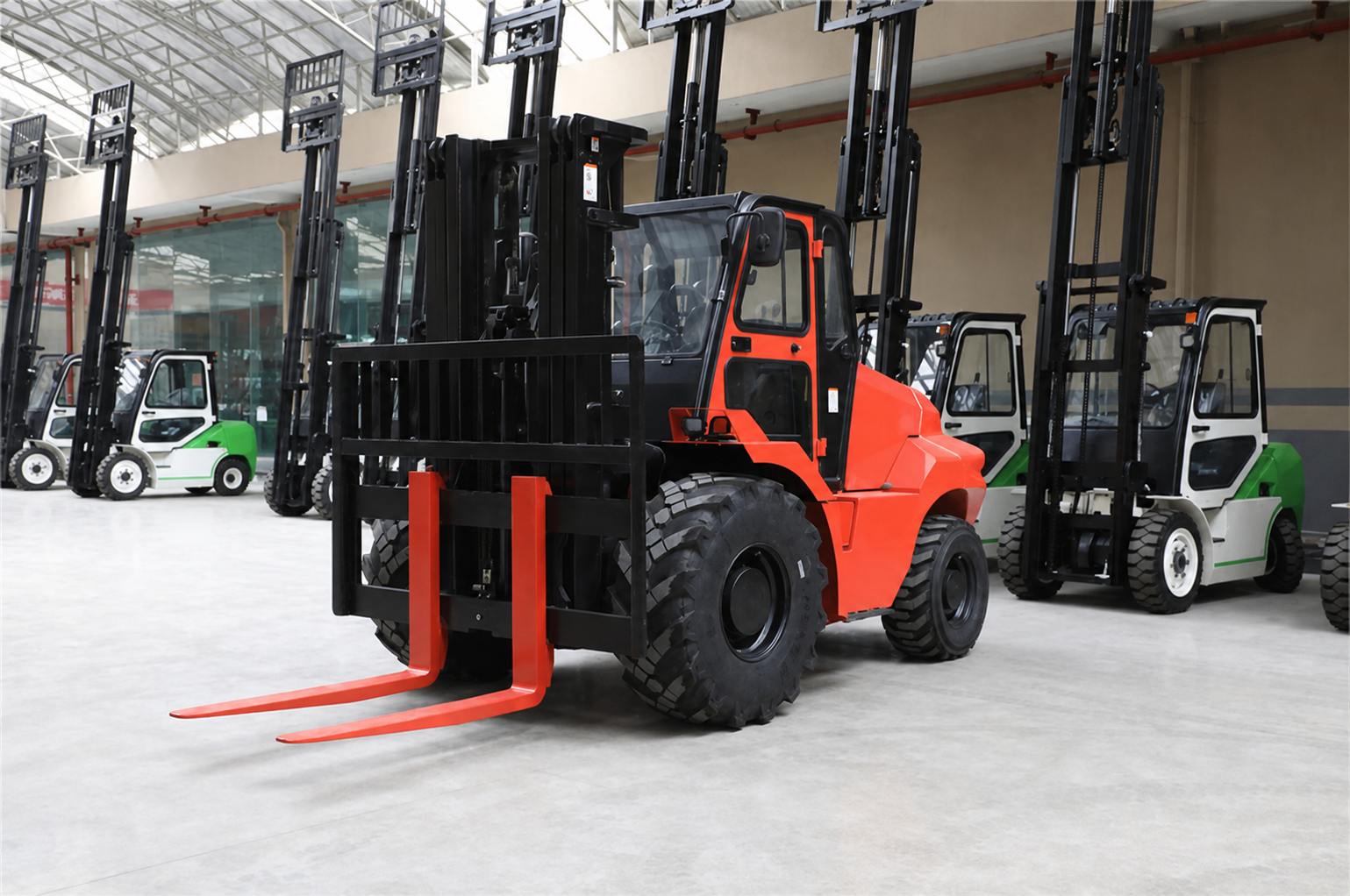
A rough terrain forklift is made for tasks on uneven outdoor floors, not smooth concrete. It offers better pull, more space under the body, and a tougher build than a regular inside forklift. These traits let it shift stacked items, construction materials, farm products, wood, and big components over outside areas.
Large Pneumatic Tires Improve Grip
The clearest change is the tire type. Big air-filled tires provide more touch with the earth. They cut down on sliding and take in jolts from rough spots on paths of stones, turf, soil, and solid mud.
Deep grooves in the tires also shove loose stuff away from the touch point. This helps on a sloppy building path, a ranch lane after showers, or a stone lot where tiny rocks might shift under the wheel. Yet, tire hold has edges. If the earth is too yielding, the wheel might drop in rather than move ahead.
Higher Ground Clearance Helps on Ruts and Stones
Outside areas often show dips, little boulders, cracked slabs, piled earth, and bumpy trails. More space under the frame lets the forklift cross these bumps without rubbing the bottom parts.
This proves handy in lots where goods sit in the open. Paths there shift with the weather. An inside forklift might jam or break on such ground. But a rough terrain forklift can go on if the path gets a good look first.
Stronger Drive Power Supports Heavy Outdoor Loads
Handling items outside often means dealing with bigger and less steady weights. Stacks of cement, feed sacks, wood packs, metal pieces, and ranch boxes put extra strain on pull and stopping.
A rough terrain forklift typically gives more drive strength for these tasks. When the area has damp turf, sloppy trails, stone inclines, or varied floors, improved hold lets the driver steer with better command.
Can a Rough Terrain Forklift Work on Mud?
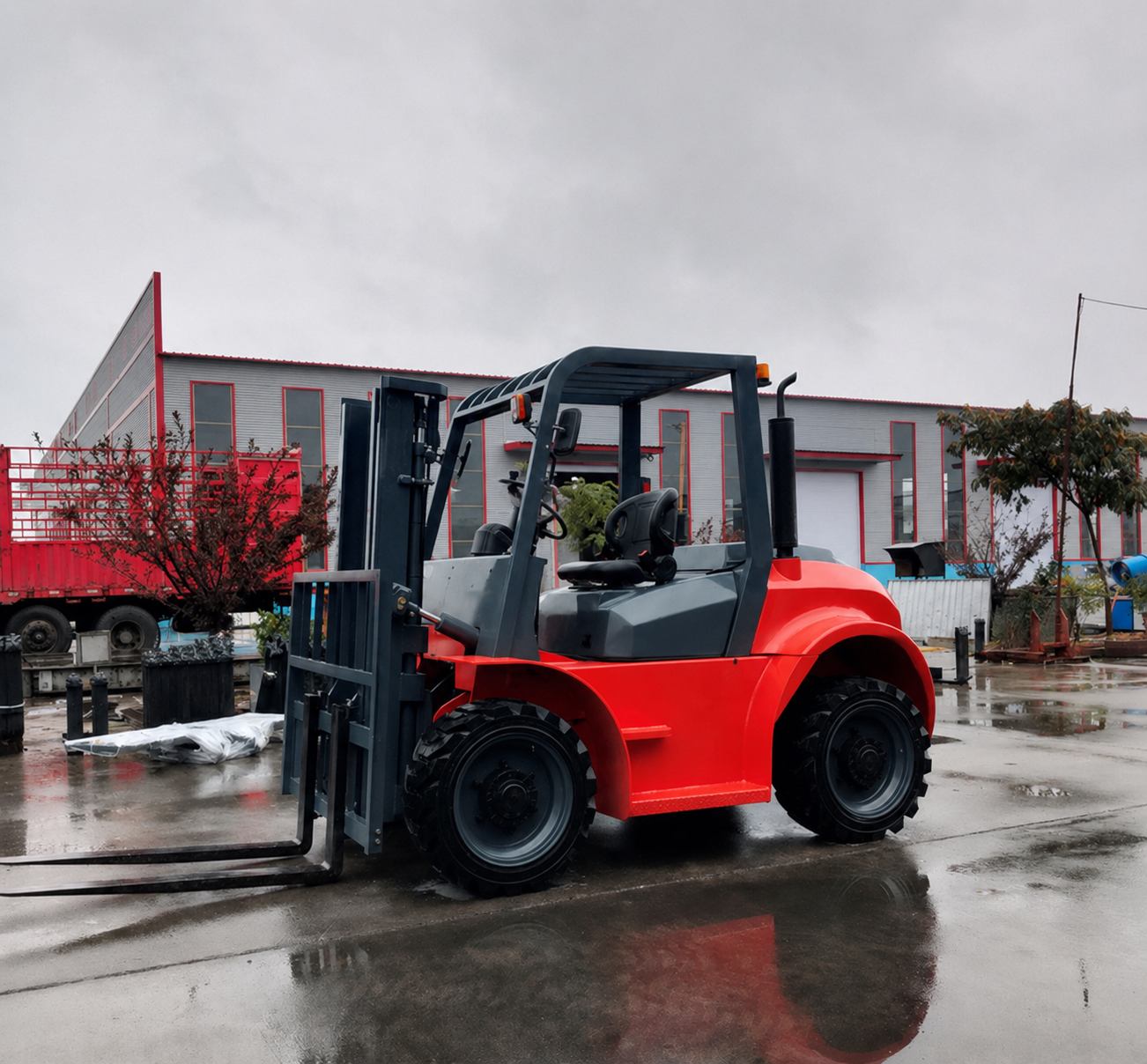
Yes, a rough terrain forklift can manage muddy spots. This works if the mud stays shallow, the earth below holds the weight, and the path gets inspected prior to use. Mud ranks as one of the toughest floors. It shifts fast. A path that seems solid in the morning might turn soft after rain, watering, or many wheel passes.
When Mud Is Acceptable
Muddy earth might work if a solid layer sits below. For instance, a building entry path with packed soil and thin mud above differs a lot from thick clay that pulls in the wheel.
Pick a forklift for muddy spots with fitting air tires, solid pull, and ample underbody space. Drivers need to go slow, skip quick bends, and hold the weight near the ground. If wheels begin to spin, pushing hard often worsens the issue.
When Mud Becomes Unsafe
Mud turns risky when wheels drop far in, turning lags, stopping takes longer, or the forklift shifts side to side. Puddles signal danger too. They might cover dips, weak areas, boulders, or ditches.
For ongoing muddy tasks, the path could need stones, metal sheets, or packed filler. A rough terrain forklift does much. However, it cannot take the place of good site setup.
Can a Rough Terrain Forklift Drive on Grass?
A rough terrain forklift can travel over grass. But treat dry, hard grass and damp, yielding grass as separate floors. Grass might seem okay from afar. Yet it can mask loose dirt under it.
Dry Grass and Farm Roads
Dry grass on solid soil often suits a rough terrain forklift. This holds true for ranches, fruit groves, event fields, and open storage zones. The unit can shift feed, seeds, plant food, boxes, fence parts, or stacked goods without a hard path.
The driver should still scan for dips, water pipes, plant roots, soft borders, and unseen inclines. Grass hides sight cues. So, walking the path ahead makes good sense.
Wet Grass and Soft Lawns
Damp grass slips more than most expect. Wheels might lose hold when stopping or bending, above all with a full stack on the arms. Yielding lawns can get marked by repeated trips. This leaves tracks that deepen with time.
If the work covers damp grass, slanted grass, or soft fields, better pull grows key. The wise way is to cut speed, skip abrupt turns, and keep weights close to the earth.
Can a Rough Terrain Forklift Operate on Gravel?
Gravel counts as a top common floor for a rough terrain forklift. Building lots, wood lots, open storage buildings, gear bases, and factory holding spots often pick gravel. It drains better than dirt and costs under pavement.
Why Gravel Works Well
Packed gravel offers wheels a steady base. It still lets water flow outside. For a rough terrain forklift, this makes a useful floor to shift stacks, steel bits, tubes, wood, slabs, and sacked items.
Gravel also cuts down on mud issues in rainy times. On lots of sites, laying a stone path to load zones speeds up and secures forklift trips.
Risks on Loose Gravel
Unpacked gravel can bring issues. Wheels may nudge rocks during speedup. Pointed stones raise wheel damage. Quick stops or bends might shake the forklift, most with a lifted or off-balance weight.
Good habits stay basic: go slow, make wide bends, skip wheel spin, and hold the weight low. Steady smoothing and packing keep gravel lots safer for routine forklift jobs.
| Ground Surface | Usually Suitable? | Main Risk | Best Practice |
|---|---|---|---|
| Firm mud | Yes, with caution | Wheel spin and sinking | Check soil support first |
| Wet grass | Sometimes | Sliding and rut damage | Use slow speed and low loads |
| Compacted gravel | Yes | Loose stone movement | Avoid sharp turns |
| Loose gravel | With caution | Tire wear and instability | Keep routes compacted |
| Steep slopes | Limited | Tip-over risk | Follow rated limits |
Can a Rough Terrain Forklift Work Safely on Slopes?
A rough terrain forklift can handle slopes only in safe ranges. Working on inclines goes beyond motor strength. Stability stands as the main worry. As the forklift goes up, down, or sideways on a tilt, its balance point shifts.
Why Slopes Are More Dangerous Than Flat Ground
A weight that stays steady on even ground might turn chancy on a tilt. The threat grows with heavy, broad, unbound, overly lifted, or off-center loads.
Side tilts pose extra danger. They raise the chance of flipping. When you can, the forklift should head straight up or down the rise. Do not cross it. Skip bends on a tilt unless the driver has a broad, solid, and approved space to do so safely.
Safe Driving Habits on Slopes
Keep the weight low while traveling. Lifting during slope movement often leads to unsteadiness. Drivers should also dodge quick stops, rapid speedup, and tight wheel work.
Poor sight calls for a helper to guide. If the floor gets damp, loose, or grooved, the tilt might no longer work even if the angle seems okay.
Ground Conditions That Should Stop the Job
Certain floor states do not fit, even for a rough terrain forklift. A smart driver knows when to halt instead of forcing a poor path.
Halt work or switch paths when these show up:
- Tires sink deeply or leave heavy ruts
- Mud reaches the lower frame area
- Water hides the actual ground surface
- The forklift slides sideways during travel
- Loose gravel moves under braking
- The slope is wet, icy, or unstable
- The load blocks forward visibility
- The ground has hidden holes, trenches, roots, or debris
- The forklift must turn while carrying a heavy load on an incline
Time spent checking paths costs less than pulling out a jammed forklift, fixing hurt wheels, or handling a fallen weight.
How to Choose a Rough Terrain Forklift for Mixed Ground
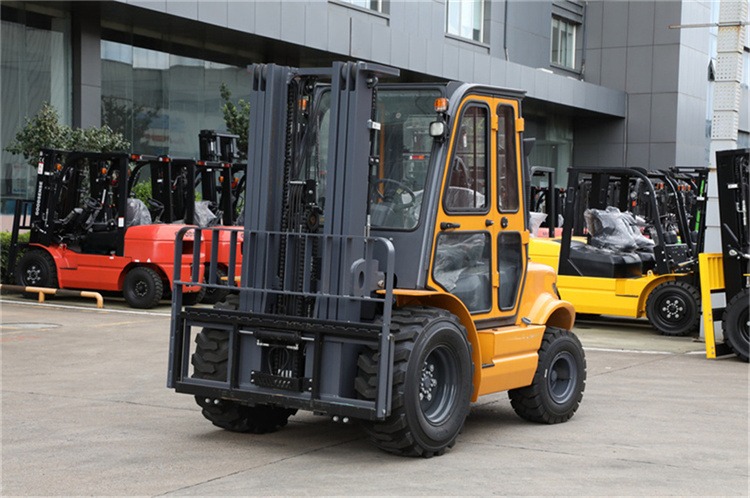
Many job sites mix floor types. A building lot might have stones by the gate, mud near the dig zone, and a rise by the hold area. A ranch could cover turf, packed soil, and damp spots after watering.
The proper rough terrain forklift needs to fit the toughest usual floor, not the easiest one.
Look at Traction First
If tasks include mud, damp turf, unpacked stones, or rises, pull ranks high. Good wheel hold and a fitting drive setup let the forklift go without spinning, slipping, or slow turning.
Light outside jobs on solid floors might need a basic model. For everyday work on damp, loose, or bumpy areas, added off-road strength often pays off despite the extra price.
Match Capacity to Real Loads
Stated capacity counts. But actual weights matter most. A stack of dry boxed goods differs from damp wood, rocks, metal bits, or piled ranch boxes. Weight form, center point, and raise height all sway steadiness.
Prior to purchase, site leads should note the biggest usual weights, the top raise spot, and the roughest path. This paints a better view than capacity specs alone.
Check Tires, Clearance, Brakes, and Visibility
A useful unit for bumpy floors should have tires that match the area, enough underbody room for grooves and rocks, sure stopping, and good driver sight. Outside tasks often bring dust, showers, bright light, uneven piles, and nearby workers or gear.
Driver safety, simple upkeep reach, and solid support services count for ongoing use.
Practical Safety Checklist Before Outdoor Operation
A quick daily scan can stop many issues. Bumpy floors add strain to wheels, wheel work, stops, arms, and the lift frame.
| Check Item | What to Look For |
|---|---|
| Tires | Cuts, low pressure, worn tread, stuck stones |
| Brakes | Delayed response, noise, weak stopping power |
| Steering | Loose response or pulling to one side |
| Forks | Cracks, bending, uneven fork height |
| Route | Holes, mud, loose gravel, slopes, blind corners |
| Load | Weight, balance, wrapping, pallet condition |
| Weather | Rain, ice, soft soil, poor visibility |
Before starting, the driver ought to know the load’s goal, the safest path, and spots where folks or machines might cross.
Where Rough Terrain Forklifts Are Commonly Used
A rough terrain forklift helps in any place where items must shift beyond smooth warehouse floors.
In building work, it hauls slabs, molds, steel, tubes, and stacked supplies over dirt or stone zones. On ranches, it shifts feed, plant food, crop holders, and gear parts among barns, lots, and field sides. In wood lots, it carries wood packs over stone hold lanes. In open factory lots, it moves big parts, boxes, and machine bits where floors stay imperfect.
The unit shows its worth by cutting hand work, speeding load times, and keeping outside item flow going despite tough floors.
JinChengYu FORKLIFT as a Rough Terrain Forklift Supplier
JinChengYu FORKLIFT offers gear for handling items in open lots, ranches, building sites, shipping tasks, and factory users needing solid units for hard floors. Its lineup includes rough terrain forklifts, diesel forklifts, electric forklifts, side loaders, storage handling tools, used forklifts, add-ons, and linked building gear.
For folks weighing rough terrain forklift picks, the firm’s strength goes beyond just sales. Blended buys, diverse unit options, and task-fit choices aid buyers in pairing the forklift to site floors, weight kinds, and funds. This aids sellers, traders, builders, ranches, and direct users who seek gear that handles true outside settings, not just neat warehouse floors.
Conclusion
A rough terrain forklift can manage mud, grass, gravel, and slopes. But safe results hinge on fitting the unit to the floor. Solid mud, dry turf, packed stones, and managed rises can work. Deep mud, damp yielding grass, loose rocks, unseen dips, and shaky tilts call for care or path fixes.
For purchasers, the top choice begins with the site. Scan the toughest floor states, biggest weight, trip length, rise, and weather habits. Then select a rough terrain forklift with proper pull, tires, space, capacity, and safety traits for the task. When the unit matches the floor, outside handling turns safer, quicker, and much more dependable.
FAQs About Rough Terrain Forklifts and Ground Conditions
Can a rough terrain forklift drive through mud?
Yes, but only if the mud lacks depth and the base earth supports the unit. If wheels drop, spin, or slip, switch the path or add strength.
Is it safe to use a forklift on grass?
It can stay safe on dry, solid grass with a fitting rough terrain forklift and watchful driving. Damp grass, yielding dirt, unseen dips, and rises boost risk.
What type of forklift is best for gravel yards?
A rough terrain forklift with big air tires, solid underbody space, steady weight handling, and firm stopping often beats an indoor storage forklift for stone lots.
Can a rough terrain forklift operate on slopes?
Yes, inside set limits and only on solid floors. Drivers must go slow, hold weights low, skip bends on rises, and never cross shaky tilts.
Is a rough terrain forklift the same as an all terrain forklift?
The words often mean close things. But buyers should eye real details: tires, pull, underbody space, capacity, stopping, and the floor type the unit will meet.