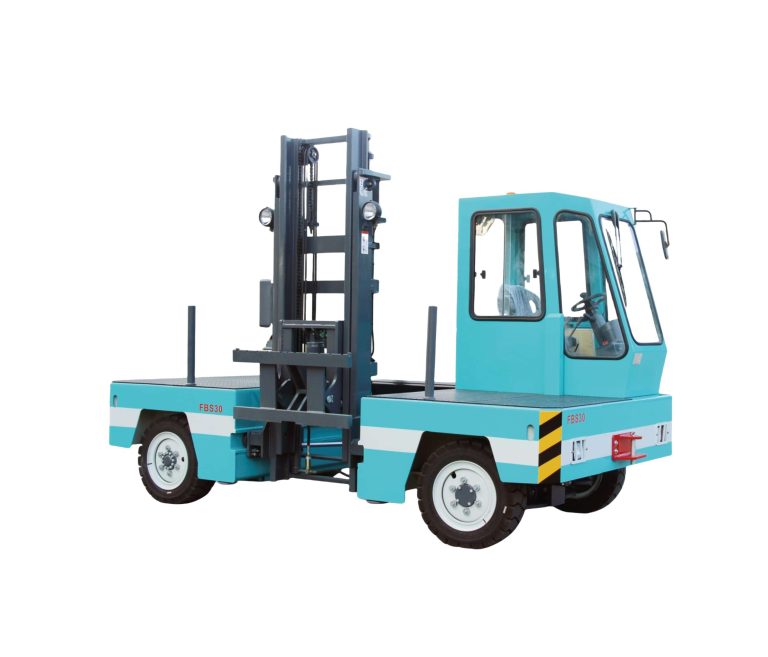
Choosing between an electric side loader forklift and a diesel side loader forklift is not only a power-source decision. It affects where the machine can work, how long it can run, how safely long materials can be moved, and how much daily pressure the handling team has to absorb.
A side loader forklift is built for loads that are difficult to carry from the front. Steel pipes, timber packs, metal sheets, long profiles, beams, and oversized bundles often create problems for standard forklifts. The side loading structure lets the load travel along the machine body, so the operator can move through narrow aisles, storage rows, and yard lanes with better control. For buyers dealing with indoor and outdoor work, the main question is simple: which power type fits the job better?
What Makes a Side Loader Forklift Different?
A side loader forklift is designed around the shape of the material, not only the weight of the load. Long goods need stable side support, clear visibility, and enough travel space. That is why the choice between electric and diesel power must be linked to the real worksite.
Side loading suits long and awkward materials
In a pipe warehouse, a load may be six meters long but not extremely heavy. In a timber yard, the load may be shorter but uneven, dusty, and rough on the ground. In a metal fabrication shop, flat sheets may need slow and careful movement through limited indoor space.
A side loader forklift carries these materials from the side, reducing the need for wide turning movements. This helps in:
- Steel pipe storage areas
- Timber and board yards
- Aluminum profile warehouses
- Metal sheet handling zones
- Building material distribution centers
- Narrow aisle long material storage
The benefit is not just space saving. It also reduces repeated repositioning, which is where many load scratches, bent corners, and operator delays happen.
Power type changes daily performance
The same side loader forklift structure can behave very differently depending on its power source. Electric power usually fits clean indoor movement, controlled floors, and lower noise requirements. Diesel power fits heavier outdoor work, longer operating hours, and rougher yards.
The wrong choice can create daily trouble. A diesel unit used too often inside a closed workshop may bring exhaust, noise, and ventilation concerns. An electric unit used in a muddy outdoor yard with long shifts may face charging limits and ground-condition stress.
When Is an Electric Side Loader Forklift Better?
An electric side loader forklift is usually the better choice when the worksite is indoors, the floor is stable, and the load weight is moderate. It is often selected for warehouses where operators need steady control rather than raw pulling force.
Indoor warehouses and enclosed workshops
Electric side loader forklifts fit indoor material handling because they do not produce exhaust during operation. This matters in enclosed buildings where workers, racks, inventory, and machines share the same air.
Common indoor sites include:
- Steel pipe warehouses with narrow storage lanes
- Aluminum profile storage areas
- Door and window frame production workshops
- Indoor metal sheet warehouses
- Finished goods areas with clean floor surfaces
- Long material warehouses near production lines
In these areas, the operator often moves at lower speed, makes frequent stops, and needs accurate fork positioning. Electric drive suits this rhythm. It gives smoother acceleration and easier control in tight spaces, especially when the route includes corners, racks, workbenches, or pedestrian zones.
Lower noise for people working nearby
Noise is often ignored during the purchase stage, but it becomes obvious after the machine starts working every day. In a closed workshop, engine noise, hydraulic sound, reverse alarms, cutting machines, and loading activity can build up quickly.
An electric side loader forklift helps keep the handling area calmer. This is useful in factories where operators need to hear instructions, warning signals, or crane movement nearby. Lower noise also makes the machine more suitable for warehouses connected to offices, packing lines, inspection areas, or night-shift operations.
Better fit for cleaner material flow
Electric machines work well where the material must stay cleaner. Aluminum profiles, painted steel, coated panels, plastic pipes, and finished building materials may lose value if exposed to dust, exhaust marks, or rough handling.
For these jobs, the side loader forklift should move slowly and predictably. Clean operation, less vibration, and smoother travel are often more valuable than maximum pulling power.
When Is a Diesel Side Loader Forklift More Suitable?
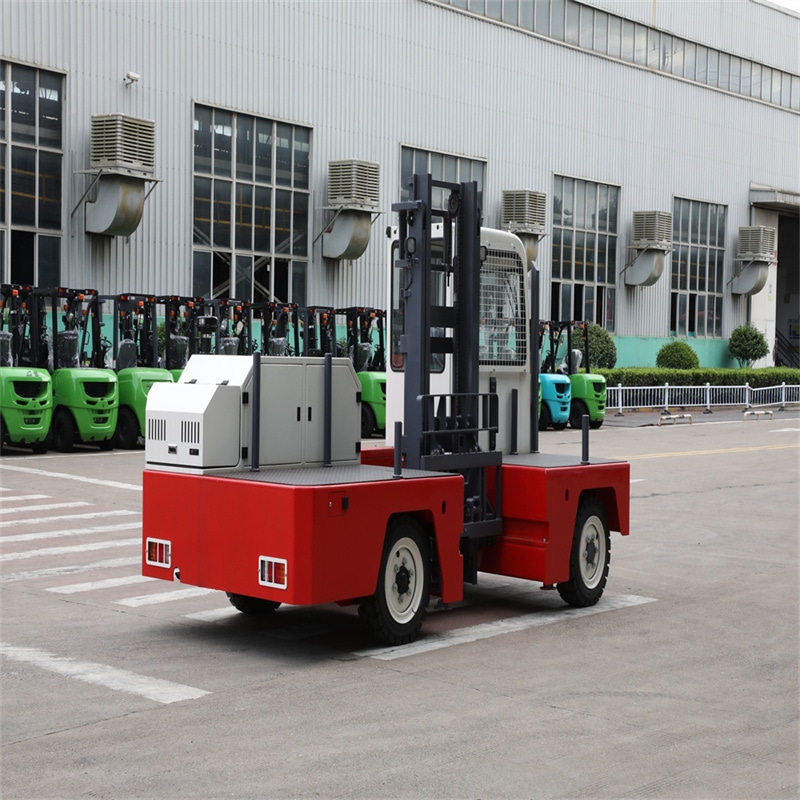
A diesel side loader forklift is usually stronger in outdoor yards, heavier handling tasks, and long shifts. It is often chosen when the material is bulky, the ground is not perfect, and the machine needs to keep working without long charging breaks.
Outdoor yards and rougher surfaces
Outdoor material yards are rarely as controlled as indoor warehouses. The surface may include concrete, packed gravel, dust, rainwater, slopes, or uneven transitions between storage zones. Loads may also vary more from day to day.
A diesel side loader forklift is a better match for:
- Timber yards
- Steel pipe yards
- Structural steel storage areas
- Building material markets
- Outdoor metal stock areas
- Container-side loading zones
- Heavy industrial storage sites
These places often need stronger traction, higher torque, and more tolerance for rough conditions. Diesel power gives the machine the strength to move heavy long loads where the ground adds resistance.
Longer shifts and fast refueling
Worksites with long daily shifts need to look beyond the purchase price. A side loader forklift may be required to receive materials in the morning, feed production during the day, and load trucks in the evening. In high-volume yards, waiting for battery charging can affect the whole loading schedule.
Diesel forklifts are often favored when:
- The machine works for several hours at a time
- Truck loading windows are tight
- Materials arrive in batches
- The site has no stable charging area
- Outdoor work continues across more than one shift
Fast refueling is a practical advantage. It keeps the machine available when the work is driven by truck arrivals, not by a fixed warehouse timetable.
Heavy loads need stronger working reserves
Long materials create a special problem: the load may not only be heavy, but also hard to balance. A bundle of steel pipes, wet timber, or thick metal sheets can shift the handling demand quickly.
Diesel side loader forklifts are often better when the site handles:
- Steel beams
- Heavy pipe bundles
- Large timber packs
- Long construction materials
- Oversized industrial loads
- Outdoor stock with uneven weight distribution
In these conditions, the power reserve gives operators more confidence, especially when starting, braking, or moving across uneven ground.
Electric vs Diesel Side Loader Forklift Comparison
Both types can be useful, but they are not built for the same daily pressure. A buyer should compare the working area, load type, operating hours, surface condition, and service routine before deciding.
Key differences for indoor and outdoor work
| Factor | Electric Side Loader Forklift | Diesel Side Loader Forklift |
|---|---|---|
| Best working area | Indoor warehouse, enclosed workshop | Outdoor yard, open storage area |
| Typical load | Medium long loads, cleaner materials | Heavy long loads, rougher materials |
| Noise level | Lower | Higher |
| Exhaust during work | No | Yes |
| Energy supply | Charging required | Fast refueling |
| Ground condition | Best on flat, clean floors | Better for rougher outdoor surfaces |
| Daily rhythm | Frequent stops and precise movement | Long shifts and heavy-duty handling |
| Good fit | Profiles, pipes, panels, finished materials | Timber, steel beams, heavy pipe bundles |
A simple decision rule
If most work happens inside a warehouse, an electric side loader forklift is usually the safer starting point. If most work happens outdoors with heavy loads, a diesel side loader forklift is usually more practical.
For mixed indoor and outdoor sites, the choice depends on the main workload, not the occasional job. A warehouse that sends one load outside every day may still be better with electric. A yard that enters a shed for short loading work may still need diesel.
How Worksite Conditions Affect the Final Choice?
Before buying a side loader forklift, the site itself should be checked. The machine should match the route, the floor, the load, and the working schedule.
Indoor use needs clean routes and charging space
Electric side loaders perform best when the site has clear travel lanes, flat floors, and a reliable charging setup. The charging point should not block truck loading areas or emergency routes. It should also be placed where operators can park the machine safely at the end of a shift.
In a narrow aisle warehouse, even a small mistake in route planning can waste time every day. The buyer should measure:
- Aisle width
- Door height
- Turning points
- Rack spacing
- Floor slope
- Load length
- Daily travel distance
- Charging location
A side loader forklift can save space, but only when the storage layout gives it a clean path.
Outdoor use needs attention to ground and weather
Diesel side loaders are often used outdoors, but the yard still needs basic planning. Potholes, loose stones, poor drainage, and sharp turning points all increase wear. Heavy long loads also need enough side clearance.
For outdoor yards, check:
- Concrete or gravel condition
- Drainage after rain
- Truck loading space
- Storage row width
- Night lighting
- Operator visibility
- Slope and turning area
- Fuel supply point
A stronger machine cannot fully solve a poorly planned yard. Good traffic routes reduce tire wear, fuel waste, and handling delays.
Industry Applications for Electric and Diesel Side Loaders
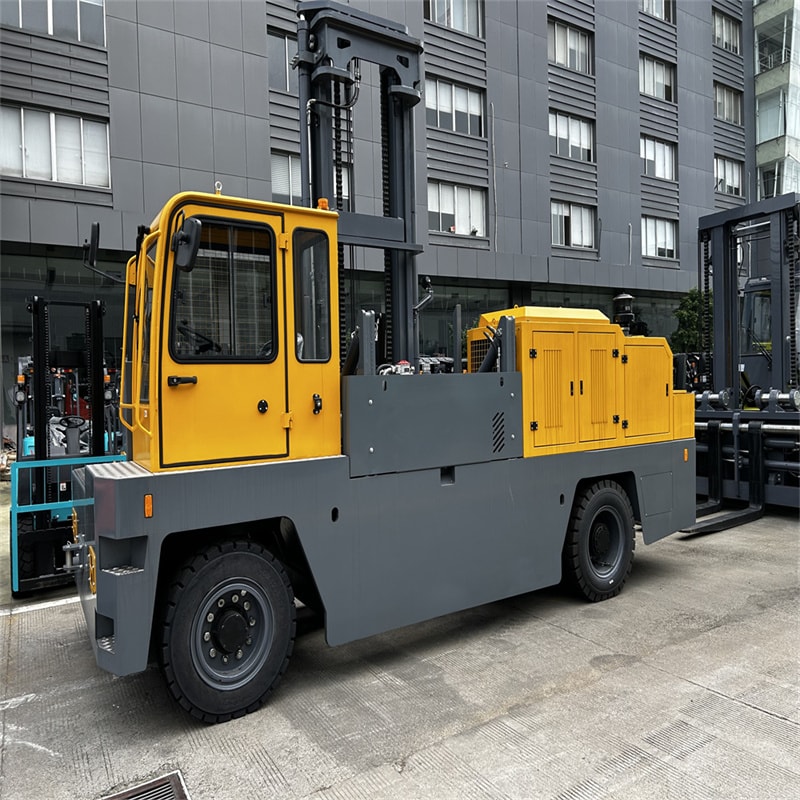
The right choice becomes clearer when the machine is viewed by industry. Different materials create different handling risks.
Steel pipe and metal stock warehouses
Steel pipe warehouses often deal with long bundles that are hard to move in standard aisles. If the pipes are stored indoors and the floor is smooth, an electric side loader forklift can move them cleanly and quietly. It also supports slower travel near racks and workers.
Outdoor steel pipe yards are different. Pipe bundles may be heavier, dusty, or moved directly between trucks and storage rows. A diesel side loader forklift usually works better in this setting because the load and ground conditions are tougher.
Timber yards and board suppliers
Timber handling often favors diesel power. Wood may be stored outdoors, and the weight can change with moisture. Boards, logs, and timber packs may also create uneven load pressure.
A diesel side loader forklift is useful for moving wood bundles from storage rows to cutting areas or trucks. The machine can work through longer shifts and handle rougher yard conditions.
Indoor board warehouses may choose electric if the load is lighter and the route is clean. This is common with finished boards, panels, and packaged materials.
Aluminum profiles and finished building materials
Aluminum profiles, door frames, window frames, and coated materials are often stored indoors. Damage control matters. A scratch or bent edge can turn a finished product into waste.
For these sites, an electric side loader forklift is often a smart match. It gives smooth movement, less noise, and cleaner operation. It also works well where workers need to move materials from production lines to packing or storage areas.
Buying Checklist for a Side Loader Forklift
A side loader forklift should be selected from the job backward. Start with the load and the site, then choose the power type.
Questions to ask before purchase
| Question | Why it matters |
|---|---|
| Is the main work indoors or outdoors? | Decides whether electric or diesel is more suitable |
| What is the longest material length? | Affects aisle space and safe turning |
| What is the heaviest daily load? | Affects capacity and power reserve |
| How many hours will the machine work per day? | Affects charging or refueling needs |
| Is the ground flat, dusty, wet, or uneven? | Affects tire wear and drive power |
| Is ventilation limited? | Important for diesel use indoors |
| Are workers close to the travel route? | Affects noise and safety planning |
| Is there space for charging or fuel storage? | Affects daily operation |
Avoid choosing by price alone
The cheapest machine is not always cheaper to run. If the forklift cannot finish a shift, damages long materials, needs frequent service, or slows truck loading, the purchase price becomes less important.
A good choice should reduce repeated handling, protect long goods, and fit the operator’s daily route. For long material handling, fewer movements often mean better safety and lower damage risk.
JinChengYu FORKLIFT as a Side Loader Forklift Supplier
JinChengYu FORKLIFT provides logistics handling equipment for industrial and warehouse applications, including diesel forklifts, electric forklifts, side loader forklifts, warehouse handling equipment, used forklifts, forklift attachments, loaders, excavators, and related machinery. Its side loader forklift range is aimed at long and bulky load handling, especially for materials such as steel, pipes, timber, and other extended goods used in warehouses, production areas, and outdoor yards.
For buyers comparing electric side loader forklift and diesel side loader forklift options, JinChengYu FORKLIFT can support selection around working environment, load weight, material length, aisle space, and daily operating hours. This is useful for importers, dealers, steel pipe suppliers, timber businesses, building material yards, and factories that need practical long load handling equipment rather than a general-purpose forklift.
Conclusion
An electric side loader forklift is usually the better choice for indoor warehouses, clean floors, lower noise, and steady long material handling. A diesel side loader forklift is usually stronger for outdoor yards, heavier loads, rougher surfaces, and longer shifts.
The best choice does not come from power type alone. It comes from the real worksite: material length, load weight, route width, ground condition, ventilation, and daily working time. When these details are clear, the right side loader forklift becomes easier to select and easier to justify as a long-term handling investment.
FAQs
Is an electric side loader forklift suitable for outdoor work?
Yes, but only in the right conditions. It can work outdoors on flat, dry, and stable surfaces for lighter or medium-duty tasks. If the yard is rough, wet, dusty, or used for heavy long loads all day, a diesel side loader forklift is usually a better match.
Can a diesel side loader forklift be used indoors?
It can be used indoors only when ventilation is good and local safety rules allow it. Diesel machines create exhaust and more noise, so they are usually better for outdoor yards, open sheds, and heavy-duty loading areas.
Which side loader forklift is better for steel pipes?
For indoor steel pipe storage, an electric side loader forklift can work well when the floor is clean and the loads are moderate. For outdoor pipe yards, heavy bundles, and long truck-loading shifts, diesel power is often more practical.
Which option is better for timber handling?
Timber yards often choose diesel side loader forklifts because timber is commonly stored outdoors and can vary in weight. For indoor finished boards or packaged wood products, electric side loaders may be a better fit.
What information should buyers provide before asking for a quotation?
The most useful details are material type, maximum load weight, material length, working area, ground condition, aisle width, daily working hours, and whether the machine will work mainly indoors or outdoors.